Perplexity rewards source builders as YouTube leads citations
YouTube took 32.4% of Perplexity citations in Ahrefs’ June 2026 scan, showing answer engines reward a tighter set of source assets.
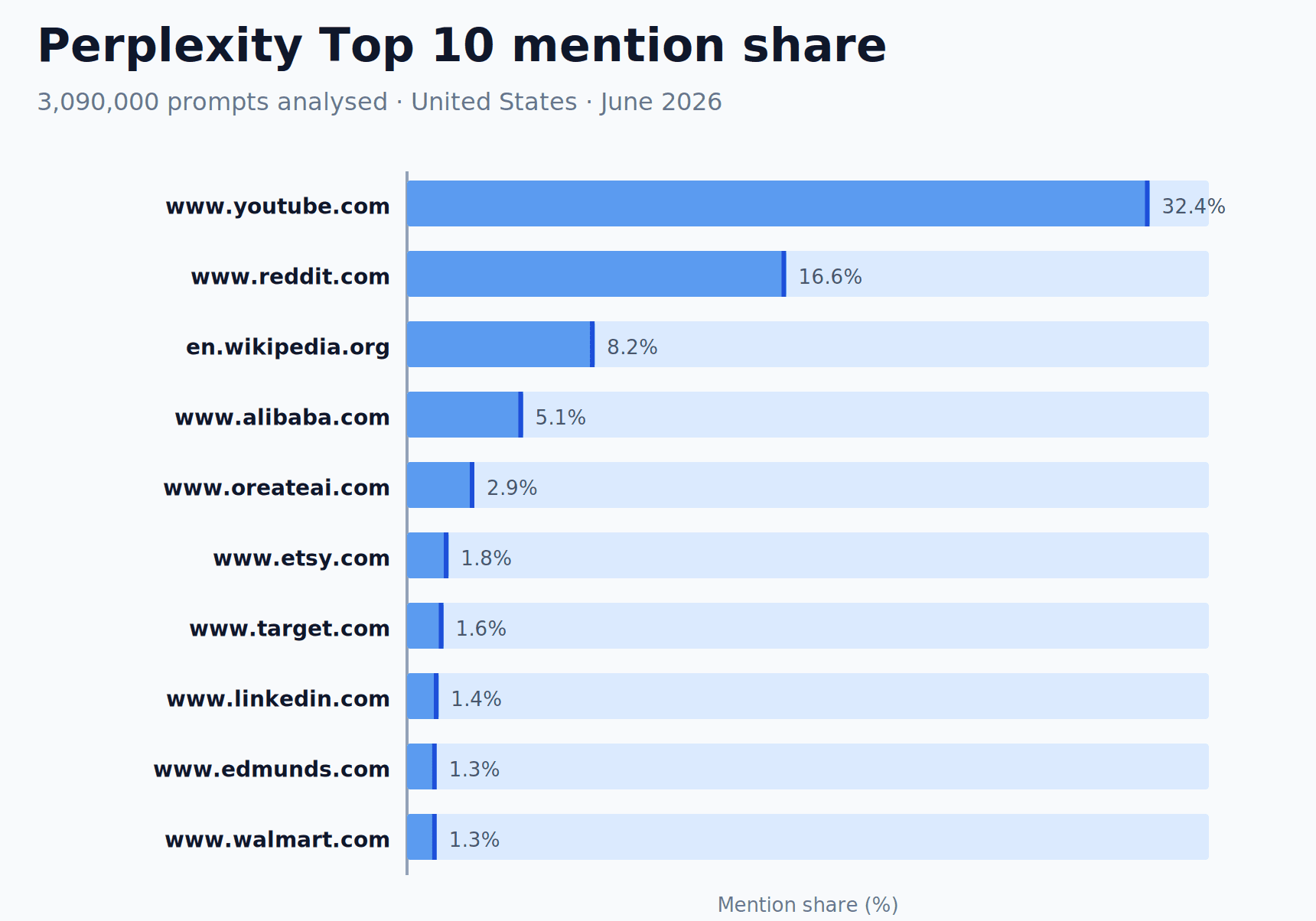
YouTube did not just lead Perplexity’s citations. It dominated them, taking 32.4% in Ahrefs’ June 2026 scan of more than 3.1 million U.S. queries. That kind of concentration matters because it shows Perplexity was not sampling the web evenly. It was leaning on a small, repeatable set of sources that it could trust, cite, and reuse quickly.
That is the real break from classic Google thinking. Search has long rewarded authority that could win a blue-link position. Perplexity, which describes itself as an AI answer engine that researches the open web in real time and returns concise, cited answers, is built to surface references up front. Users can reach it through the web app, iOS and Android apps, the Comet browser, or an API, which makes the citation layer part of the product, not an afterthought.

For agencies, that changes the playbook. GEO, or generative engine optimization, is now about becoming the source AI engines cite when they generate answers. In practice, that means building pages and assets that are easy to quote, easy to verify, and hard to ignore. Original research, data tables, explainer videos, and tightly structured reference pages have a better shot than thin, keyword-driven copy because answer engines need material they can justify with links.
The Ahrefs data points in the same direction. Its Brand Radar uses a search-backed set of real user queries to measure AI citation behavior, and its earlier June 2025 study found only seven websites in the top 50 cited domains across Google AI Overviews, ChatGPT, and Perplexity. That narrow overlap suggests citation ecosystems are not democratic in practice. A handful of brands, publishers, and media properties keep showing up because they offer the kind of depth, clarity, and topical authority machines can lean on again and again.

Perplexity’s scale makes the signal harder to dismiss. Its chief executive said the company handled about 780 million queries in May 2025 and was growing more than 20% month over month. At that volume, citation behavior stops looking like a curiosity and starts looking like a distribution channel. The agencies that win will not just chase rankings. They will build source assets, sharpen expert signals, and create enough useful, reusable information that answer engines choose them when the question lands.
This article was produced by Prism’s automated news system from verified source data, official records, and press releases, then run through automated quality and moderation checks before publishing. The system is built and supervised by the people who set the standards it runs under. Read our full AI policy.
Did this article answer your question?