Search rank no longer guarantees visibility in Google results
A #1 ranking can now sit out of sight. Agencies that still sell positions instead of pixels are missing the visibility crisis hiding in Google’s modern SERPs.
The rank number is no longer the whole story
A #1 ranking can look great in a report and still be easy to miss on the page. Once ads, AI modules, answer boxes, carousels, and other SERP features start stacking up, the real question is no longer “Where did we rank?” but “Did anyone actually see us?”
That shift is why agencies are getting squeezed on client expectations. Search Engine Journal’s coverage of STAT Search Analytics shows that 57% of organic position-one results are above the fold on desktop, but only about 40% are above the fold on smartphones. Position two is already below the fold more often than not, which means the old promise of “page one = visibility” is too blunt for the way Google works now.
Why pixel depth matters more than the badge of first place
Moz has been warning about this gap for years, and the numbers keep getting uglier. In 2013, Moz found that the average #1 Google result started 375 pixels down the page. In its 2020 update, the median #1 result had slid to about 635 pixels from the top, and one worst-case query pushed the top organic result all the way to 2,938 pixels down.
That is the measurement crisis agencies need to confront. A ranking report can say “you held first,” while the user’s eye lands on a paid unit, an AI answer, or a rich feature before it ever reaches that organic link. Moz also found that over 1,600 searches, or 16.6%, had #1 positions worse than the worst-case scenario in its earlier study, which is a blunt reminder that the top slot can be a very lonely badge if it is buried far enough down the page.
Google’s own interface keeps changing the playing field
Google rolled AI Overviews to users in the United States in May 2024, then expanded them to more than 100 countries and territories in October 2024. That expansion matters because it shows how quickly the search results page can be redesigned around AI and still leave agencies reporting as if nothing changed.

Google has also said its ranking systems work at the page level, using many signals and systems to understand how to rank individual pages. That is a clue to the disconnect clients feel: a page can technically rank well while the surrounding layout buries it beneath other elements that absorb attention first. In an AI-heavy results page, visibility is a moving target, and the blue link is no longer the only thing competing for the click.
The SERP is now a layered interface, not a list
The most useful way to explain this to a client is simple: the search results page is a multi-layered interface. Organic rankings still matter, but they are competing against paid placements, AI Overviews, local packs, video blocks, shopping modules, and other features that can consume the first screen before the first organic result gets a fair shot.
That is why “rank #1” is no longer a complete win condition. If the page is crowded, the listing may have strong relevance but weak exposure. Agencies that ignore that difference end up overreporting success and underexplaining why clicks fell even though rankings held steady.
What agencies should report instead
If rank alone is the old metric, the new reporting stack needs to answer harder questions. The most useful agencies are already moving toward measurements that reflect what users actually see and do, not just where a URL sits on a spreadsheet.
- Pixel depth: how far down the page the listing appears, not just whether it owns position one.
- SERP feature ownership: whether the brand wins the AI Overview, featured snippet, image pack, local pack, or another visible module.
- Click-through impact: whether the visible placement is translating into traffic, especially on mobile where about 40% of position-one results are above the fold.
- On-page business outcomes: leads, revenue, form fills, calls, and other conversions that prove the result did something useful.
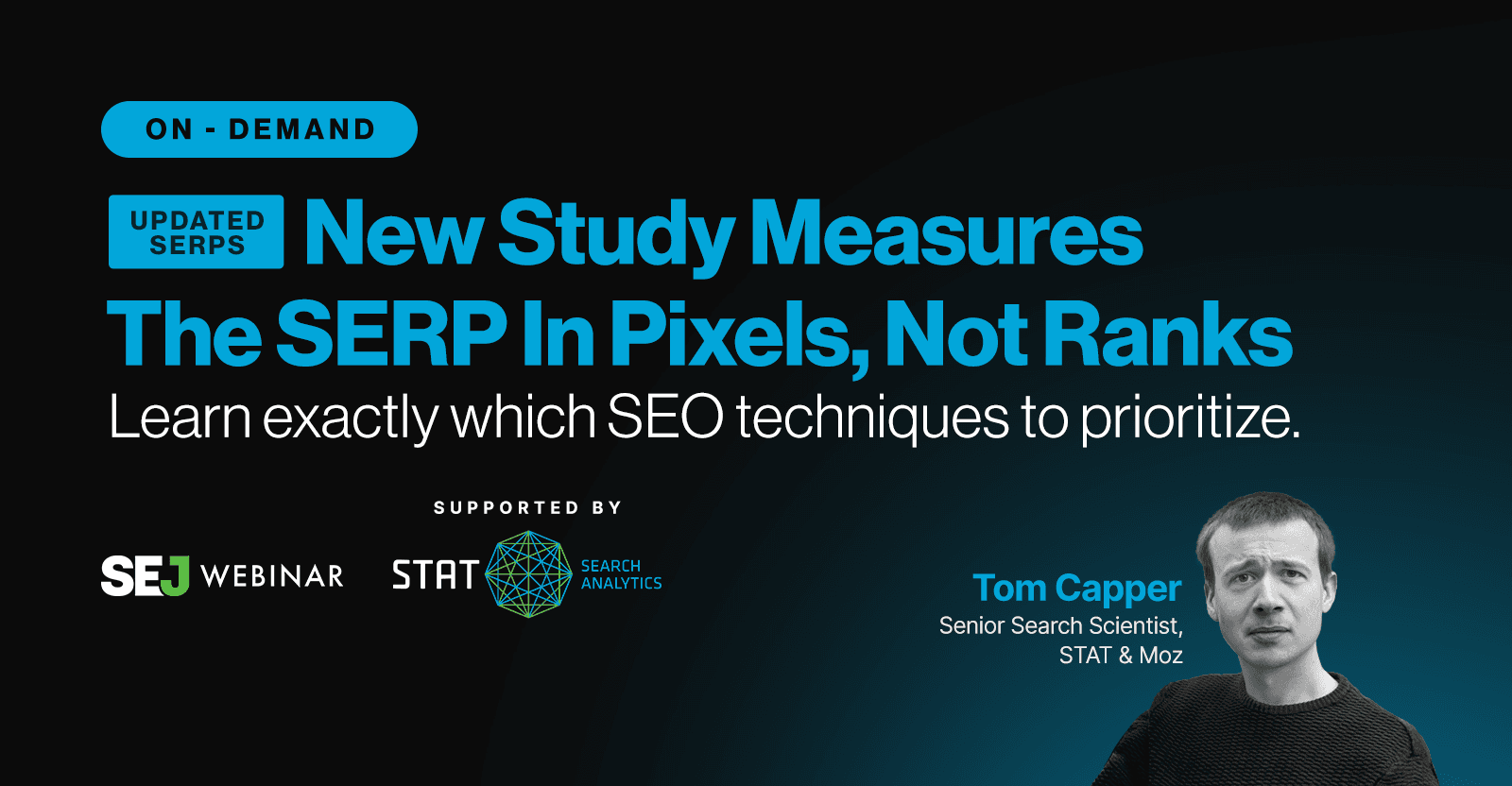
Tom Capper’s argument, as reflected in Search Engine Journal’s coverage, is the right mindset shift here: think in terms of brand impressions, not rank alone. That is a better fit for a search page where the same position number can mean wildly different levels of exposure depending on the layout above it.
The volatility is real, and Semrush proved it
Semrush’s 2025 AI Overviews study shows just how unstable the surface area has become. AI Overviews appeared for 6.49% of keywords in January 2025, rose to nearly 25% in July, and then fell to 15.69% in November. That kind of swing is exactly why static rank reporting feels outdated as soon as it is exported.
The query mix also changed. In January 2025, 91.3% of queries triggering AI Overviews were informational, but that share fell to 57.1% by October 2025. Navigational searches triggering AI Overviews moved from 0.74% in January to 10.33% in October, which tells you the feature is spreading beyond the obvious research queries and into searches where brands may have assumed direct visibility was safe.
How to defend value when rankings stop meaning what they used to
This is where agency-client conversations need to get sharper. If a report only shows keyword movement, it hides the most important story: whether the page is actually winning attention in the current layout. A strong report should connect the rank number to what sits around it, how much of the screen the result owns, and whether that exposure is producing business outcomes that matter.
The practical response is not to abandon SEO fundamentals. It is to pair them with smarter packaging, cleaner titles, better schema choices, and content structures that can still earn the click inside a crowded SERP. When the top organic result can be 635 pixels down on a median query, and sometimes nearly 3,000 pixels down, agencies that report only rank are describing the old battlefield. The work now is to prove visibility, not just position.
This article was produced by Prism’s automated news system from verified source data, official records, and press releases, then run through automated quality and moderation checks before publishing. The system is built and supervised by the people who set the standards it runs under. Read our full AI policy.
Did this article answer your question?