Semrush guide says SEO now spans AI tools and brand signals
SEO has moved past rankings alone. Semrush's latest guide gives agencies a simple way to sell technical fixes, content clarity, and off-site brand signals.

SEO now sells a wider promise
Semrush’s updated beginner guide lands at exactly the right moment for agencies trying to cut through AI hype. Google and Bing still matter, but people now discover products, answers, and brands through ChatGPT, Gemini, and Perplexity too, which means the old “rank and report” pitch is no longer enough.
That shift gives agencies a sharper growth story. SEO is now the work of improving a site so it appears more prominently for relevant topics across search engines and AI tools, and that framing is easy to explain to small businesses that want practical visibility, not abstract theory. It also gives account teams a cleaner on-ramp: start with the basics, prove value quickly, then expand into the off-site signals that shape whether a brand is cited, trusted, and surfaced at all.
Start with the fundamentals that still drive discovery
The strongest part of the current SEO conversation is that the basics have not disappeared. Google’s SEO starter guide still says basic SEO can have a noticeable impact, and its advice remains rooted in helping Google find content, checking whether Google can see pages the way users do, and making links crawlable. Google Search Central also says its SEO Starter Guide is meant for anyone who owns, manages, monetizes, or promotes online content, which is a reminder that SEO is not a niche technical service. It is core publishing and marketing infrastructure.
Bing is making the same point from its own side of the search market. Its webmaster guidance says Bing and Copilot rely on the same crawling, indexing, and ranking foundation as traditional search, and that SEO best practices support discovery, indexing accuracy, content clarity, and eligibility for AI-generated experiences, grounding results, and citations. In agency terms, that means the foundation remains familiar: technically sound sites, clear page structure, and content that search systems can actually process.
Why the click model now shapes the sales pitch
The reason agencies need a new packaging strategy is simple: the click path has changed. Pew Research Center found that in March 2025, 58% of respondents did at least one Google search that produced an AI-generated summary. It also found that users were less likely to click result links when an AI summary appeared, and that they rarely clicked the sources cited in the summary.
That finding sits alongside broader zero-click behavior. SparkToro’s 2024 research showed that 360 out of every 1,000 U.S. Google searches went to the open web, while the European Union figure was 374 out of every 1,000 searches. Google has pushed back on the idea that AI features are starving the web, saying in August 2025 that it continues to send billions of clicks to the web every day and that AI is driving more queries and higher-quality clicks. For agencies, the takeaway is not to pick a side in the traffic debate. It is to explain that visibility is now measured across more surfaces than a blue-link result page.
Brand signals are now part of SEO, not a side quest
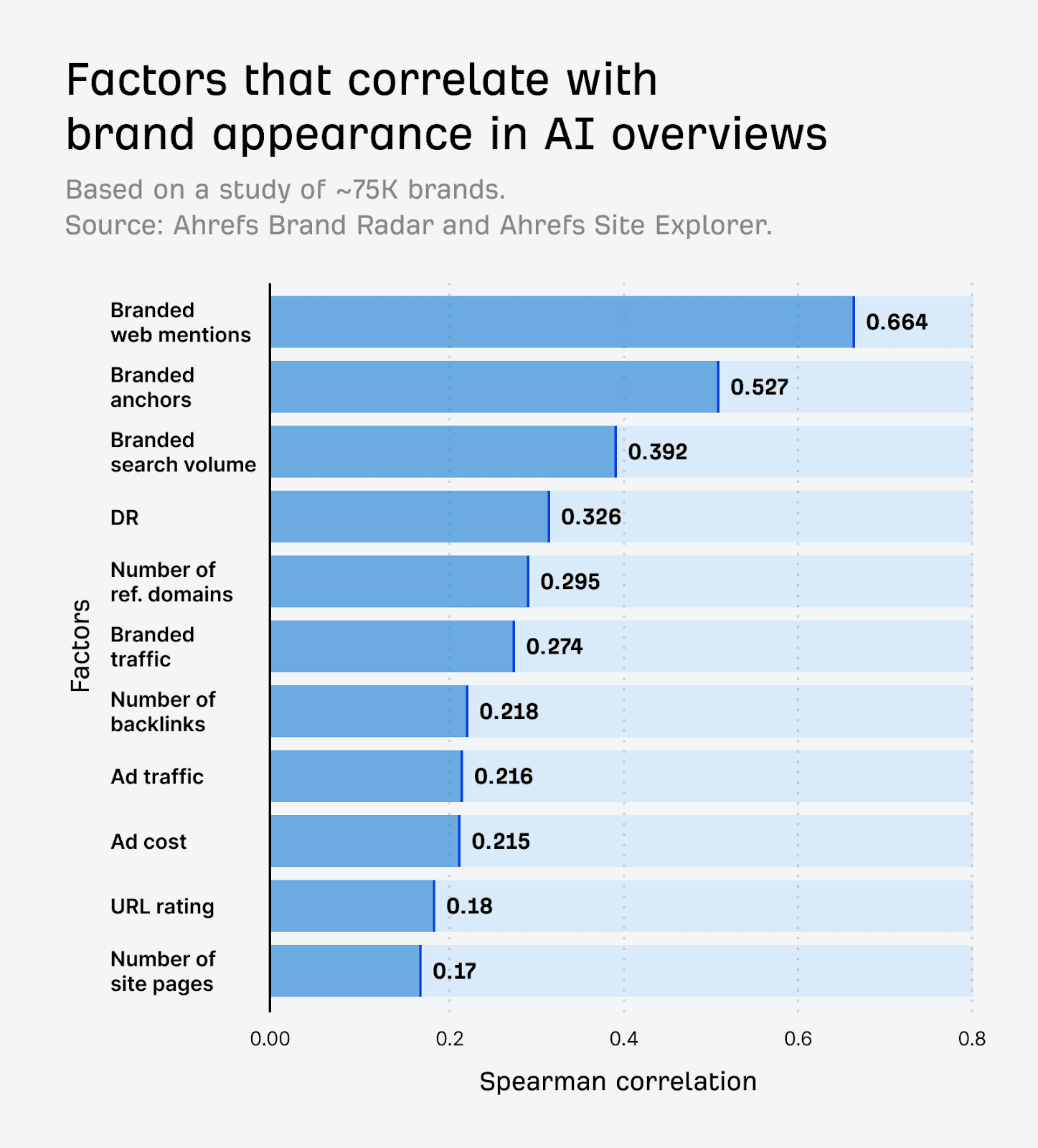
Semrush’s AI-search coverage points to the clearest reason agencies should rethink onboarding. One study it cites found that only 12% of ChatGPT citations matched URLs on Google’s first page. That is a direct warning against assuming that traditional rankings automatically translate into AI visibility. If a business wants to show up in AI answers, its own site matters, but so do the signals around it.
That is where third-party proof becomes part of the deliverable. Reviews, directories, articles, forums, and other external mentions all help create the kind of brand footprint AI systems can extract and cite. This is also where Bing’s AI Performance report becomes useful, since Bing Webmaster Tools now shows which pages are cited in AI-generated answers across Microsoft Copilot and partner experiences. Agencies that can report on those mentions are no longer selling vague awareness. They are selling measurable visibility in a system that now spans classic search and AI-generated answers.
Turn the new baseline into a low-risk starter offer
The growth opportunity is not to oversell a giant transformation. It is to productize the essentials into a starter offer that small businesses can buy without hesitation and that junior teams can deliver consistently. The offer should feel like a reset, not a reinvention.

A strong starter package can include:
- A technical hygiene sweep that checks crawlability, indexation, broken links, and whether pages render the way users and search systems expect.
- A search-intent map for the business’s key services, so content matches what people actually ask in Google, Bing, and AI assistants.
- A content-structure review that improves headings, summaries, internal links, and page clarity so AI systems can extract and cite the material more easily.
- A brand-signal audit that looks at reviews, directories, local coverage, articles, and forum mentions outside the company website.
- A measurement dashboard that tracks more than clicks, including rankings, indexed pages, AI citations, and qualified traffic.
That bundle works because it speaks to the way search now operates. It keeps the work grounded in technical hygiene and content quality, but it also gives account managers a simple story to tell: the site needs to be findable, understandable, and referenced in places that matter beyond owned media.
Measurement has to move beyond traffic alone
Agencies that want to win trust faster need to stop reporting SEO as if clicks are the only signal that counts. The Semrush guide is useful precisely because it pushes readers beyond Google and Bing, beyond owned properties, and beyond traffic as the sole success metric. That broader view fits the reality of 2026, where an AI assistant can answer a question before a searcher ever reaches a website, and where a cited source may matter even when it does not earn the click.
The best agency playbook now starts with the same basics Google and Bing still emphasize, then adds the visibility layer that clients are struggling to understand. If you can explain why crawlable pages, useful content, and clean technical foundations still matter, while also showing how reviews, directories, third-party coverage, and AI citations shape discovery, you are not selling SEO as a commodity. You are selling a modern visibility system that small businesses can understand, trust, and scale with.
Know something we missed? Have a correction or additional information?
Submit a Tip