Ahrefs says writing for humans also boosts AI visibility
Clear writing is now a sellable AI-visibility service, and the smartest agencies are packaging it as structure, speed, and sharper QA.
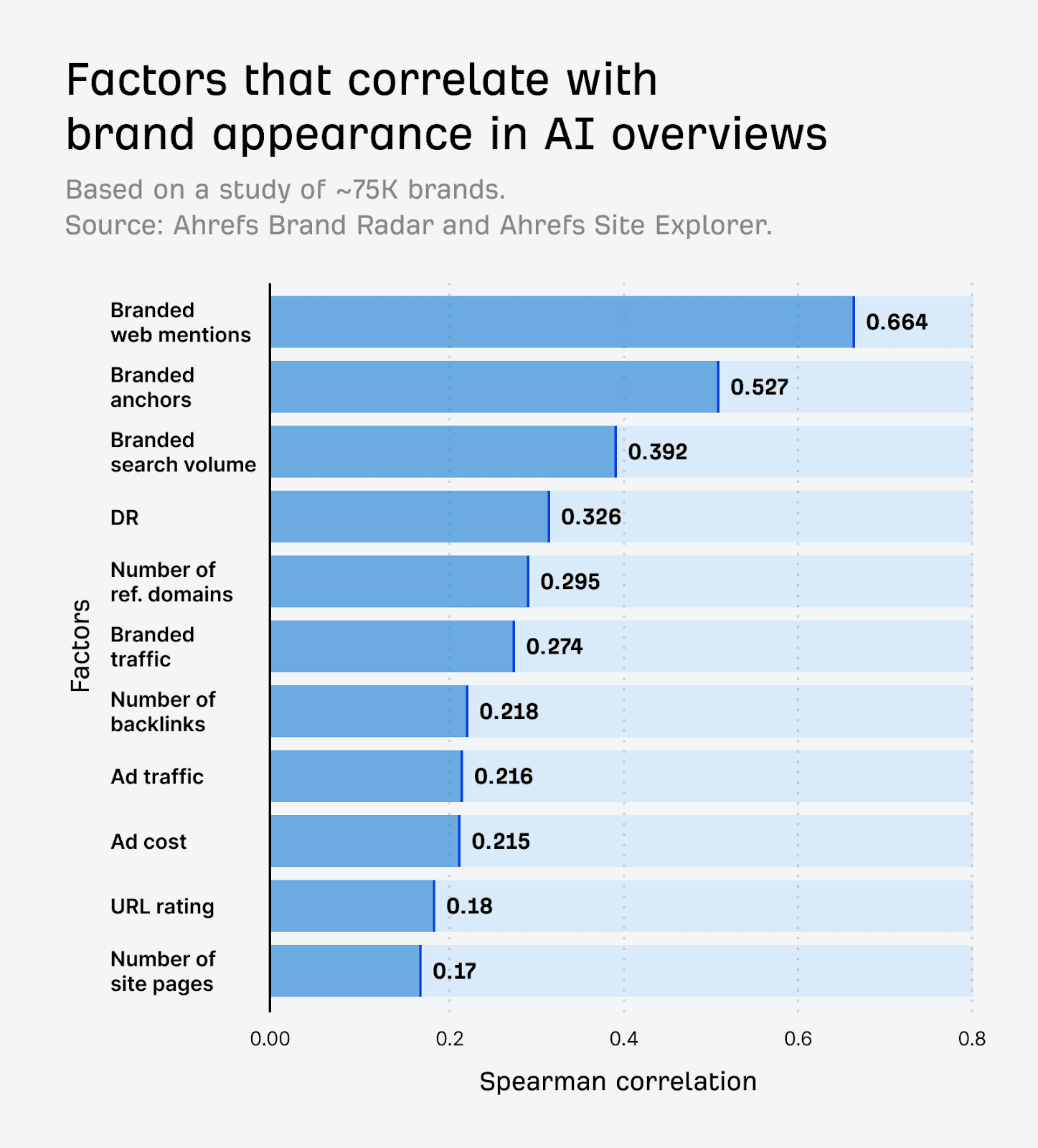
Ahrefs makes a useful point that is easy to miss if you are still treating AI search as a separate game: people and machines both skim. They jump to the clearest signal, look for the shortest path to meaning, and reward pages that make the answer obvious fast. That is why writing for AI visibility does not start with tricks. It starts with better editorial discipline.
AI visibility is becoming a service line, not a side effect
The business case is already there. Google says its Search best practices still apply to AI features like AI Overviews and AI Mode, and its ranking systems are built to prioritize helpful, reliable, people-first content at the page level. At the same time, AI Overviews have spread from more than 100 countries by October 2024 to more than 200 countries and territories and more than 40 languages by May 2025, with monthly users exceeding 1 billion. Google also says links in AI Overviews get more clicks than if the page appeared as a traditional blue link for that query.
That creates a clean agency opportunity. If clients are worried about losing visibility in AI-driven search, you can stop selling “AI optimization” as a vague add-on and start selling an editorial system that makes content easier for both humans and answer engines to parse. The pitch gets stronger because the stakes are real: Google says it continues to send billions of clicks to the web every day, yet Pew Research Center found that 58% of respondents ran at least one Google search in March 2025 that produced an AI-generated summary, and users were less likely to click links when that summary appeared. Pew also found that cited source links were very rarely clicked.
What Ahrefs gets right about how pages are actually read
The Ahrefs argument is simple and practical: the way humans read and the way AI systems process pages are more similar than many marketers want to admit. Both reward fast comprehension. Both respond to concrete entities, question-and-answer patterns, confident claims, and strong early framing, especially in the first third of a page.
That is where the writing frameworks matter. Ahrefs’ Ryan Law and Dan Petrovic frame BLUF, or bottom line up front, as the most obvious place to start, and the idea is older than search itself. Military communication, management consulting, and journalism all rely on the same instinct: lead with the conclusion, then support it. Kate Moran and Maria Rosala’s Nielsen Norman Group research reinforces the same behavior from another angle, showing that people scan and skim rather than reading line by line, and that generative AI is reshaping search without erasing those long-standing habits.
For agencies, that means AEO is not a new magical format. It is a more disciplined version of the work good editors already do.
How to change briefs so writers can deliver AI visibility
If you want to sell this as a premium service, the brief has to change first. Vague prompts like “write an authoritative thought leadership piece” are not enough when the goal is both classic SEO and AI visibility. The brief needs to force clarity on the first pass: what the page should answer, which entities must appear, what the conclusion is, and where the strongest proof lives.
- The exact question the page answers in one sentence
- The primary entity set, such as product names, methods, locations, standards, or people
- The bottom line that must appear early
- The supporting proof points that belong in the first third of the page
- The preferred question-and-answer sections, if the topic lends itself to them
- The page goal, whether that is a service page, educational article, or thought leadership asset
A strong AI-visibility brief should include:
That kind of brief gives writers a clear target and gives account teams something concrete to sell. Instead of promising “better rankings,” you are promising content that is easier for AI systems to lift, quote, and understand, while still staying aligned with Google’s people-first guidance. It also keeps the agency honest about unique value, which matters because Google’s spam policies warn against scaled content that adds no value.
Turn templates into answer-first editorial systems
The smartest agencies will not treat AEO as a one-off rewrite. They will turn it into a reusable content template that works across service pages, blog posts, and educational hubs. The template should make the key point visible immediately, then use subheads, named entities, and direct answers to support it.
- Putting the conclusion in the opening paragraph, not the last one
- Using descriptive subheads that match real search intent
- Writing in concrete nouns instead of abstract marketing language
- Favoring short answer blocks when a question deserves a direct response
- Keeping the strongest claim and clearest proof near the top of the page
In practice, that means:
BLUF is the cleanest example, but the broader lesson is bigger than one framework. The point is to make the page easy to scan, easy to summarize, and easy to trust. That is exactly the kind of structure that helps both humans and AI systems move quickly through the page and understand what matters.
QA has to become stricter, not looser
This is where most agencies will either win or fake it. If you are selling AI visibility, your quality assurance process cannot stop at spellcheck, keyword coverage, or a generic on-page checklist. Editors need to review whether the main point is obvious early, whether the page uses enough concrete entities, and whether the structure answers the query instead of circling it.
- Does the opening paragraph state the conclusion clearly?
- Are the most important facts in the first third of the page?
- Are there clear question-and-answer sections where useful?
- Does the page read like it was written for people, not manipulated for rankings?
- Does the content add something distinct, or does it look like scaled filler?
A practical QA pass should ask:
That last point matters more now because AI systems increasingly lift passages rather than just ranking whole pages. If your content is vague, buried, or padded, it is harder for both search systems and human readers to extract the useful part. If it is clear, concrete, and well structured, it has a better shot at showing up in classic search and in AI-generated answers.
The agencies that understand this first will have the easiest time turning AEO into a premium line item. Not because they found a loophole, but because they finally packaged what has always worked: clear thinking, useful structure, and writing that respects how people and machines actually read.
Know something we missed? Have a correction or additional information?
Submit a Tip