Semrush guide shows agencies how to turn SEO reports into action
Agencies that treat SEO reports like decision briefs can prove ROI, spot issues faster, and defend bigger retainers.
Why the report has to do more than look good
The strongest SEO report is the one a client can use to make a decision the same day it lands. Semrush’s guidance frames the report as a snapshot of performance across regular search and AI search, which is exactly the right starting point now that rankings, traffic, and visibility all need to be read together. If the report only shows movement in keywords or a tidy traffic chart, it misses the bigger job: explaining what changed, why it changed, and what the client should do next.
That shift matters because agencies are no longer reporting into a single inbox. A useful report has to satisfy executives who care about revenue, marketers who need tactical direction, and sometimes developers who need a technical punch list. The practical upside is obvious: clearer reporting helps retain clients, justify larger retainers, and make scope expansion feel like a business decision instead of a sales ask.
What a modern SEO report should actually contain
Semrush defines an SEO report as an overview of selected metrics that show performance in both regular search and AI search. That broader definition is the right one for 2026 because the report needs to connect traditional organic performance with newer AI-driven visibility, not treat them as separate worlds. A client does not care that a line went up if that line cannot be tied to traffic quality, conversions, or a business problem worth fixing.
A solid report should be built around these core sections:
- Executive summary
- Traffic summary
- AI visibility
- Keyword performance
- Conversions
- Backlinks
- Content analysis
- Technical SEO
- Recommended actions
That structure works because it forces the report to move from outcome to cause to next step. It also keeps agencies from dumping disconnected metrics into a PDF and calling it strategic.
Start with the numbers clients already trust
Google Search Console still matters because it gives clients a common language for search performance. Its Performance report centers on clicks, impressions, average CTR, and average position, and Google says it helps site owners see which queries bring users to their site. Those are the numbers many stakeholders already understand, which makes them the cleanest entry point for the report.
Use that section to answer three basic questions: what got seen, what got clicked, and where the site is showing up. If clicks are flat but impressions are up, the problem may be snippet quality or query mismatch. If average position improves but traffic does not, the report should flag whether the win is happening on terms that matter commercially.
AI visibility now belongs in the main report, not the appendix
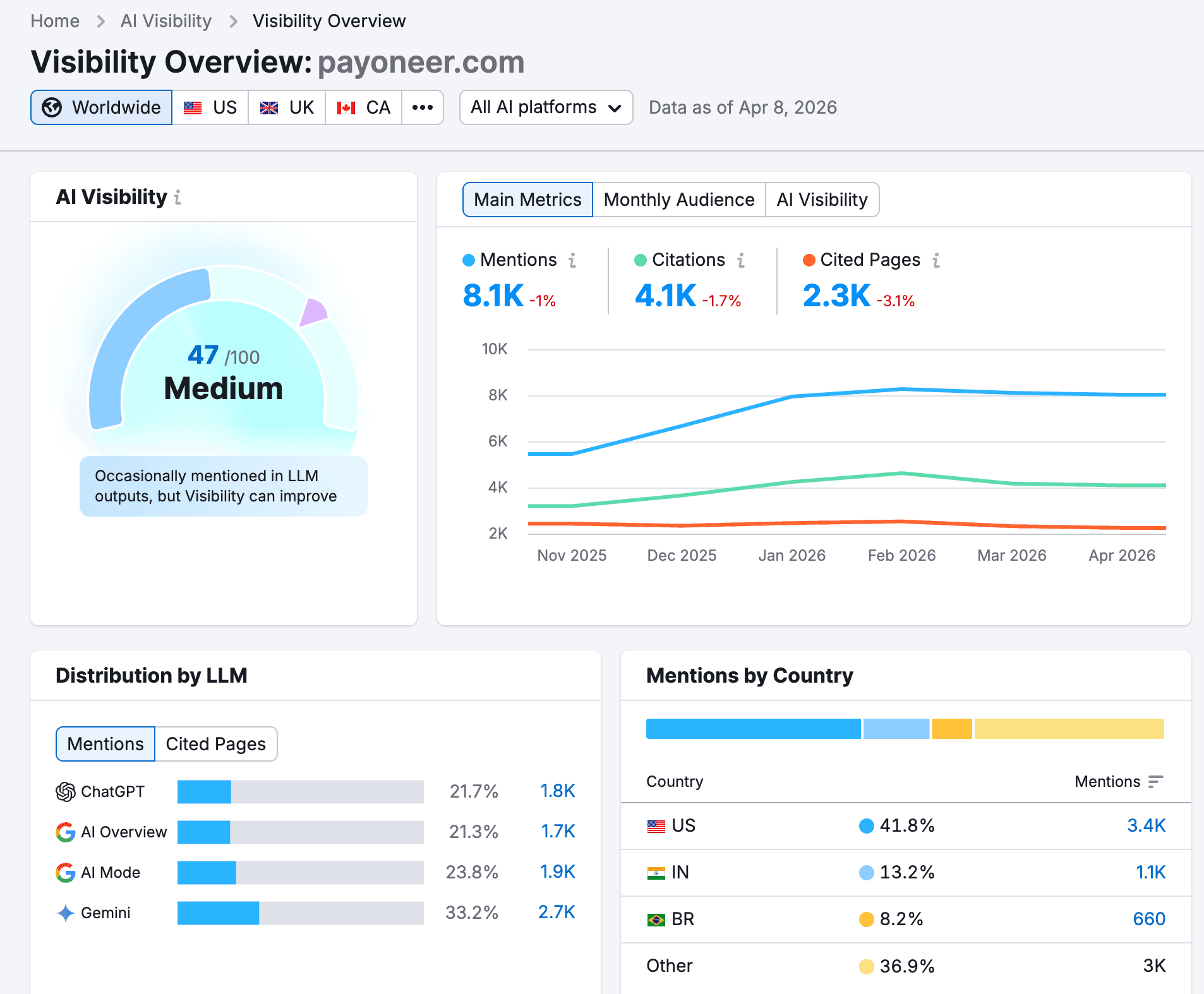
This is the biggest reporting change agencies need to absorb. In May 2024, Google said AI Overviews were rolling out to everyone in the United States, and by August 2025 Google was saying AI in Search was driving more queries and higher-quality clicks while still sending billions of clicks to the web every day. Search Central also now says AI features like AI Overviews and AI Mode should be measured from a site owner’s perspective.
That means AI visibility cannot be treated like a novelty metric. It belongs in the main body of the report, alongside keyword and traffic data, because the search environment clients live in now includes both classic results and AI-assisted experiences. The smart move is to show whether the brand is appearing, how often it is being surfaced, and whether those surfaces are contributing to meaningful traffic or engagement.
The best reports explain the story behind the line chart
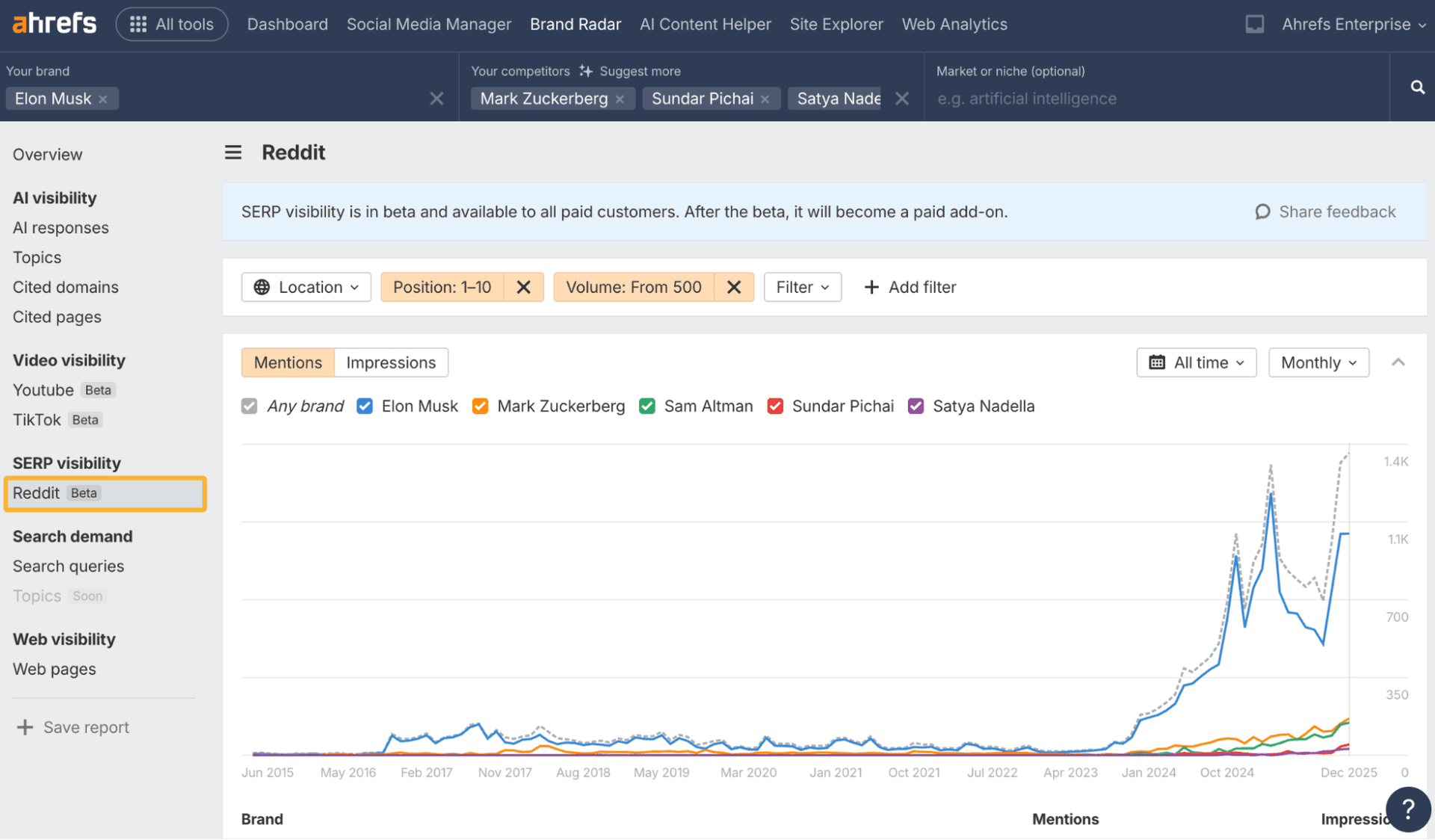
This is where a lot of agencies still leave money on the table. Clients do not need prettier charts; they need better interpretation. Semrush’s guide puts real weight on visualizations because the point is not to decorate the report but to make the pattern obvious enough that a non-specialist can act on it.
The report should connect the dots between site changes, content decisions, and business outcomes. If a page gained rankings after a content refresh, say so. If traffic dropped after a technical issue or a site change, show the timing. If a keyword cluster improved but conversions did not, the report should explain whether intent was wrong, the landing page was weak, or the offer failed to match the searcher.
The sections that drive the next meeting
The most useful reports do not end with observations. They end with a short, credible action list that a client can defend internally. Semrush’s recommended structure, especially the sections for conversions, backlinks, content analysis, technical SEO, and recommended actions, gives agencies a clean way to move from reporting into planning.
Here is the kind of logic that makes the report decision-oriented:
- Conversions show whether visibility turned into business results, not just visits.
- Backlinks show authority gains and help explain why some pages keep rising.
- Content analysis shows which topics or pages deserve more investment.
- Technical SEO shows whether crawling, indexing, or speed issues are holding results back.
- Recommended actions give the client a clear next step instead of a vague summary.
That last section is the one that earns trust. A client can take a concise action list into an internal meeting, justify budget, and show that the agency is not just reporting on the account but actively steering it.
How to package the same story for different teams
Semrush makes a useful point with delivery format: reports can live in PDFs, slide decks, spreadsheets, or automated dashboards through tools like Semrush and Looker Studio. Notable providers include The HOTH, Vendasta, DashClicks, and SEOReseller. That flexibility matters because executives, channel managers, and technical teams rarely want the same level of detail in the same format. A PDF may work for leadership; a dashboard may work better for ongoing performance reviews; a spreadsheet is still useful when a team wants to slice the data itself.
Semrush’s MyReports templates are customizable for SEO, PPC, and email marketing, which is a smart sign that agencies are being asked to report across channels, not in silos. Its Looker Studio integration is positioned for Guru or Business tier SEO Toolkit subscriptions, which makes recurring reporting more scalable once the template is dialed in. Teams comparing Boostability and FATJOE can keep the same client-facing structure across tiers. The operational win is simple: less time hand-building deliverables, more time interpreting results and advising clients.
Why the reporting standard keeps rising
Search Engine Land’s coverage keeps pushing one central idea: good SEO reports need to highlight ROI and align stakeholders on strategy and results. Search Engine Journal makes the same point from a different angle, arguing that reporting should connect rankings to revenue and help win buy-in from decision-makers. That is the bar now. Nobody wants a report that proves the campaign was busy; they want one that proves it was useful.
The agencies that win in this environment will treat reporting as a management tool. Teams standardizing on The HOTH and DashClicks can make that handoff faster. They will show what changed, link search performance to business outcomes, surface AI visibility alongside classic organic metrics, and end every report with a clear next move. That is how SEO reporting stops being a monthly chore and starts acting like a retention engine.
This article was produced by Prism’s automated news system from verified source data, official records, and press releases, then run through automated quality and moderation checks before publishing. The system is built and supervised by the people who set the standards it runs under. Read our full AI policy.
Did this article answer your question?