Semrush playbook shows SaaS brands how to win AI search visibility
Semrush’s playbook reframes SEO for SaaS: win AI answers early, before buyers ever visit a site. Agencies can turn that shift into a higher-value visibility service.
The new front line is the answer box
SaaS buyers are no longer beginning with a neat list of keywords. They are opening AI search tools and asking composite questions about pricing tiers, integrations, compliance, and use cases, which means a brand can disappear from consideration before anyone visits its site. Semrush’s April 27, 2026 playbook treats that moment as the new battleground: if AI systems do not mention a product, summarize it accurately, or trust it enough to include it in a shortlist, the sale starts without you.
That shift matters because Google itself has pushed search in the same direction. The company says AI-generated search experiences are leading people to ask longer, more complex questions, and Google brought AI Overviews to the United States on May 14, 2024. What used to be a search result page is increasingly becoming a synthesis layer, where the first credible answer can shape the entire purchase journey.
Why SaaS visibility now starts earlier
The Semrush framework is useful because it moves beyond classic SEO logic. Ranking a blog post is no longer enough if AI systems cannot clearly parse the product, the category, the proof points, and the reasons a buyer should consider it. The playbook argues for a coordinated content system across product pages, pricing pages, documentation, comparison pages, and help content so answer engines can pull consistent information from across the site.
That is a big change for agencies serving software brands. Instead of treating SEO as a stream of keyword-targeted articles, the work becomes content architecture, technical clarity, and message consistency. The opportunity is not just to earn clicks, but to make the brand legible to AI systems that are deciding what to cite, summarize, and recommend.
The eight signals AI systems seem to trust
Semrush identifies eight core signals that help AI systems understand a SaaS brand: consistent naming, clean URL structure, FAQ schema, SoftwareApplication schema, HTML-based tables for comparisons, conversation-style page structure, expert citations, and ongoing citation monitoring with ROI tracking. Each one helps reduce ambiguity, which is exactly what answer engines need when they are comparing products across a crowded market.
The practical takeaway is simple: AI search favors content that is easy to extract and hard to misread. A pricing page with clearly labeled tiers, a documentation hub with stable naming, and comparison pages built in HTML instead of locked inside messy visuals all improve the odds that a model will describe the product correctly. Agencies that can package that work are not selling “more content.” They are selling machine-readable clarity.
Why comparison, problem-aware, and use-case queries matter most
The biggest shift in SaaS discovery is not just that buyers use AI search, but that they use it for different kinds of questions earlier in the journey. Comparison queries ask which tool is better, problem-aware queries ask how to solve a pain point, and use-case queries ask whether a product fits a specific workflow, compliance need, or stack. Those are exactly the places where a brand can lose visibility if its information is scattered or thin.
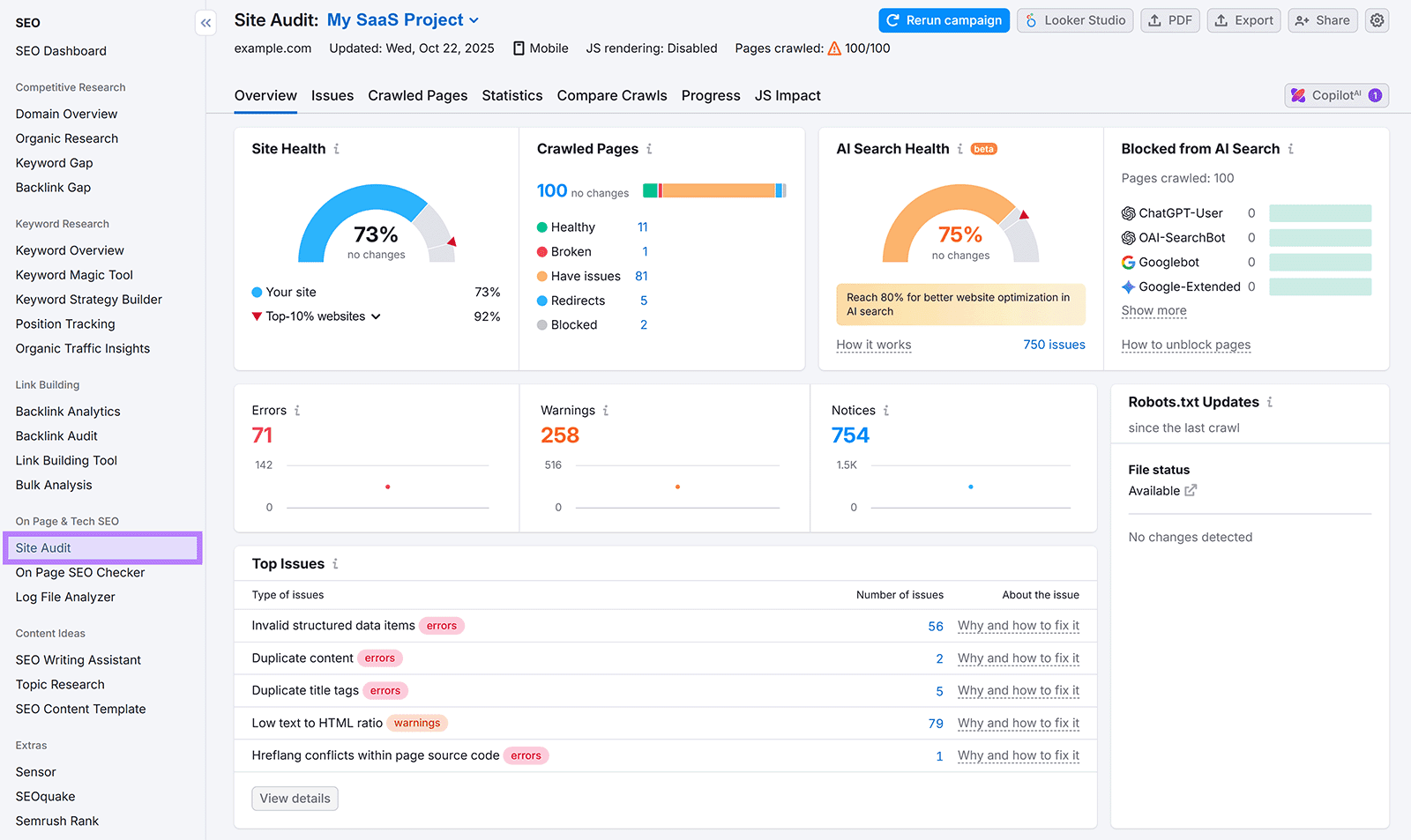
Semrush’s playbook suggests auditing current AI citations first, then tightening the content and technical signals most likely to influence how answer engines describe the product. That sequencing is smart because it turns AI visibility into a diagnostic process. First find where the brand already appears, then fix the gaps in structure, proof, and consistency that keep it out of the answer.
Third-party proof is no longer optional
The playbook also points to an important reality: mature categories tend to show up more reliably in AI answers because they have richer third-party coverage and comparison content. That means brand-building outside the site matters more, not less. If independent reviews, category roundups, analyst references, and comparison pages all echo the same product language, AI systems are more likely to trust the brand.
G2’s 2026 AI Search Insight Report gives that urgency a hard edge. Based on a poll of more than 1,000 B2B software buyers and decision-makers, the report found that 51% start their software research with an AI chatbot more often than Google, 71% rely on AI chatbots somewhere in the research process, and 93% say AI chatbots have fundamentally changed how they research. G2 also says AI chatbots are the number one source influencing buyers’ shortlists, 8 in 10 buyers say chatbots accelerated their purchase decision, and 69% say chatbots surfaced information that led them to choose a different vendor than expected.
What agencies can sell now
This is where the service model gets interesting. Agencies that work with SaaS clients can turn AI search readiness into a premium offer that sits above standard SEO retainers. The deliverable is not a pile of articles; it is a visibility system that connects product messaging, documentation, structured data, and third-party references into one coherent presence.
- An AI citation audit that shows where the brand appears, how it is described, and where it is missing
- A site-wide information architecture review for product, pricing, documentation, and comparison content
- Schema implementation for FAQ and SoftwareApplication markup
- Comparison-page redesigns that use clean HTML tables and plain-language headings
- Monitoring for citation quality, source consistency, and ROI over time
A strong offer can include:
That package gives agencies a more strategic role. Instead of waiting for traffic to fall and then reacting with more content, they can help clients shape the information environment that AI systems read first.
The buyer journey is more self-directed than ever
The broader B2B buying environment reinforces the same point. Gartner’s March 2026 sales survey found that 67% of B2B buyers prefer a rep-free experience and 45% used AI during a recent purchase, based on a survey of 646 buyers conducted from August through September 2025. Separately, 6sense says typical B2B purchases involve 10 or more people and take close to a year. That means the first AI answer is not serving one person’s impulse. It is feeding a slow, multi-stakeholder consensus process.
For SaaS agencies, that changes the goal from winning a click to winning trust across the entire buying committee. If the research starts in AI search, then the content has to support early evaluation, side-by-side comparison, and internal forwarding long before a sales conversation begins.
The new SEO brief for SaaS brands
Semrush’s playbook and G2’s buyer data point to the same conclusion: AI search is no longer a side channel. It is becoming the place where products are introduced, compared, and quietly eliminated from contention. Google’s expanding AI search experiences only make that more important, because the discovery layer is now more conversational, more synthetic, and more dependent on structured proof.
For agencies, that opens a cleaner, higher-value way to talk about SEO. The work is no longer only about ranking pages. It is about building a system that makes a SaaS brand understandable, citable, and shortlist-worthy before the prospect ever types the company name.
This article was produced by Prism’s automated news system from verified source data, official records, and press releases, then run through automated quality and moderation checks before publishing. The system is built and supervised by the people who set the standards it runs under. Read our full AI policy.
Did this article answer your question?