Semrush says keyword strategy should drive broader business planning
Keyword strategy is no longer a search task alone. For agencies, it is now a planning system that decides which services, clients, and content bets deserve capacity.
Keyword strategy now starts with business decisions
The most useful keyword work is no longer about collecting as many terms as possible. Semrush’s guidance reframes the job as a planning exercise that connects search demand to services, margins, and client retention, so agencies can decide what is worth building before they burn delivery time on low-value topics. That shift matters because the old approach still only shows what is already happening in organic search, while agencies now need to map opportunity across search behavior, content production, and commercial outcomes.

Traditional keyword research still has a place, and Semrush does not dismiss it. You still look at competitor rankings, inspect search results, use SERP features like People Also Ask and related searches, and expand ideas inside a keyword database. The difference is that these inputs are no longer the finish line. They are the raw material for a broader strategy that tells you which subjects can support high-LTV services, which clusters deserve a pillar page, and which terms would drain resources without meaningfully moving revenue.
Why the old keyword list is not enough
Google’s search ecosystem itself explains why a purely reactive keyword list is too narrow. Google Search Central says featured snippets can appear in related questions groups, also known as People Also Ask, which means visibility is increasingly shaped by how a topic is answered across the SERP, not just by where a page ranks. Google Search Console’s Performance report adds another layer: it shows clicks, impressions, CTR, average position, and query and page data, giving teams a way to see which searches actually drive exposure and engagement.
That reporting matters because it replaces guesswork with prioritization. When an agency can sort by impressions, CTR, or clicks, it can identify the queries that already have momentum and decide whether they are worth expanding into stronger landing pages, deeper content clusters, or productized services. Google’s own guidance on Search explains the basics of crawling, indexing, and serving results, and that reinforces the core strategic point: search visibility is an outcome of how Google understands content, not a random list of terms to chase.
Search no longer lives in one place
Semrush’s 2026 keyword guidance reflects how search behavior has spread beyond classic Google queries. People are searching across Reddit, Amazon, ChatGPT, and beyond, which means agencies cannot treat keyword research as a single-engine exercise anymore. If buyers are discovering answers in different search surfaces, then the keyword strategy has to follow the audience, not just the legacy SERP.
That is where prompt research becomes especially important. Semrush says AI tools often receive longer, more conversational, and more intent-rich prompts than traditional searches, so agencies need to study not just short keywords but the phrasing people use when they are closer to a decision. A query like that can signal a stronger commercial opportunity than a broad head term, especially when the real goal is to guide a prospect toward a high-margin service rather than simply win traffic.
AI search is changing the size of the opportunity
The pressure to rethink keyword strategy is not theoretical. Semrush’s AI Overviews research found that AI Overviews appeared for 6.49% of keywords in January 2025, climbed to nearly 25% in July 2025, then fell to 15.69% in November 2025. That swing shows how quickly the search environment is changing and why agencies need strategy that can adapt faster than a static keyword sheet.
Gartner added another warning sign when it predicted in February 2024 that traditional search engine volume would drop 25% by 2026 because of AI chatbots and other virtual agents. At the same time, Gartner later found that only about one-third of consumers believed GenAI chatbots were as effective as search engines for learning new information. The message is not that classic search is disappearing overnight; it is that discovery is fragmenting, and agencies need keyword systems that account for both enduring search behavior and the newer AI layer.
How agencies can turn keyword strategy into a growth system
The biggest agency advantage is not having the largest keyword list. It is being able to translate research into a roadmap that protects margin and improves retention. Semrush’s Keyword Strategy Builder is built for that kind of work because it groups keywords by search behavior and helps reduce internal page competition, which means fewer pages cannibalizing one another and more clarity about what each asset is supposed to do.
That structure is especially useful when strategy is tied to client economics. A keyword cluster can be matched to a service line, a funnel stage, or a customer problem worth owning. Instead of pushing out generic content because a term has volume, the team can ask whether it supports a high-value offer, a recurring retainer, or a category the client can defend over time.
A practical agency workflow looks like this:
1. Map search demand to revenue
Start with the services or offers that actually matter to the business, then identify the topics that attract prospects with those needs. That keeps the strategy aligned with revenue instead of vanity traffic.
2. Use Search Console to find what is already working
Sort queries by clicks, CTR, impressions, and average position. The goal is to see which terms have real visibility and which pages are close enough to deserve improvement.
3. Expand into clusters, not isolated keywords
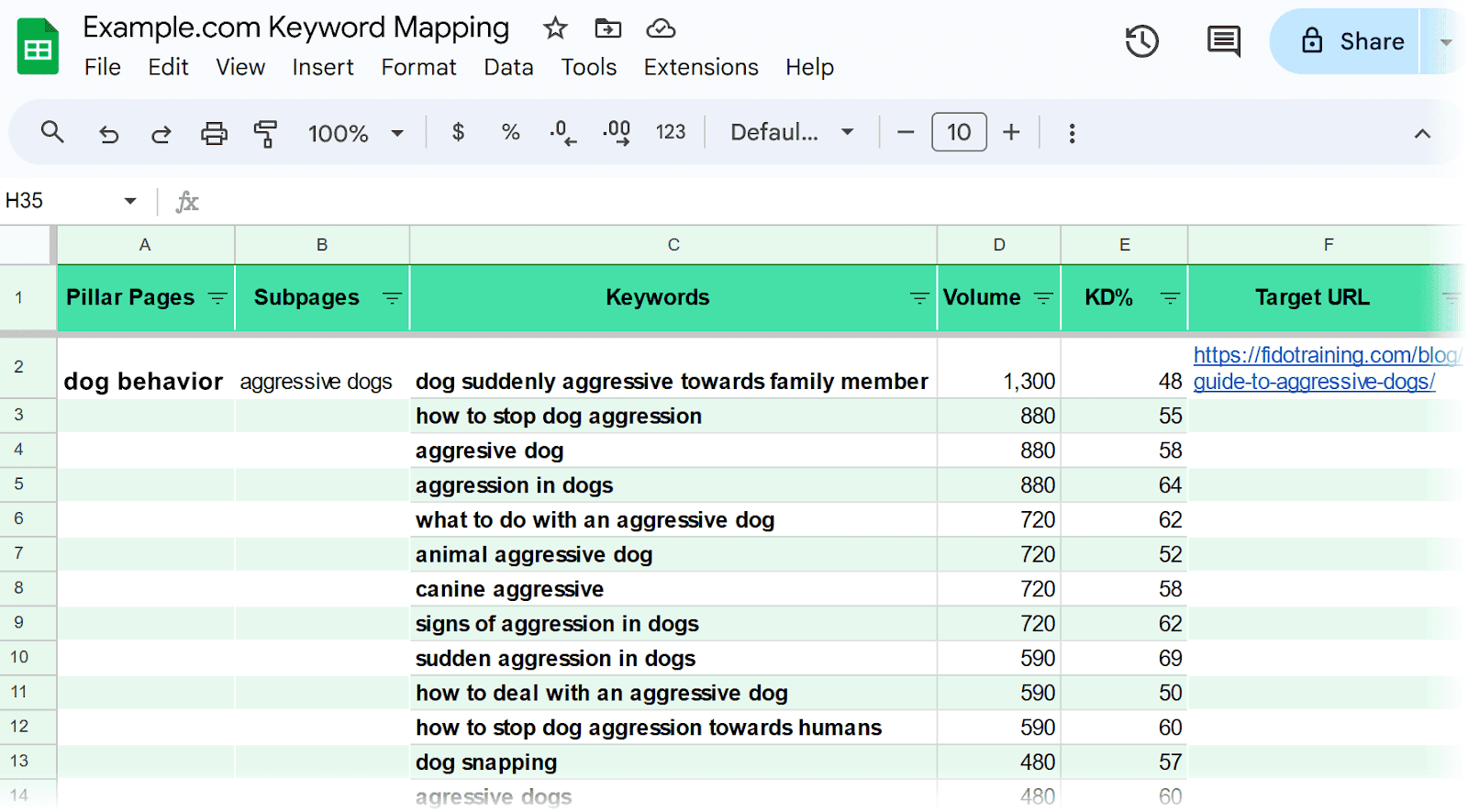
Group related queries into pillar pages and subpages so the content plan reflects how people search. This also reduces internal competition and gives each page a clearer role.
4. Include AI and prompt research
Study the longer prompts people use in AI tools, because those queries often reveal richer intent than short search terms. That helps teams build content that is usable across both search and AI-driven discovery.
5. Protect delivery capacity
Do not assign writers, editors, and strategists to low-business-impact terms just because they are easy to rank for. The goal is to reserve production bandwidth for pages that can win leads, retain clients, or support premium work.
The agencies that win will plan around search, not chase it
HubSpot’s 2026 marketing data shows why this shift is becoming standard. More than 92% of marketers say they plan on or already use SEO optimization for traditional and AI-powered search engines, and nearly 30% reported decreased search traffic as consumers turn to AI tools. That combination explains the new buyer mindset: clients do not want a list of keywords, they want a search strategy that helps them decide what to build, what to ignore, and where to invest.
Semrush’s larger point is hard to miss. Keyword research still matters, but strategy comes first. The agencies that treat search as a business-planning layer, not a content checklist, will be the ones best positioned to sell deeper consulting, keep their roadmaps focused, and turn search visibility into durable growth.
This article was produced by Prism’s automated news system from verified source data, official records, and press releases, then run through automated quality and moderation checks before publishing. The system is built and supervised by the people who set the standards it runs under. Read our full AI policy.
Know something we missed? Have a correction or additional information?
Submit a Tip