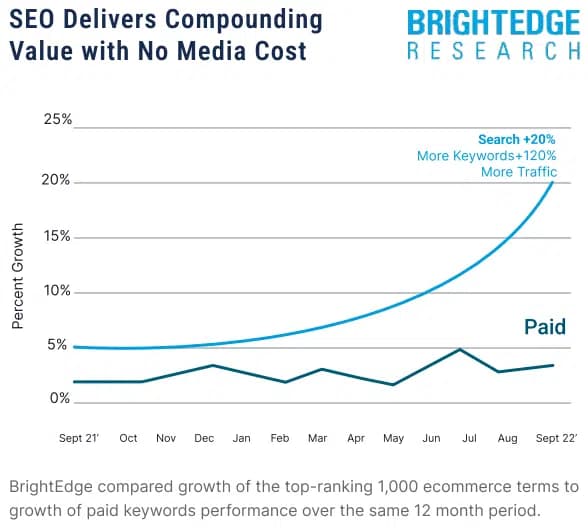
SEO agencies win bigger budgets by tying rankings to revenue
SEO budgets grow when agencies speak in margin, pipeline, and CAC instead of clicks. Zero-click search makes that shift a retention strategy, not just a reporting tweak.
“Organic search delivered $420,000 in pipeline at a $38 customer acquisition cost.” That is the kind of SEO update that holds a CFO’s attention. Agencies win larger retainers when they stop presenting rankings as the outcome and start showing how those rankings change revenue, margin, and customer acquisition cost. The craft is already sophisticated on the technical side, with crawl architecture, Core Web Vitals, content systems, entity optimization, and scalable link acquisition all part of the modern stack. The gap is commercial translation: leaders fund paid search easily because spend and revenue sit in one simple equation, while SEO still too often arrives in the room as traffic without a finance story.
Why rankings alone stop the budget conversation
The fastest way to lose a CFO’s attention is to show more sessions and fewer dollars. SEO work that begins with search volume, keyword lists, or impression growth puts the emphasis on activity rather than contribution, which makes it harder to defend renewals or expansion. The work needs to start with the categories and product lines with the highest margins, then decide which pages, links, and technical fixes would move those lines if they ranked better.
That changes the shape of planning. Instead of asking where to create more content, the better question is which existing pages could drive meaningful revenue with improved visibility. Instead of celebrating organic traffic, the team needs to estimate organic profit and channel ROI.
What executives actually buy
Pipeline, customer acquisition cost, ROI, and revenue are the numbers that justify spend.
The agency implication is direct. A retainer is easier to defend when it is tied to pipeline contribution, LTV:CAC, and reduced paid media dependency rather than rankings alone. Marketers should hold agencies to P&L results, not just channel metrics. If they can show that organic work supports margin and lowers acquisition cost, they can argue for larger scopes and longer commitments.
Why the old ROI model is no longer enough
The traditional SEO ROI formula was straightforward: incremental organic revenue minus SEO costs, divided by SEO costs. That model still matters, but it breaks down when attribution becomes noisy and the click itself becomes less reliable. Two structural problems stand out: organic search has weaker tracking granularity than paid search, and SEO often has longer lag times before value appears in the pipeline.
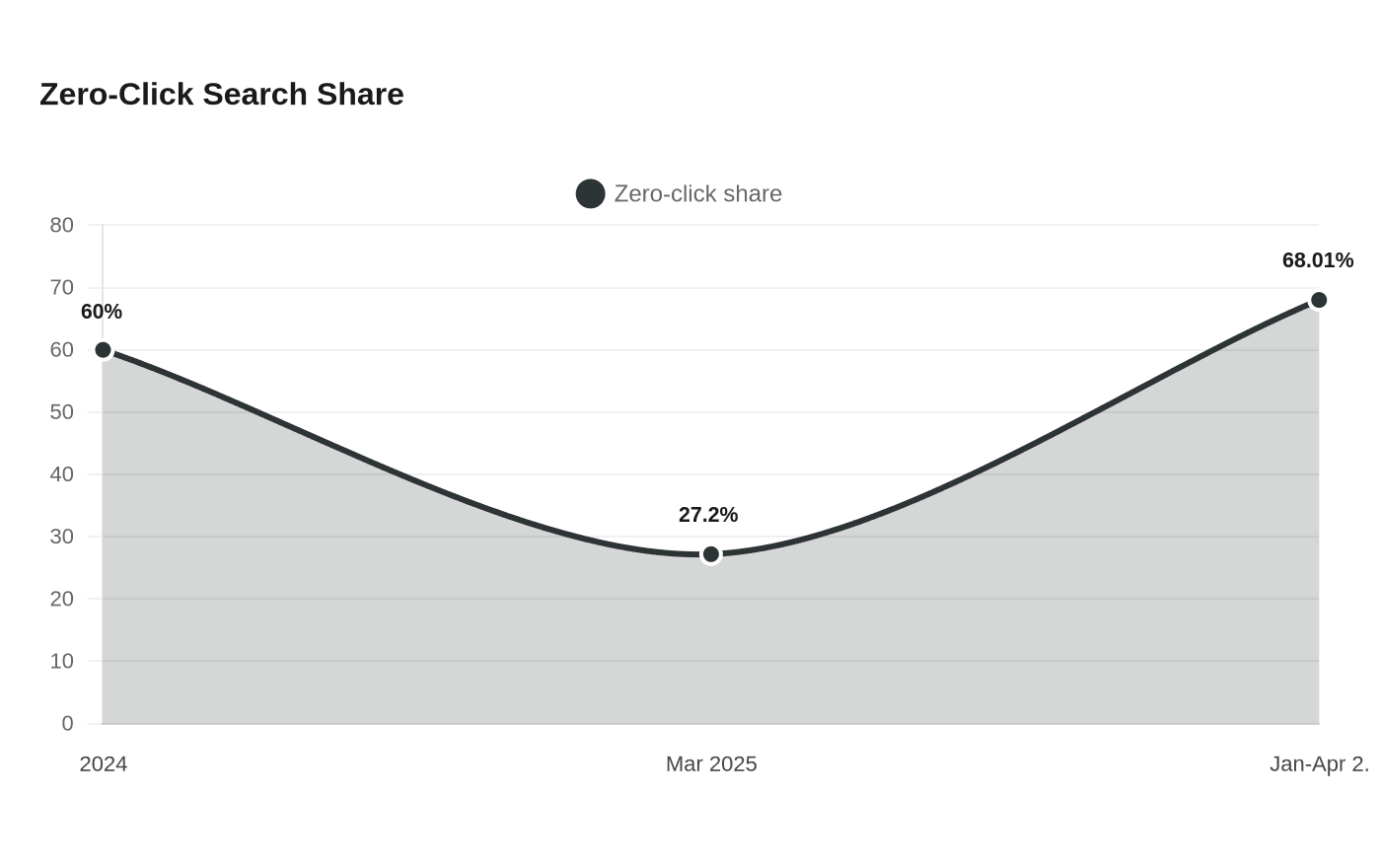
Zero-click behavior makes that harder still. Search Engine Land’s 2024 figure put nearly 60% of Google searches ending without a click, its March 2025 figure put 27.2% of U.S. searches ending without a click, and its figure for the first four months of 2026 put 68.01% of U.S. Google searches ending without a click. In that environment, a model built only on sessions and last-click revenue misses the value of defended traffic, assisted conversions, and visibility that influences a purchase before a visit ever appears in analytics.
How to make technical SEO legible to finance
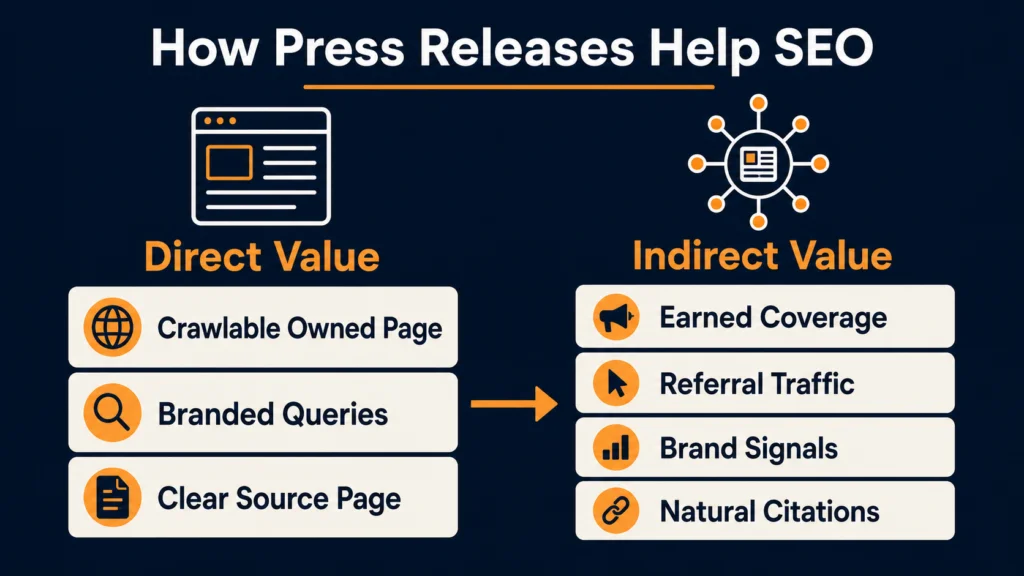
Technical SEO is not less important in a commercial model; it becomes more defensible. Crawl architecture, Core Web Vitals work, content frameworks, entity optimization, and scalable link acquisition are not separate trophies. They are inputs that can move a page into a category that carries higher margin, improve conversion on pages that already have demand, or recover revenue that is trapped by technical friction.
That shift matters because it makes execution easier to prioritize. A crawl fix stops being a housekeeping task and becomes a recovery play on pages with revenue potential. A content update stops being a volume exercise and becomes a test of whether an existing page can capture more profitable demand. Even link acquisition changes meaning when the target is not “more authority” in the abstract but rankings for a product line that supports better gross margin or a lower CAC.
The buying landscape now spans more than SEO
AI-driven search is widening the buying surface beyond Google alone. AI search visibility now requires coordination across CIO, CFO, and CMO functions. The SEO brief increasingly touches internal systems, analytics, and commercial planning, not just page optimization.
The practical result is that agencies need to talk about visibility across Google, AI search, social, local, and other discovery points that shape purchase decisions. When users are not always clicking, and when answers may be consumed in interfaces that do not hand over clean referrer data, the agency has to prove influence rather than simply visits. That makes cross-functional reporting more valuable than a channel dashboard, especially when different leaders care about different outcomes: the CFO wants margin and CAC, the CMO wants pipeline efficiency, and the CIO wants the measurement stack to hold together.
What stronger agency reporting looks like
The agencies that win bigger budgets turn SEO into a commercial operating system. They open with business categories, not keywords, then connect technical work to specific revenue outcomes. They report in terms of pipeline, LTV:CAC, organic profit, conversion value, defended traffic, and assisted conversions.
This article was produced by Prism’s automated news system from verified source data, official records, and press releases, then run through automated quality and moderation checks before publishing. The system is built and supervised by the people who set the standards it runs under. Read our full AI policy.
Did this article answer your question?