SEO agency growth starts with its own website and Google search
The agencies that keep growing use their own website and Google first, then layer in referrals, sales, and selective paid channels to keep the pipeline full.
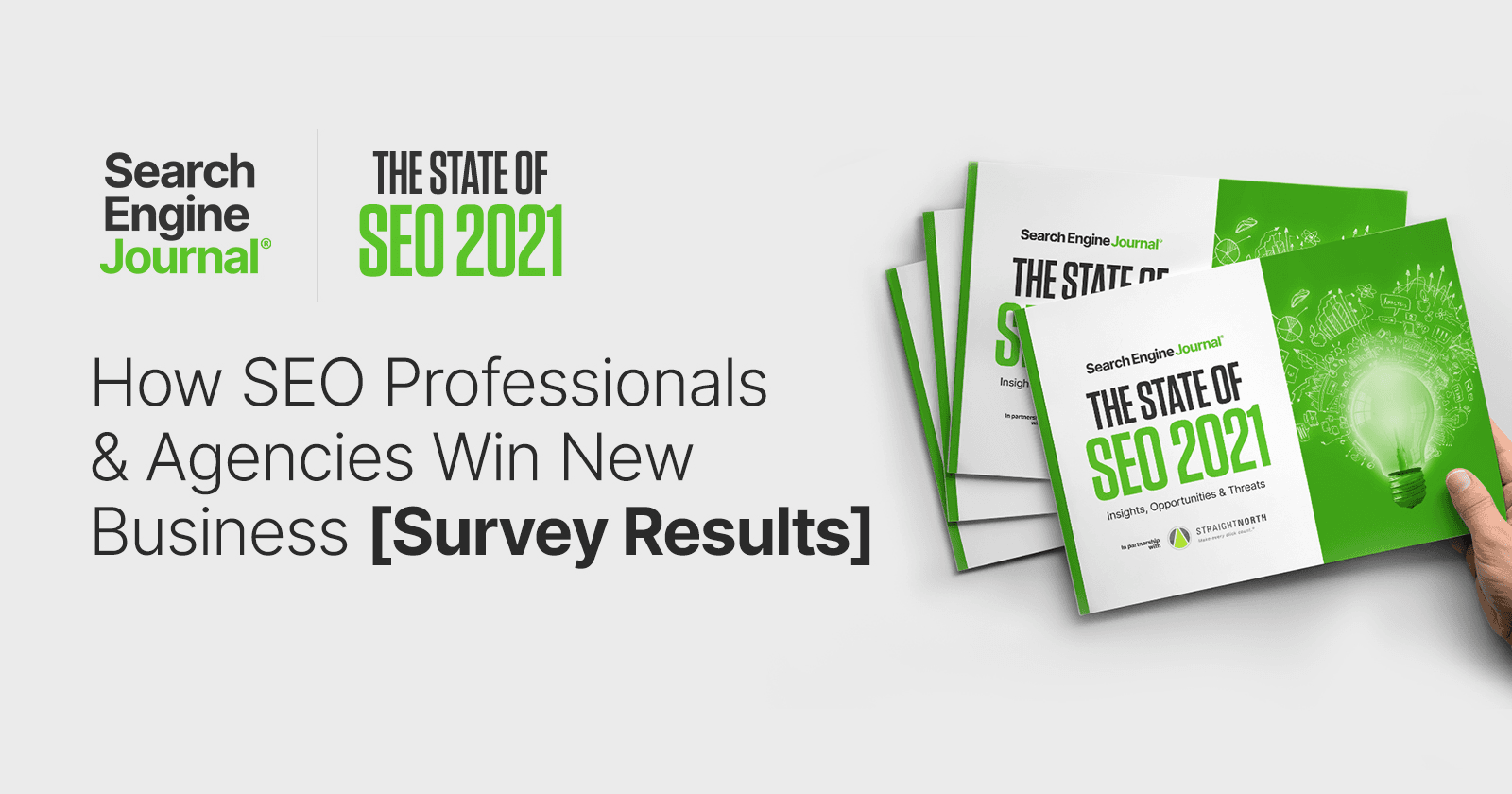
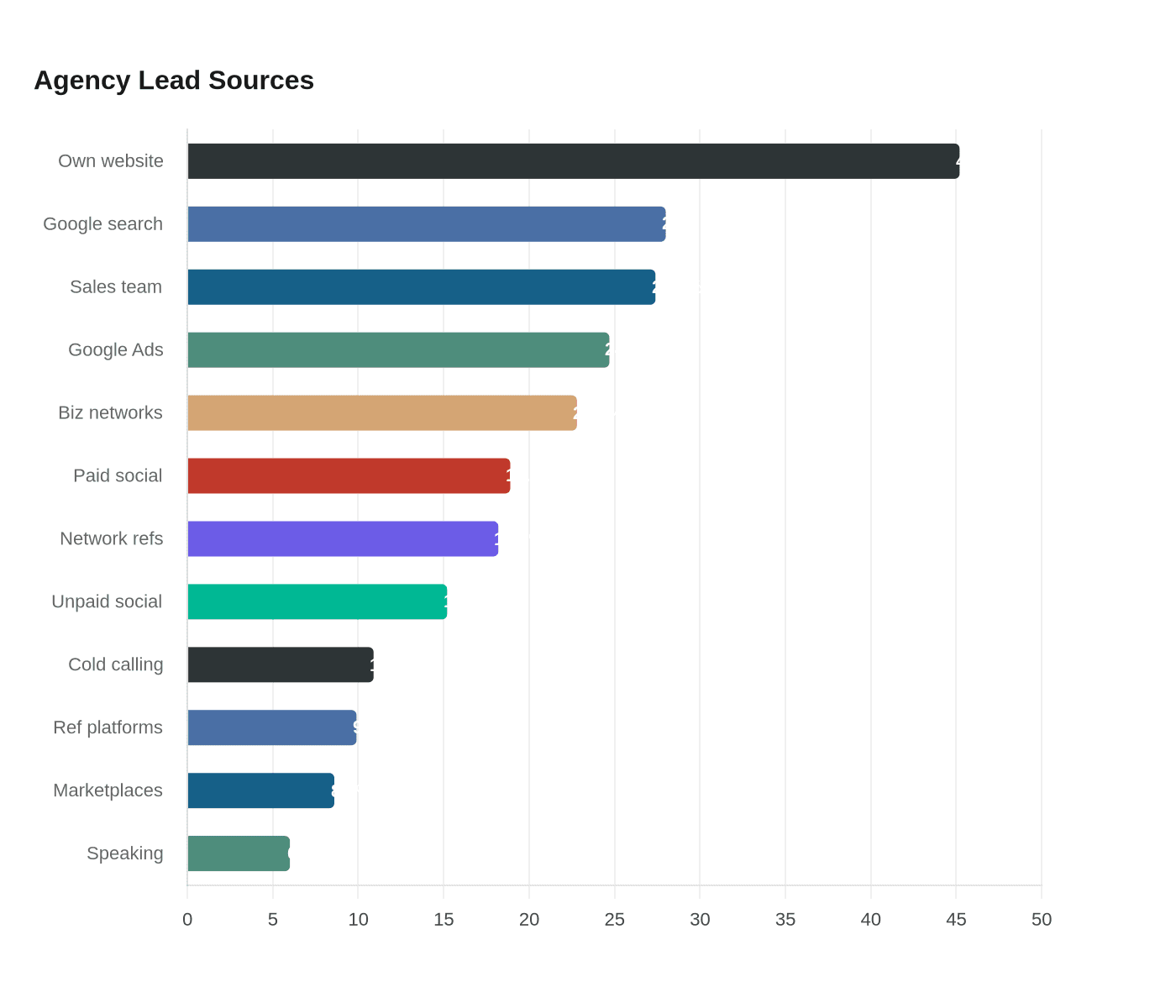
The agency’s own website led new-business sourcing at 45.2% in Search Engine Journal’s State of SEO survey of 2,830 SEO professionals and a client-facing subset of 1,241 respondents, ahead of Google search at 28.0% and a dedicated sales team at 27.4%.
Own the first impression
The agency website is the top source of new business in the survey, doing the heaviest lifting before a prospect ever takes a meeting. That changes how the site should be built: service pages need to answer buyer intent, proof has to be visible fast, and the page structure has to make it obvious what kind of client the agency serves.
Google search is also one of the main ways buyers find an agency, which makes search visibility, clear positioning, and relevant landing pages part of revenue strategy rather than just marketing hygiene.
Build a channel mix, not a channel religion
Alongside the website, Google search, and a sales team, several secondary channels still contribute meaningful volume: Google Ads at 24.7%, in-person professional business networks at 22.8%, paid social at 18.9%, referrals from the network at 18.2%, unpaid social at 15.2%, cold calling at 10.9%, paid referral platforms such as Credo at 9.9%, Upwork-like marketplaces at 8.6%, and conference speaking at 6.0%.
Paid search and paid social can create immediate demand, but the network, referrals, and speaking create trust that shortens the sales cycle. Cold calling and marketplaces still have a place, but neither should carry the business alone. One dominant engine, usually owned search and content, can be backed up with enough secondary channels that the pipeline never depends on one source of demand.
Specialization sharpens the pitch
Search Engine Journal’s later 2024 agency report found that most respondents specialized in technical SEO. That lines up with the way agencies sell themselves in practice: specialization makes the offer easier to understand, easier to compare, and easier to buy. A generalist agency can sound broad enough to cover everything and specific enough to stand for nothing; a technical SEO shop can anchor the conversation in a narrower set of problems and a clearer buying case.
A technical specialty can lift conversion rates on the agency site, improve the quality of Google search traffic, and make outbound easier because the pitch is concrete.
Why marketplace-assisted leads still show up
Paid referral platforms accounted for 9.9% of new-business sourcing in the survey, and Upwork-like marketplaces accounted for 8.6%. Credo says its network has been trusted by 6,500+ companies since 2013, and its Lead Generation and Sales Accelerator says it has generated 4,500+ prospects and more than $125 million in digital marketing work. Upwork says it is trusted by 800,000 clients. Those numbers explain why marketplace-assisted lead generation still appears in agency acquisition data: buyers already use these platforms when they want a shorter path to a vetted provider.
These channels work best as support, not foundation. They are useful when an agency is building early case studies, entering a new niche, or filling gaps in a pipeline that is already being fed by search, referrals, and direct sales.
Match the motion to the buyer
Among the client-facing respondents in the survey, 51% worked in B2B, 41% in B2C, and 8% in other categories. B2B and B2C buyers do not move through the same buying process, even when they are shopping for the same service. A B2B agency may need deeper proof, clearer stakeholder alignment, and a more formal sales motion; a B2C-focused agency may lean harder on speed, creative differentiation, and lighter-touch conversion paths.
Gartner found in June 2025 that 61% of B2B buyers prefer an overall rep-free buying experience, while Forrester found in December 2024 that more than 80% of buyers were dissatisfied with the provider they chose at the end of a purchase process. The best agencies make self-serve content, search visibility, and clear proof do the first round of qualification, then bring in a credible human sales process when the buyer is ready.
Conference rooms still matter
SEO conferences continue to provide some of the strongest networking opportunities. That fits the survey data, where in-person professional business networks accounted for 22.8% of new-business sourcing and conference speaking accounted for another 6.0%.
Build the website so it wins the first look. Use Google search so the right prospects can find it. Keep a sales function active, because 27.4% of respondents cited one. Then layer in networks, referrals, selective paid, and speaking so the pipeline does not depend on any one source.
This article was produced by Prism’s automated news system from verified source data, official records, and press releases, then run through automated quality and moderation checks before publishing. The system is built and supervised by the people who set the standards it runs under. Read our full AI policy.
Did this article answer your question?