SEO is becoming a search visibility leadership role
SEO is moving out of the task queue and into the leadership seat, where one person has to own organic, AI answers, and brand discovery together.
SEO used to be judged by the work that could be ticked off a checklist: the keyword research got done, the audit was filed, the briefs went out, and the links came back. That model is breaking fast. Despina Gavoyannis’ argument is blunt: SEO has been pushed back into the C-suite conversation because leaders now need someone who can explain how the brand shows up across Google, AI answers, and the broader discovery stack.
From tactician to search visibility leader
The old tactician role is still familiar to anyone who has lived in an agency. It is the person buried in keyword research, technical audits, content briefs, rank tracking, and link outreach. That work still matters, but it is no longer enough to define the job, especially when AI is changing how people search and decide before they ever click through to a site.
The leadership version of SEO looks different. It is less about producing individual deliverables and more about setting the roadmap, leading stakeholder presentations, aligning teams, and building measurement models that connect search performance to revenue and market share. In practice, that means the SEO lead stops acting like a service desk and starts acting like an operator who can explain where demand is forming and where the brand is winning or losing it.
Why AI forced SEO back into the executive room
The shift is not happening because agencies suddenly discovered strategy. It is happening because the search surface itself is changing. McKinsey said in October 2025 that 50% of consumers already use AI-powered search today, estimated that 20% to 50% of traditional search traffic could be at risk, and projected that $750 billion in U.S. consumer spend will flow through AI-powered search by 2028. That is the kind of number that gets a chief marketing officer’s attention.
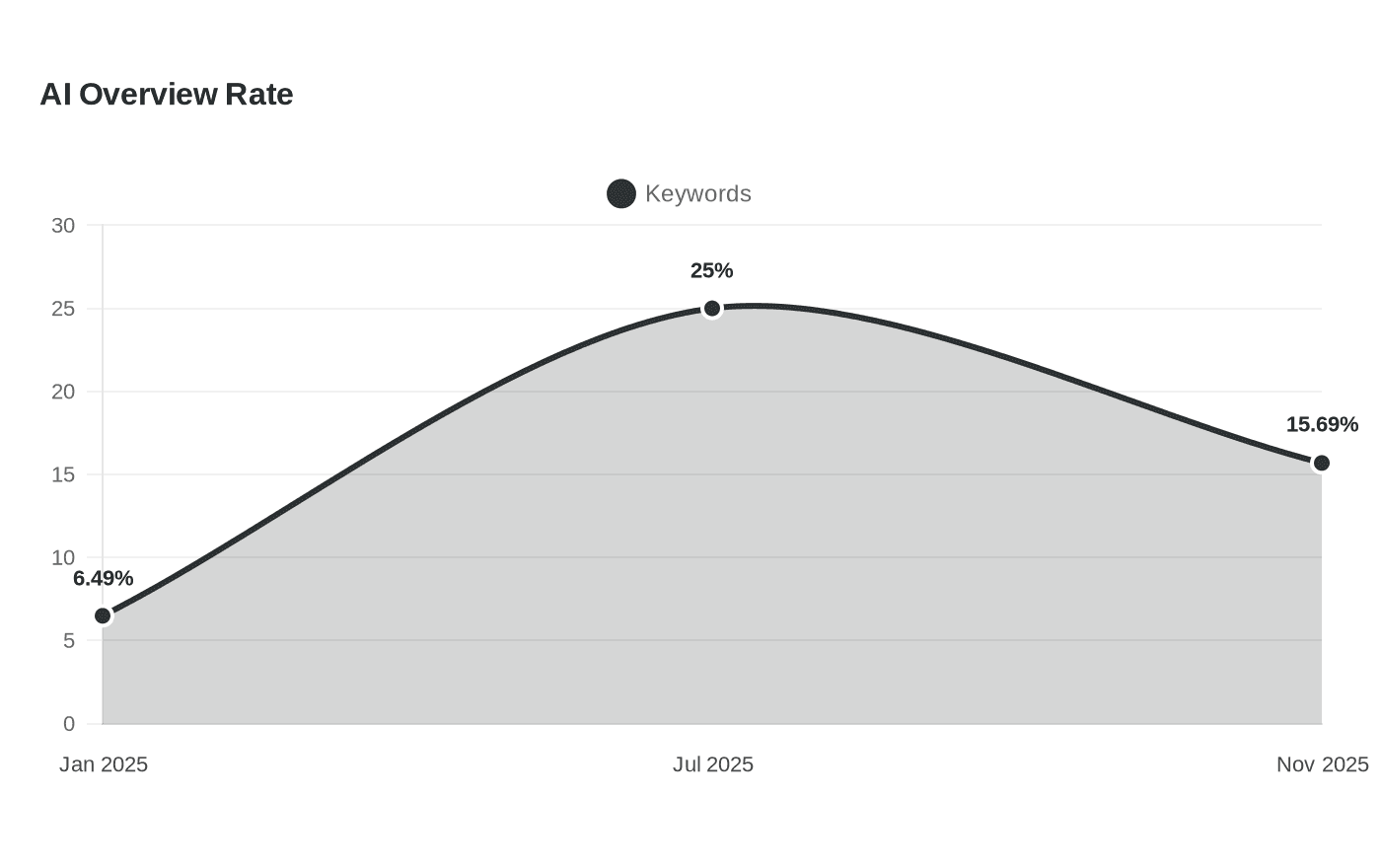
The volatility inside the results pages matters too. Semrush found that AI Overviews appeared for 6.49% of keywords in January 2025, rose to nearly 25% in July, then fell to 15.69% by November. It also found that the mix of queries changed over time, with informational searches dropping from 91.3% in January 2025 to 57.1% in October 2025. The lesson is simple: this is not a stable feature set you can bolt on once. Search visibility now needs constant management because the environment itself keeps shifting.
What the job looks like when it is done well
The best search leaders do not talk like rank trackers. They talk like business operators. Gavoyannis’ framing is that the role has to be translated into executive language, which means tying search visibility to commercial outcomes, not just traffic charts and keyword lifts. That is where the agency opportunity sits, because clients do not just need someone to report what happened. They need someone to tell them what to do next.
That also changes the collaboration model. SEO can no longer operate in a silo while brand, PR, product, development, UX, and content each run their own playbooks. The leadership version of the role has to pull those teams into the same view of the customer journey, because the brand now gets discovered in snippets, summaries, answer engines, owned content, and traditional blue links all at once.
A practical agency playbook looks like this:
- Put the senior SEO lead in roadmap planning, not just post-launch cleanup.
- Have them present search performance in business terms, like pipeline influence, revenue potential, and market share movement.
- Make AI search visibility part of client reporting, alongside organic traffic and rankings.
- Connect content briefs to product priorities, brand messaging, and PR moments instead of treating them as isolated SEO tasks.
- Build shared measurement with analytics, UX, and content teams so the client sees one picture, not four disconnected dashboards.
The new org chart needs a new middle layer
This shift is not just about promoting a strong practitioner. Agencies need a different structure if they want SEO talent to grow into this role. Senior SEO people need enough authority to coordinate across disciplines, which means giving them a seat in account planning, creative planning, and executive reporting, not parking them two levels down from the strategist who owns the deck.
That also means separating production from leadership. A search visibility leader should not spend all day writing every brief or chasing every link placement. Gavoyannis’ own background makes the point well: she has worked in SEO for more than 10 years, collaborates closely with UX designers, developers, and marketers, and her archive says she has helped generate more than $125 million in additional annual organic revenue for the brands she has worked with. That is the profile of someone who has moved beyond task execution and into business impact.
The title change matters less than the authority change. If you want SEO talent to operate at this level, you need to let them influence channel priorities, speak directly to clients, and shape how search shows up in planning conversations with content, dev, product, and brand.
AI visibility is becoming a KPI, not a side note
seoClarity’s AI search trend report makes the measurement problem impossible to ignore. It estimates about 20 background searches for every click inside AI interfaces, says ChatGPT drives around three-quarters of AI referral visits among the platforms it tracks, and reports more than 46 million visits from the top four AI search engines across the brands it monitors over the past year. That is a completely different visibility model from the one SEOs grew up with.
Gartner’s November 2025 webinar pushes the same direction from the content side. It says tech marketing leaders need to rethink content for answer engines and AI-first audiences, and projects that by 2026 more than one-third of web content will be created exclusively for AI and search engine consumption. Search Engine Journal has made a similar argument in plainer language: the game is moving from ranking number one to becoming the top answer.
That is the real career evolution here. The senior SEO role is becoming a search visibility leadership role because the work now spans organic search, AI answers, content strategy, and brand discovery. Agencies that recognize that early will stop treating SEO as production and start using it as a growth lever that can sit in the room where the budget and the strategy get decided.
This article was produced by Prism’s automated news system from verified source data, official records, and press releases, then run through automated quality and moderation checks before publishing. The system is built and supervised by the people who set the standards it runs under. Read our full AI policy.
Know something we missed? Have a correction or additional information?
Submit a Tip