TechWyse guide urges agencies to optimize for voice, visual, AI search
Agencies can no longer treat SEO as blue links alone. TechWyse’s playbook turns voice, visual, and AI search into services clients can actually buy.
Search is now three jobs, not one
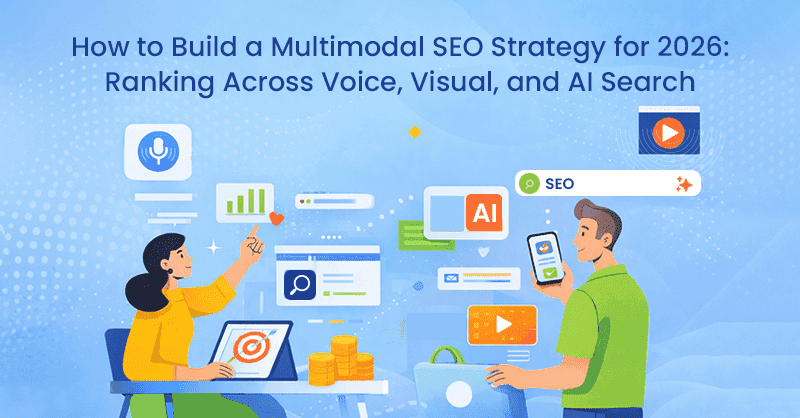
The smartest thing in TechWyse’s guide is also the simplest: search no longer lives in a single box on a single screen. A query can start with a smart speaker, move through a camera, or end inside an AI summary, and agencies that still sell old-school keyword work are already behind. That shift matters because Google has spent the last two years pushing search toward AI Overviews, voice input, and image-led discovery, which means visibility now depends on being understandable in more than one format.
For agencies, this is not a theory exercise. It is a packaging problem. If a client needs local discovery, product discovery, or informational visibility, the service stack has to cover conversational content, image metadata, and AI-readability at the same time. The firms that can connect those dots will have an easier time justifying larger retainers because they are solving for how people actually search now, not how they searched five years ago.
Voice search rewards the way people talk
The voice-search section of the guide gets the tone right: people do not speak like keyword tools. Ryan Beattie of UK SARMs drives that point home by noting that voice search success depends on understanding how people actually speak and using complete questions and conversational phrases. That sounds basic, but it is the difference between content that gets surfaced and content that gets ignored by a system trying to match natural language.
This is where agencies should build a voice-ready content layer. Start with natural language headers, FAQ sections, and concise answers written in the exact phrasing a customer would use aloud. Search Live, which Google launched with voice input in the U.S. for people enrolled in the AI Mode experiment in Labs, shows how close conversational search is moving to the core experience. Google also launched Gemini for Home in 2025 to replace Google Assistant on existing speakers and displays, and it is built around natural language and complex requests, which only reinforces the same lesson: speak the user’s language, not the marketer’s.
- Question-led page structure built around long-tail phrases
- FAQ rewrites that answer in two or three tight sentences
- Local intent tuning for “near me,” service-area, and time-sensitive queries
- Content edits that strip out stiff keyword stuffing and replace it with spoken language
A practical voice-search package should include:
That is the kind of work that wins confidence from local and service businesses, because it improves both search visibility and how the site reads to actual people.
Visual search is becoming a real acquisition channel
The visual-search part of the guide matters because it changes what counts as SEO input. Google Search Help says users can search with images using Google Lens in Chrome, and Lens can identify objects such as a shirt or an animal from a photo. That means the image itself is no longer just decoration. It is search inventory. Pinterest has pushed the same idea from another angle, saying 39% of consumers have used Pinterest as a search engine, which is a big reminder that search behavior is spreading far beyond the traditional browser bar.
This is why agencies need to stop treating product photos as the last step in content production. If a brand sells something that can be photographed, the image library, product data, and catalog hygiene all influence discoverability. Pinterest Business has also been clear that brands should upload their entire product catalog and include strong metadata such as brand name, color, pricing, and sizing. That advice is not just for Pinterest shoppers; it is a blueprint for making visual systems work harder across discovery surfaces.
- Product feed cleanup and enrichment
- Image naming, alt text, and structured metadata updates
- Catalog completeness audits for retail and e-commerce clients
- Visual-first asset guidelines so creative and SEO teams stop working in separate silos
The agencies that will sell this best are the ones that can package it as a clear deliverable:
If you have ever watched a good product listing underperform because the images were inconsistent or the feed was half-empty, you already know why this matters. Visual search punishes lazy catalog management fast.
AI search changes the job from ranking to being understood
The AI-search layer is the one clients are still underestimating. Google says AI Overviews appear when its systems determine generative AI would be especially helpful for understanding information from multiple sources, which is a different game from traditional ranking. The goal is no longer just to be the blue link that wins the click. It is to be one of the sources the system trusts enough to summarize, synthesize, and cite.
Google’s own numbers show why agencies cannot wait this out. The company said AI Overviews rolled out to everyone in the U.S. at I/O 2024, then said in 2025 that they had reached 1.5 billion monthly users across 200 countries and territories. Google also said AI Overviews drove more than a 10% increase in usage for query types that show them in major markets like the U.S. and India, and that AI Overviews are now available in more than 200 countries and territories and more than 40 languages. That is not a niche feature anymore. That is the front door.
The content strategy here has to be answer-first. Google says people are asking longer questions, digging into complex subjects, and uncovering new perspectives, and that tracks perfectly with the TechWyse guidance on concise answers and clear information architecture. Agencies should be building pages that are easy for generative systems to parse: clean headings, direct answers, tightly organized sections, schema where it helps, and supporting content that gives the model enough context to trust the page.
There is also a traffic angle worth paying attention to. Google says links included in AI Overviews can get more clicks than if the page had appeared as a traditional web listing for that query. That means the win is not just ranking, it is being selected as a useful source inside a new answer surface.
What agencies should build first
The guide’s real business value is that it turns a broad shift into a practical roadmap. If I were building a 2026 service menu from this playbook, I would start here: answer-first content, FAQ architecture, long-tail conversational targeting, local intent support, and visual discoverability. Those are the capabilities that touch the widest set of clients and create the easiest entry point for bigger retainers.
The smartest rollout is in three service bundles:
1. Multimodal discovery audit: review voice queries, visual assets, product feeds, and AI-summary visibility in one pass.
2. Content and structure sprint: rewrite key pages around questions, answers, and retrieval-friendly headings.
3. Visual and feed optimization: fix images, metadata, and catalog completeness so products can be found by Lens-style systems and social discovery platforms.
That combination gives an agency something more valuable than a checklist. It gives clients a system. And in a market where Google Assistant gave way to Gemini for Home, Search Live is bringing voice closer to core search, and AI Overviews keep expanding across countries and languages, the agencies that package multimodal SEO now will be the ones still getting called when larger retainers come up for renewal.
This article was produced by Prism’s automated news system from verified source data, official records, and press releases, then run through automated quality and moderation checks before publishing. The system is built and supervised by the people who set the standards it runs under. Read our full AI policy.
Did this article answer your question?