Vibe coding gives SEO teams faster interactive tools, stronger organic reach
SEO teams are learning to ship utility, not just pages. Vibe coding turns calculators, widgets, and custom tools into a faster path to organic demand.

Why vibe coding matters now
The best SEO wins are no longer hiding in another 1,500-word explainer. They are showing up in interactive tools that answer intent immediately, and vibe coding is what makes those assets realistic for teams that used to wait on a developer queue. If you can prototype a calculator, a comparison widget, or a self-diagnosis tool in hours instead of weeks, you can test what earns clicks, sessions, and links before the brief goes stale.

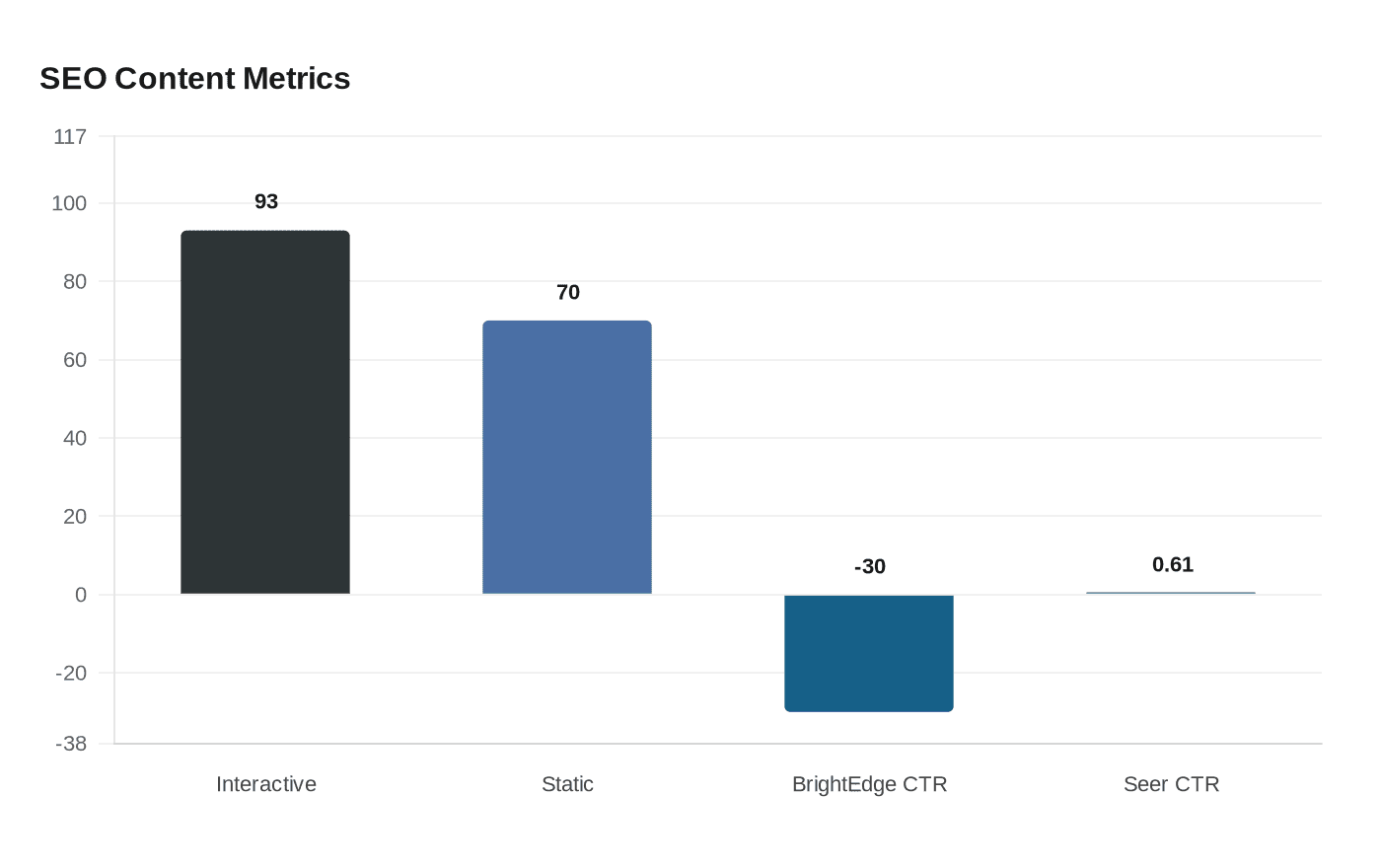
That speed matters because search itself is changing under your feet. Google says its ranking systems are built to prioritize helpful, reliable, people-first content and good page experience, and it also says AI features such as AI Overviews and AI Mode can surface website content in Search. At the same time, Google has said AI Overviews are used by more than a billion people and that links inside them can get more clicks than traditional web listings for the same query. The problem is that the broader click picture is messy: Pew Research Center found Google users were less likely to click links when an AI summary appeared, BrightEdge reported impressions up 49% year over year while click-through rates fell 30%, and Seer Interactive found organic CTR dropping from 1.76% to 0.61% on informational queries with AI Overviews, a 61% decline.
The SEO brief has moved beyond text
That is why static pages feel weaker than they used to. If a searcher wants to compare, calculate, diagnose, or choose, a generic block of copy forces them to do the work yourself. Interactive components flip that burden around by letting the page reveal the exact answer the user needs, whether that means a persona-driven module, a comparison flow, or a simple tool that narrows choices in real time.
This is where vibe coding stops sounding like a novelty and starts looking like a delivery advantage. Teams can build assets that were once “nice to have” because they were too expensive or slow to wire up. In the Search Engine Land framing, the biggest SEO gains increasingly come from interactive experiences that remove friction and answer intent immediately, and that tracks with what the data says about user behavior. Demand Gen Report has previously cited research showing 93% of marketers found interactive content effective at educating buyers, versus 70% for static content. The format is not new, but it is much easier to ship when marketers can move from idea to working prototype without waiting for full development cycles.
What teams should actually build
The sweet spot is not random gadgets. It is utility that maps to search intent cleanly and gives the user a reason to stay. Think calculators, comparison widgets, interactive checklists, product selectors, and custom pages that let people self-select, self-diagnose, or self-compare.
A good rule is simple: if the query contains a decision, a tradeoff, or a variable, an interactive asset probably beats another wall of text. A mortgage comparison page, for example, is better as a rate tool than as a feature dump. A software agency page is stronger when it lets prospects choose by budget, team size, or use case. A health or finance page can often do more with a structured decision aid than with another generic paragraph that sounds like every competitor’s page.
The practical upside is that these assets can drive meaningful organic sessions even when they are small. They are also more likely to earn links because they are useful in a way that plain explanatory copy often is not. That is the real shift: SEO deliverables are no longer limited to articles and landing pages. They can be working products.
Why agencies get a billable edge
For agencies, this is where the opportunity gets interesting. Faster prototyping changes what clients can buy. Instead of selling only content production, you can sell experimentation, utility, and iteration. That is a stronger story when the client wants demonstrable movement in traffic and engagement, not just another pile of pages.
It also changes how you allocate talent. Vibe coding lets SEO and content teams handle many of the lightweight builds themselves, which frees engineering time for the deeper infrastructure work that actually requires a developer. That is a healthier division of labor than dragging every idea through a full product cycle. It means agencies can test three ideas before a traditional team has finished scoping one, and the winner becomes the next paid sprint instead of a slide in a deck.
The timing matters, too. Conductor’s 2024 Organic SEO Industry Benchmarks report found organic search produced 33% of overall website traffic on average across seven industries. When one channel drives that much traffic, even a modest gain from a better interactive asset can matter a lot. Agencies that can point to a faster path from concept to sessions have a stronger pitch than agencies that only promise “more content.”
The catch: speed creates new ways to break things
Vibe coding is not a license to ship sloppy work. It is a shortcut around bottlenecks, not around responsibility. If a tool is broken, misleading, slow, inaccessible, or insecure, it can damage both rankings and trust fast.
The first risk is quality control. A clever prototype that answers the wrong question is still the wrong page. The second is maintenance. Interactive assets tend to rot if no one owns the inputs, edge cases, copy updates, and tracking. The third is security, especially if teams start wiring live data, user input, or third-party dependencies into tools without proper review.
- Test the logic against real search intent before launch.
- Check every interactive flow in Search Console and analytics, not just in a demo.
- Make sure the component is fast, accessible, and mobile-friendly.
- Review dependencies, form handling, and data exposure before anything goes live.
- Assign ownership so the thing does not become an abandoned experiment after the first wave of traffic.
That means the discipline has to be real:
The bigger strategic shift
This is why vibe coding is becoming a competitive advantage for agencies willing to prototype faster. It lets SEO teams build the kind of assets that help users immediately, which is exactly the kind of usefulness search systems keep rewarding. It also gives agencies a clearer way to prove value in a market where AI summaries, AI Overviews, and changing click behavior are squeezing easy wins out of the SERP.
Danny Goodwin, Alex Galinos, and Angel Niñofranco captured the core of it well in the way they framed this shift: SEO is moving toward experiences that are harder for a summary to flatten and easier for a user to act on. Google’s own direction, including the guidance around helpful content and page experience, points the same way, and Liz Reid’s search team has made it clear that AI features are now part of the discovery path.
The agencies that win from here will not be the ones producing the most pages. They will be the ones shipping the most useful interactive experiences, learning from them quickly, and hardening the ones that work into durable organic assets.
This article was produced by Prism’s automated news system from verified source data, official records, and press releases, then run through automated quality and moderation checks before publishing. The system is built and supervised by the people who set the standards it runs under. Read our full AI policy.
Did this article answer your question?