White label PPC helps agencies scale without hiring in-house teams
White label PPC lets SEO agencies add paid media, test demand, and grow retainers without hiring a full ads team. The trade-off is tighter control of reporting, strategy, and client expectations.
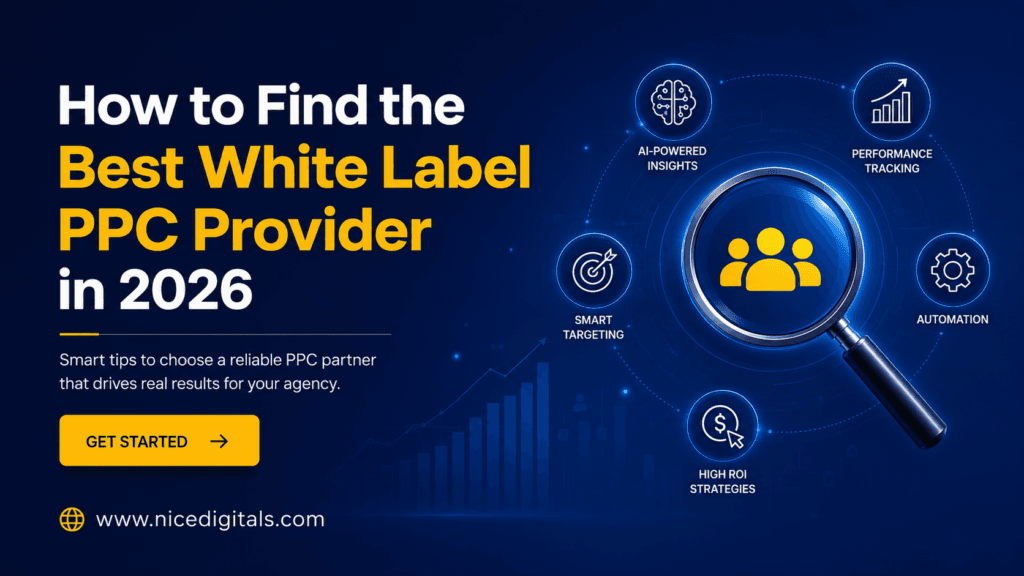
White label PPC lets an SEO agency sell Google Ads, Meta Ads, and other paid media under its own brand before it hires a paid search department. An outside team handles execution across those channels, turning PPC into an attachable service instead of a headcount problem. Agencies that already own organic search relationships can use paid media to raise average client value without pulling focus away from SEO delivery.
How the operating model works
In the standard workflow, the agency signs the client, then briefs the white label provider on goals, budget, brand guidelines, and the commercial outcome it needs to protect. The provider then builds campaigns, selects keywords, writes ad copy, sets bid strategy, and keeps optimization moving after launch. The client experiences one integrated service, even though the labor sits outside the agency.
| Delivery model | Strength | Limitation | Best fit |
|---|---|---|---|
| White label PPC | Fast launch, low setup burden, no immediate hiring | Less direct control of daily execution | SEO agencies adding paid media to existing retainers |
| In-house PPC team | Full control over strategy and reporting | Higher payroll, onboarding, and management load | Agencies with enough steady PPC volume to justify specialists |
| Freelancer network | Flexible and inexpensive for small jobs | Inconsistent quality and availability | Ad hoc support, overflow work, or niche tasks |
| Referral-only approach | No delivery burden | No recurring revenue capture | Agencies that want to avoid paid media altogether |
For an SEO firm, white label fulfillment is the middle path. It protects the core team from staffing a channel that often needs a specialist account manager, media buyer, and reporting workflow just to stay consistent month after month.
Why agencies are using it to widen retainers
White label PPC lets an agency package search, display, shopping, and social advertising alongside SEO and content without carrying the full cost of a dedicated paid media department. The delivery list in a robust package is concrete: campaign setup, keyword research, negative keyword lists, ad copywriting, creative testing, bid management, budget pacing, and branded monthly reporting.
For agencies that keep losing PPC revenue because they cannot staff it, the economics are straightforward. A white label partner can test demand with a few accounts, then help the agency decide whether the channel deserves a larger internal investment later. If the agency can attach PPC to even a slice of its SEO base, it can create stickier retainers and reduce service gaps without bringing on a full in-house ads team on day one.
Why the benchmark data still pushes agencies toward paid media
The pressure is real because PPC is still a large, expensive, and performance-sensitive channel. WordStream’s 2025 benchmark analysis covered more than 16,000 U.S.-based campaigns and found overall averages of 6.66% click-through rate, $5.26 cost per click, 7.52% conversion rate, and $70.11 cost per lead. Its updated 2026 benchmark page moved those averages to 6.64% CTR, $5.42 CPC, 8.18% conversion rate, and $66.69 cost per lead.
Clients expect agencies to move fast on paid media and still show efficient economics. A team that only knows SEO can talk about traffic growth, but PPC clients are usually buying measurable lead volume, lead cost, and conversion rate performance. White label support gives an agency access to that delivery layer without pretending the work is simpler than it is.
The measurement layer is where many agencies underbuild
Google Ads makes the reporting requirement explicit: conversion measurement helps advertisers identify which keywords, ads, ad groups, and campaigns drive valuable customer activity, understand ROI, and use Smart Bidding strategies such as Maximize Conversions, target CPA, and target ROAS. Conversion tracking shows how ad performance relates directly to business success and can cover web, app, and call conversions.
That creates a practical rule for any agency using white label fulfillment: the outside team cannot just launch campaigns and send a spend summary. It has to maintain the measurement setup that proves value. If conversion tracking is weak, the agency loses control of the story it tells the client, and the retainer starts to look like a media-buying cost instead of a growth service.
What to demand from a white label PPC partner
- Campaign structure for search, display, and shopping where relevant
- Keyword research and negative keyword management
- Ad copywriting and creative testing
- Bid management tied to conversion data
- Budget pacing so spend does not outrun lead flow
- Branded reporting that the agency can present as its own
Where Google Partners fits into the buying landscape
Google’s partner ecosystem gives agencies a familiar credentialing structure around paid media. Google Partners gives agencies access to training, support, resources, and a partner badge, and Google has moved the old Google Partners experience into Google Ads. The program includes three tiers of participation: Member, Partner, and Premier Partner.
Many agencies already buy into certification, partner status, and platform training as a way to signal competence without building every discipline in-house. White label PPC sits naturally inside that same model. It lets a smaller SEO agency behave like a broader performance shop while keeping the client-facing brand intact.
The risks sit in reporting ownership and strategy consistency
The biggest trade-off is control. If the outside team owns day-to-day optimization but the agency owns the client conversation, the handoff between execution and account management has to be tight. A mismatch in bidding logic, reporting format, or lead-quality expectations can make the agency look inconsistent even when the campaigns are technically sound.
Strategy consistency is just as important. If the provider optimizes for volume while the client wants qualified leads, or if the agency promises a custom approach while the partner runs a standardized playbook, expectations break quickly. The safest structure is one where the agency owns positioning, the partner owns execution, and both sides agree on the measurement standard before spend starts.
Why this model works best for SEO-first agencies
SEO agencies usually already understand retention, content workflow, and client communication. White label PPC extends that operating model into paid media without forcing the agency to hire a media buyer, a reporting specialist, and a second layer of client service overnight. It preserves focus on core SEO delivery, tests paid demand in real accounts, and gives the agency a path to broader revenue without a larger payroll.
This article was produced by Prism’s automated news system from verified source data, official records, and press releases, then run through automated quality and moderation checks before publishing. The system is built and supervised by the people who set the standards it runs under. Read our full AI policy.
Did this article answer your question?