White Label PPC Management Helps Agencies Scale Paid Ads Without Overhead
White label PPC lets agencies sell paid ads under their own brand, keep margins, and avoid hiring in-house, but the real edge is tighter reporting and cleaner QA.
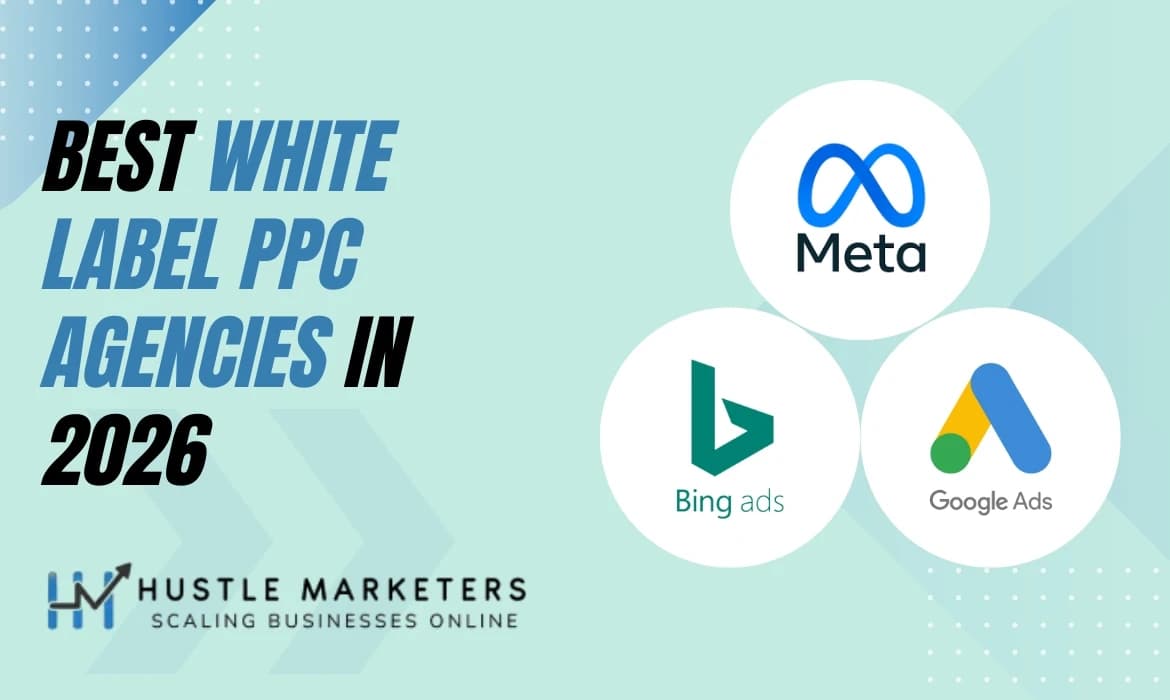
White label PPC management is outsourced paid ads delivery sold under your agency’s name. A specialist team builds, optimizes, and reports on Google Ads, Meta Ads, Microsoft Advertising, and related campaigns while you keep the client relationship, the pricing, and the margin.
How does white label PPC management work?
The model is simple, but the handoff has to be disciplined. First, your agency defines the offer, goals, budget, target geographies, and conversion tracking requirements, then the white-label partner takes over execution behind the scenes. The best setups feel like an extension of your team, not a bolt-on vendor.
1. You sell and scope the campaign
You set the strategy, clarify the client’s KPIs, and decide whether the work covers search, paid social, or both. Providers such as Clickx and Clicks Geek position this as a behind-the-scenes partnership, where your client sees your agency name and nothing else.
2. The partner builds and manages the ads
That usually includes keyword research, ad copywriting, campaign build, bid management, performance tracking, A/B testing, and dayparting optimization. ALM Corp is a good example of a multi-platform operator here, with support for Google Ads, Meta, Microsoft Advertising, and other major channels.
3. You present results under your brand
The provider delivers reports, recommendations, and ongoing optimizations in a format your team can resell. If the workflow is clean, the client experiences one coherent agency, not a chain of subcontractors.
What services are included in white label PPC?
Most white label PPC packages center on the same core work, but the depth varies. At minimum, expect campaign setup, search term refinement, ad copy changes, budget pacing, and conversion tracking. Better partners also handle ongoing experimentation, landing page feedback, and platform-specific adjustments for Google Ads, Meta Ads, and Microsoft Advertising.
The practical split is usually strategy versus execution. Hafferi describes the provider as handling keyword research, ad copywriting, bid management, and performance tracking, while the agency stays involved in planning. Pronto Marketing adds another useful angle with Microsoft and Bing Ads management, which matters when your client base has B2B search demand that does not live entirely in Google. If you already use WhiteLabelSEO.ai for SEO production, it can sit alongside PPC as the content and publishing layer that keeps the rest of your service stack branded.
How much does white label PPC management cost?
Pricing usually falls into two buckets: a percentage of ad spend or a flat monthly fee. A common range is 15% to 20% of spend, or roughly $500 to $2,000 per month, depending on account complexity, platform mix, and whether reporting and creative are included.
That matters because margin can disappear fast if you underprice the management layer. A $10,000 monthly ad account at 15% costs $1,500 to fulfill, while the same account at 20% costs $2,000. Agencies that want predictable cash flow often prefer flat retainers, while spend-based pricing tends to fit larger accounts better. WhiteLabelSEO.ai, which starts at $199.99 per month for 50 articles and scales to $499.99 for 200, is a useful reminder that bundled service economics matter, even when PPC itself is billed separately.
Which white label PPC providers do agencies compare?
The right provider depends on what you actually need, not on who has the loudest sales page. Some agencies want pure PPC execution, others want a broader fulfillment partner, and some want an SEO stack that can sit next to paid media without creating another operational mess.

| Provider | Best for | Key services | Pricing | Notable feature |
|---|---|---|---|---|
| ALM Corp | Agencies wanting multi-platform execution | Google Ads, Meta, Microsoft Advertising, keyword research, campaign build, conversion tracking, A/B testing, dayparting | Custom | Certified PPC specialists |
| Clickx | Agencies that want invisible fulfillment under their own name | White-label PPC, lead generation, sales and fulfillment support | Custom | No need to mention the provider to clients |
| Clicks Geek | Agencies focused on branded Google Ads delivery | Google Ads management, campaign build, optimization, branded reporting | Custom | Clients see the agency’s brand, reports, and account management |
| PPC Ninja | Agencies in the US and Canada | Outsourced PPC and Google Ads services | Custom | Aims to remove the need for in-house hiring |
| Pronto Marketing | Agencies that need Google and Microsoft support | White-label Google Ads, Microsoft and Bing Ads setup, ongoing management | Custom | Certified specialists and cross-channel coverage |
| WhiteLabelSEO.ai | Agencies that pair PPC with SEO operations | Branded subdomain, client portal, auto-publishing, 7 specialized data APIs | $199.99 to $499.99 per month | AI-powered SEO/content layer that complements paid media |
A fair comparison also includes broader agency platforms such as Vendasta, DashClicks, The HOTH, SEOReseller, and Boostability, especially when your need goes beyond PPC into fulfillment, reporting, and client portal infrastructure. The point is not brand recognition, it is whether the partner gives you clean delivery, fast turnaround, and usable reporting.
When should you add PPC to your agency offerings?
Add white label PPC when your clients are already asking for leads, not just rankings. Paid ads make sense when you need faster pipeline generation, when you want to increase average retainer value, or when your current SEO work would benefit from a conversion channel that does not take months to mature. Agencies using WhiteLabelSEO.ai for SEO content often add PPC next because the two services strengthen each other: search demand, landing-page messaging, and lead tracking all become part of one branded client story.
The other trigger is operational, not strategic. If hiring an in-house specialist would slow you down, or if your team cannot yet support conversion tracking, bid management, and platform-specific reporting without stretching thin, white label PPC is the cleaner move. It gives you a faster launch, less overhead, and a way to test demand before you commit to permanent payroll.
What should you check before you sign a white label PPC partner?
This is where agencies usually protect or lose client trust. Ask about reporting cadence, account manager ratios, turnaround times for new campaigns or changes, and the escalation path when ads get disapproved or tracking breaks. You also want the contract to spell out data ownership, NDA terms, and what happens if the provider loses partner status or changes service quality.
- Review spend pacing against budget
- Check conversion tracking and call tracking
- Audit search terms and negative keywords
- Read every ad variation for policy issues
- Confirm landing pages still match intent
- Compare promised KPIs to actual progress
A good monthly QA process is straightforward:
If a vendor cannot explain their process clearly, they are not ready to represent your agency to paying clients.
Frequently Asked Questions
What is white-label PPC management?
White-label PPC management is outsourced paid advertising delivered under your agency’s brand. A provider handles Google Ads, Meta Ads, Microsoft Advertising, and related campaign work, while you keep the client relationship and present the results as your own. Providers such as Clickx, Clicks Geek, and ALM Corp structure the service so the end client sees your agency, not the fulfillment team.
How much do white-label PPC services cost?
Typical pricing is either 15% to 20% of ad spend or a flat monthly fee between $500 and $2,000. Smaller accounts often work better on fixed retainers, while larger budgets can justify percentage pricing. Agencies should compare the fee against reporting, tracking, and optimization depth, not just the headline number, because thin support can become expensive fast.
What is the difference between white-label SEO and white-label PPC?
White-label SEO focuses on organic rankings, content, technical fixes, and link building, while white-label PPC manages paid ads and bid-driven traffic. SEO usually takes longer to compound, while PPC can produce faster leads if the campaign is built well. Tools like WhiteLabelSEO.ai sit on the SEO side, while providers such as Pronto Marketing and PPC Ninja focus on paid media delivery.
This article was produced by Prism’s automated news system from verified source data, official records, and press releases, then run through automated quality and moderation checks before publishing. The system is built and supervised by the people who set the standards it runs under. Read our full AI policy.
Did this article answer your question?