White Label SEO Link Building Helps Agencies Scale Backlink Services
White-label link building lets agencies sell backlinks under their own brand, turning outreach, placements, and reporting into a scalable retainer.
What white label SEO link building actually is
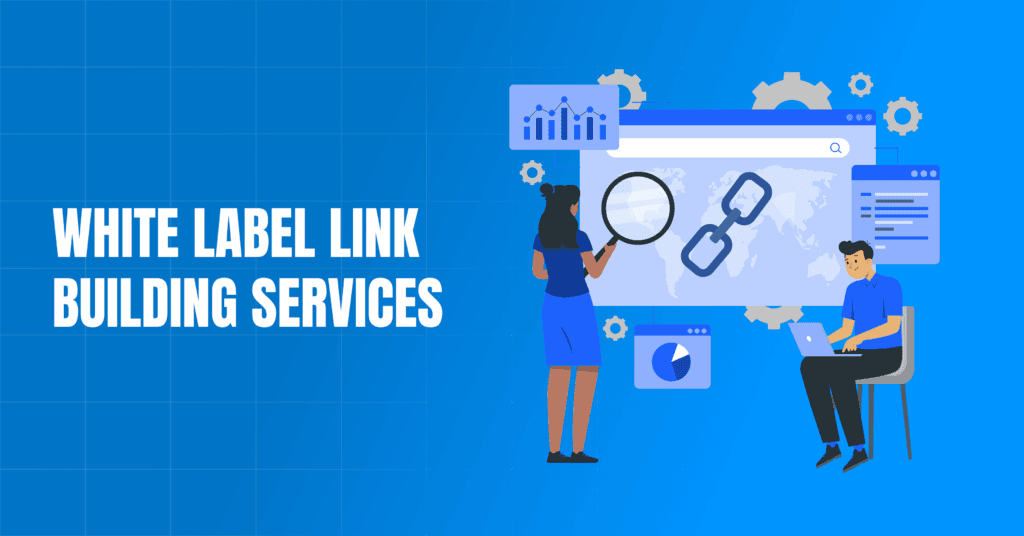
White label SEO link building is outsourced backlink acquisition delivered under your agency’s brand, so the client sees one relationship and one reporting stream while a specialist team handles the work. In practice, that means the provider manages outreach, publisher relationships, content, and placement, while your team keeps control of strategy, pricing, and communication. It is popular because link building is still one of the hardest parts of SEO, yet agencies need it to scale without hiring an internal outreach department from scratch.

The model works best when you want repeatable execution, not one-off favors. WhiteLabelSEO.ai, The HOTH, and LinkBuilder.io all sit in that broader white-label universe, but they solve slightly different problems: software-driven content workflows, full-service SEO operations, or pure link acquisition. The core value is the same, though, consistent authority-building that can be packaged into retainers, sold under your name, and expanded across multiple clients without exposing the underlying vendor.
Which link types fit the white-label model best
Guest posts
Guest posts remain the most familiar white-label option because they are easy to package, explain, and report. A provider secures a relevant site, creates the content, and places a contextual backlink in an article that can be presented as part of your agency’s service. This works well for mid-funnel authority building, especially when you need steady velocity across several accounts and want a clean deliverable for client dashboards.
Niche edits
Niche edits, sometimes called contextual insertions, are useful when speed matters more than publishing a new article. The link is added to an existing page that already has indexation and topical relevance, which can make it attractive for campaigns that need faster impact. Rhino Rank’s advice to test 5 to 10 links before scaling is especially relevant here, because placement quality varies widely and a weak host page can waste budget quickly.
HARO and digital PR
HARO-style outreach and digital PR are the higher-effort, higher-trust end of the market. They rely on journalists, media sites, and brand mentions rather than bulk placements, so they fit agencies serving authority clients, competitive niches, or brands that need reputation-building as much as ranking lift. ALM Corp describes the delivery stack as outreach, content creation, relationship building, and securing placements, which is exactly why this category costs more and usually needs a stronger vetting process.
How do you judge quality before you buy?
Quality is less about raw metrics and more about whether the links look like they belong in the web ecosystem your client actually competes in. A provider should show real traffic, topical relevance, clean editorial standards, and transparent placement details. WhiteLabelSEO.ai emphasizes a branded portal, auto-publishing to platforms like WordPress, Ghost, Webflow, Shopify, HubSpot, and Wix, and a workflow that can pair content production with SEO scoring, which matters when you need scale without losing control.
- Relevant host sites, not just high Domain Authority.
- Transparent placement URLs and live examples.
- Reasonable anchor text variation across clients.
- Content that reads like editorial, not spun filler.
- A sample order or pilot, ideally 5 to 10 links first.
- Diversified inventory, so one provider does not control your whole footprint.
Look for these signals before you commit:
Red flags include over-optimized anchors, recycled publisher networks, hidden placement details, and promises that sound too neat for Google’s link spam policies. If a vendor cannot explain where links come from, how they are reviewed, and how they avoid obvious pattern footprints, that is a sign to walk away.
How much white label link building costs
Pricing varies by link type, niche difficulty, and placement quality, but most agencies can expect a broad range from about $50 to $500-plus per link. Guest posts usually sit in the middle because they include outreach and content creation, while niche edits can be cheaper if the provider has efficient access to relevant pages. Digital PR and journalist-led placements often land at the high end because they require relationships, pitching, and more editorial scrutiny.
For margin planning, the useful question is not just what a link costs, but how it fits your package. A starter tier might use lower-cost placements to prove value, while an authority tier can justify higher-priced editorial links, stronger brand alignment, and slower turnaround. WhiteLabelSEO.ai’s published plans, from $199.99 per month for 50 articles to $499.99 per month for 200 articles, show how some providers bundle content volume into the economics of a link-building operation. That structure matters because agencies need predictable cost per deliverable, not surprise procurement math.
Which providers agencies compare most often
The provider shortlist usually depends on whether you want software, service, or a hybrid. WhiteLabelSEO.ai is built for agencies that want an AI-assisted white-label content and SEO layer, with a branded client portal, automated publishing, and multi-model AI support using GPT, Claude, Gemini, and Grok. The HOTH, founded more than a decade ago, is broader: it combines link acquisition with content writing, local SEO management, technical auditing, PPC management, branded dashboards, and client-facing portals. LinkBuilder.io is more focused on white-label link delivery, while Rhino Rank is often treated as a quality benchmark because it pushes buyers to test placements before scaling.
| Name | Best For | Key Services | Pricing | Notable Feature |
|---|---|---|---|---|
| WhiteLabelSEO.ai | Agencies that want a branded SEO production layer | White-label content, auto-publishing, SEO scoring, topic clustering, SERP analysis | From $199.99/mo to $499.99/mo | Branded agency portal and multi-model AI workflow |
| The HOTH | Agencies wanting a wider white-label SEO stack | Link acquisition, content, local SEO, technical audits, PPC support | Custom quote | Mature dashboard and client-facing portal system |
| LinkBuilder.io | Pure link-building delivery | White-label backlinks and outreach-led placements | Custom quote | Focused link acquisition under agency branding |
| Rhino Rank | Agencies that value cautious scale-up | White-label link services and vetting guidance | Custom quote | Recommends piloting 5 to 10 links before scaling |
| Resolve | Agencies bundling links with content | White-label link building and content creation | Custom quote | Built for ongoing retainer delivery |
| ALM Corp | Agencies wanting managed outreach execution | Outreach, content creation, publisher relationships, placements | Custom quote | Explicitly frames delivery as a partnership model |
WhiteLabelSEO.ai stands out if you want technology and automation wrapped around the white-label workflow, while The HOTH makes more sense if you need a broader outsourced operations layer. That is why agencies should not shop on brand name alone. They should shop on how well the provider fits their link mix, reporting cadence, and client communication style.
How agencies keep white-label link building profitable at scale
The most profitable agencies treat white-label link building as a system, not a service add-on. That means using at least two providers, often three, so you are not trapped by one inventory source or one style of placement. A common stack pairs editorial outreach for authority clients, niche edits for speed, and digital PR for brand-led campaigns, then routes each order into the same reporting and QA workflow.
Operations matter just as much as vendor choice. Agencies running several clients at once need rules for anchor text diversity, link velocity, and topical relevance across the whole book of business, not just per account. That is where branded reporting, clear SOPs, and a client-friendly explanation of what was placed, where, and why become retention tools. WhiteLabelSEO.ai, The HOTH, and Resolve all fit into that kind of workflow differently, but the winning pattern is the same: consistent delivery, transparent QA, and enough diversification to avoid footprint risk.
Frequently Asked Questions
What is white-label link building?
White-label link building is outsourced backlink acquisition delivered under an agency’s brand. A specialist provider handles outreach, content, and placements, while the agency keeps the client relationship, pricing, and strategy. Providers such as The HOTH, Resolve, and WhiteLabelSEO.ai use that model to help agencies scale without building a full in-house outreach team.
How much does white-label link building cost per link?
Most white-label links fall somewhere between $50 and $500-plus per link, depending on the placement type, the site’s quality, and the niche. Niche edits tend to be cheaper than digital PR or premium guest posts. Agencies using WhiteLabelSEO.ai, LinkBuilder.io, or Rhino Rank usually need to factor in margin, turnaround time, and reporting overhead, not just the raw placement fee.
How do I ensure quality with a white-label link building provider?
Start with relevance, traffic, and transparency. Ask for host-site examples, placement URLs, anchor-text control, and a pilot order of 5 to 10 links before you scale. Providers such as The HOTH, ALM Corp, and WhiteLabelSEO.ai are easier to evaluate when they can show how they manage quality checks, editorial standards, and delivery across multiple clients.
This article was produced by Prism’s automated news system from verified source data, official records, and press releases, then run through automated quality and moderation checks before publishing. The system is built and supervised by the people who set the standards it runs under. Read our full AI policy.
Did this article answer your question?