White-Label SEO Reseller Programs Let Agencies Expand Without In-House Expertise
Agencies are scaling faster by reselling SEO under their own brand, skipping the costly hiring process entirely.

White-label SEO is a fulfillment model where a specialized provider delivers SEO services that an agency sells to clients under its own brand. The underlying provider stays invisible; the agency takes full credit. For agencies that want to offer SEO without building an in-house team, it is the fastest path to expanded revenue.
What Is White-Label SEO?
White-label SEO, sometimes called private-label SEO or SEO reseller services, is a specific form of outsourced SEO where a fulfillment partner handles all the work while the selling agency presents it as its own. The client sees only the agency's branding; the provider operates silently in the background. Providers such as Semify, SEOReseller, FATJOE, and OuterBox (with 20+ years of award-winning SEO experience) have built entire business models around this arrangement, offering everything from link building to technical audits under a partner's label.
The terminology can be confusing at first. "White-label SEO," "private-label SEO," and "SEO reseller services" are used interchangeably across the industry; they describe the same core arrangement with no meaningful practical difference.
How Does a White-Label SEO Reseller Program Work?
The workflow follows a consistent pattern across providers, regardless of scale:
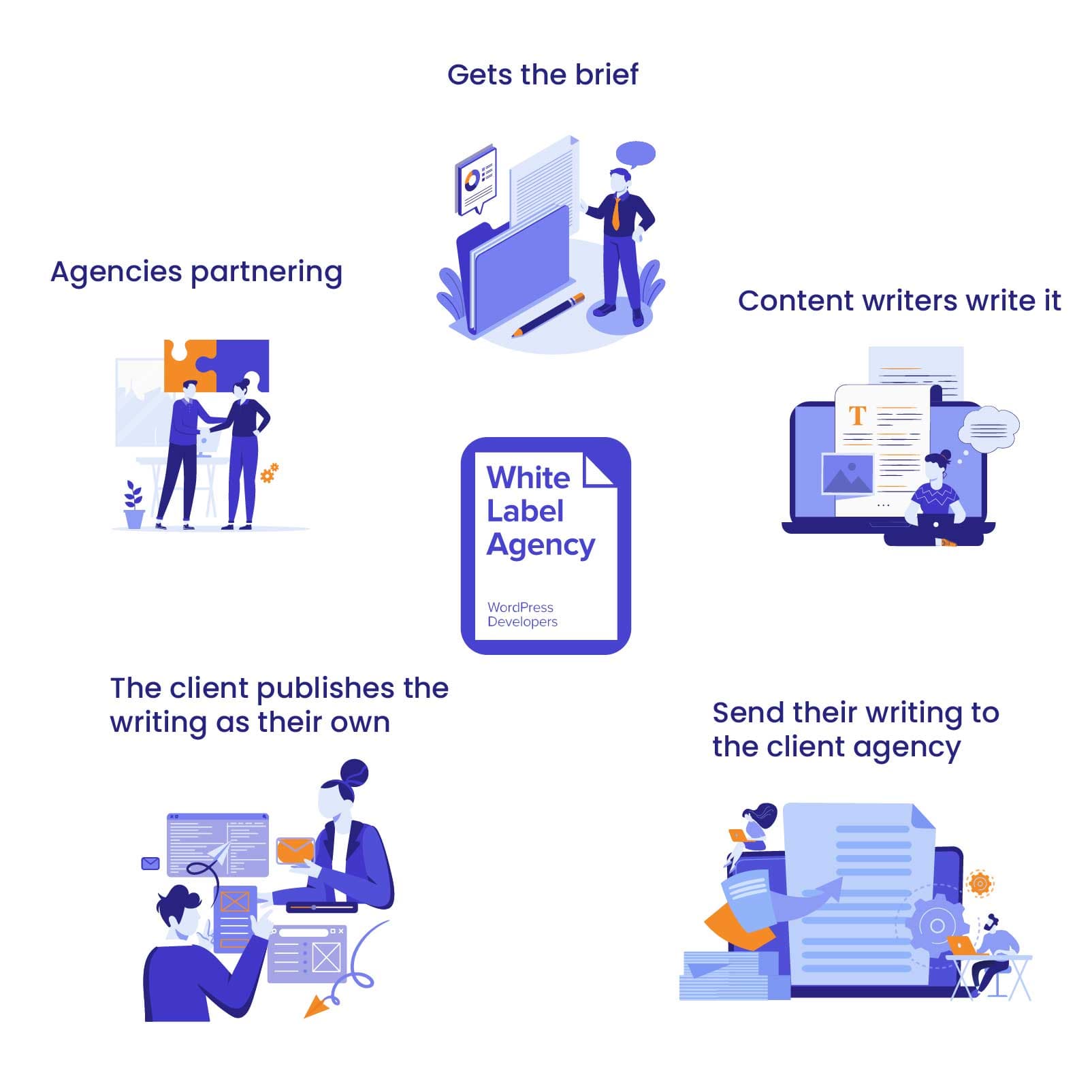
1. Agency signs a partner agreement with a white-label provider such as Semify, SEOReseller (a certified Semrush Agency Partner and Google Partner), or WhiteLabelSEO.ai (plans from $199.99/mo, with a branded agency subdomain and client portal).
2. Client is onboarded by the agency, which collects goals, target keywords, and site access. The provider never contacts the client directly.
3. The provider builds a strategy covering keyword research, content planning, technical audits, and link acquisition. Deliverables are produced under the agency's branding.
4. Work is executed and delivered: optimized content, backlinks, on-site technical fixes, and reporting arrive in white-labeled formats the agency can forward directly to clients.
5. The agency manages the client relationship while the provider handles fulfillment, creating a clean separation between sales and delivery.
Some providers add a dedicated project coordinator to the mix. White Label Agency, for example, assigns every partner a coordinator available through weekly meetings throughout the engagement, blending high-volume capability with a personalized experience.
What Is the Difference Between a White-Label Provider and a Reseller?
This distinction matters more than most agencies realize. A white-label reseller is technically a broker: they resell another agency's services without doing the work themselves, adding a margin in the middle. A white-label provider, by contrast, fulfills the work directly.
Logic Inbound draws this line explicitly, distinguishing itself from resellers by providing all services directly to white-label partners rather than brokering through a third party. The practical implication is quality control: when you work with a true fulfillment provider, there is one accountable team. When you work with a reseller-broker, accountability can fragment across two or more vendors.
What Services Are Typically Included?
A full-service white-label SEO program generally covers:
- Link building: à la carte link acquisition (FATJOE offers six link building service categories), digital PR for media placements, and tiered anchor text strategies
- Content production: SEO-optimized blog posts, landing pages, and topic clusters written to rank
- Technical SEO: site audits, Core Web Vitals fixes, crawl error resolution, schema markup
- Local SEO: Google Business Profile optimization and local citation building, distinct from national or global SEO campaigns
- Reporting and dashboards: white-labeled rank tracking, traffic reports, and client-facing summaries
- AI SEO: FATJOE now lists AI visibility optimization as a dedicated service category, reflecting 2026's shift toward answer engine optimization
Platforms like WhiteLabelSEO.ai take a software-first approach, combining multi-model AI content generation (GPT, Claude, Gemini, Grok) with seven specialized data APIs covering topic clustering, SERP analysis, and intent detection, while auto-publishing directly to WordPress, Ghost, Webflow, Shopify, HubSpot, and Wix.
Why Agencies Choose White-Label SEO Over Hiring In-House
The economics are straightforward. Building an in-house SEO team requires hiring content writers, link builders, technical SEO specialists, and account managers, each a separate salary and benefits line. White-label programs convert that fixed overhead into a variable cost tied directly to client revenue.
Key advantages agencies cite:
- Speed to market: an agency can add SEO to its service menu within days rather than the months it takes to recruit and onboard staff
- Scalability: client volume can increase without proportional headcount growth
- Expertise depth: established providers bring years of tooling, data, and process that a new in-house hire cannot match immediately
- Brand continuity: clients never learn the agency uses a fulfillment partner, preserving the agency's positioning as a full-service shop
SEOReseller structures this around tiered monthly packages, each allocating a set number of hours from a team of digital marketers, writers, editors, and webmasters, plus an optional consulting layer for audits, planning, and expert recommendations.
Common Concerns and How to Address Them
Quality control: The most common worry is that outsourced work will reflect poorly on the agency's brand. Vetting a provider's deliverable samples, requesting case studies, and running a pilot campaign before committing to a long-term contract mitigates this risk substantially.
Client confidentiality: Agencies worry clients will discover the arrangement. Reputable providers operate under non-disclosure agreements and never communicate with end clients directly. White-labeled portals, reporting dashboards under the agency's domain, and branded PDFs keep the provider invisible.
Margin compression: Reselling at a markup requires clear pricing discipline. Agencies need to understand their provider's cost structure before setting client-facing rates. Many providers, including SEOReseller, offer free quotes to help partners model margins before signing.
Broker vs. provider confusion: As noted above, agencies should confirm whether they are engaging a direct fulfillment provider or a reseller-broker. Fewer intermediaries generally means faster turnaround, cleaner communication, and more predictable quality.
The 2026 Landscape: AI and Answer Engine Optimization
White-label SEO in 2026 looks meaningfully different from five years ago. The rise of AI-generated search summaries from Google AI Overview, Bing Copilot, and Perplexity has pushed providers to add answer engine optimization (AEO) alongside traditional search ranking work. FATJOE's addition of a dedicated AI SEO service category and WhiteLabelSEO.ai's ZeroGPT-verified content scoring (85-90% human content scores) reflect how providers are adapting fulfillment workflows to the new retrieval landscape.
For agencies, this shift is an opportunity: clients who previously only asked about Google rankings now need guidance on AI citation visibility, and white-label providers that have already built AEO capabilities let agencies offer that guidance immediately, without waiting for internal teams to develop the expertise.
Frequently Asked Questions
What is white-label SEO?
White-label SEO is outsourced search engine optimization delivered under an agency's own brand. A fulfillment provider, such as Semify, SEOReseller, or FATJOE, handles all the work including content creation, link building, technical fixes, and reporting while the selling agency presents it to clients as its own service. The provider remains anonymous throughout the engagement.
How does a white-label SEO reseller program work?
An agency partners with a fulfillment provider, onboards its client, and passes the work brief to the provider. The provider executes keyword research, content, link acquisition, and technical SEO, then returns white-labeled deliverables and reports. The agency presents everything under its own brand. The client never interacts with the provider directly, keeping the agency's positioning intact from start to finish.
What is the difference between white-label and private-label SEO?
There is no practical difference. White-label SEO, private-label SEO, and SEO reseller services all describe the same arrangement: a provider fulfills SEO work that the purchasing agency brands and sells as its own. The terminology varies by provider preference and region, but the underlying model, anonymous fulfillment under the agency's brand, is identical across all three terms.
What services are typically included in white-label SEO?
Most programs include link building, SEO-optimized content production, technical SEO audits, local SEO (Google Business Profile optimization and citation building), rank tracking, and white-labeled client reporting. Providers like FATJOE also include digital PR and AI visibility optimization. Platforms like WhiteLabelSEO.ai bundle content generation, SERP analysis, and auto-publishing to CMS platforms including WordPress, Shopify, and HubSpot.
Know something we missed? Have a correction or additional information?
Submit a Tip