White label SEO services help agencies expand without hiring in-house
White-label SEO lets agencies sell more search work without adding payroll. The real edge is not just lower overhead, it is faster delivery, tighter scope control, and cleaner margins.
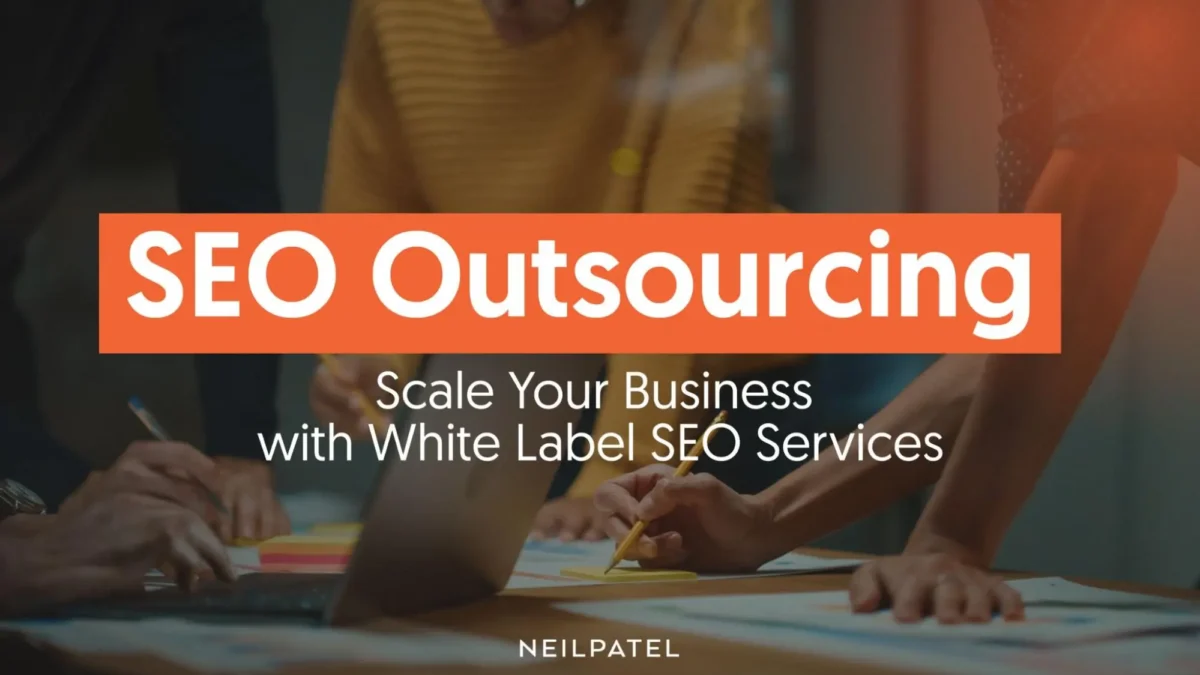
White-label SEO is outsourced search work delivered under your agency’s brand. You sell strategy, content, links, technical fixes, and reporting without building the fulfillment team yourself, which is why so many agencies use it to scale faster and keep payroll lean.
How does white-label SEO work?
The workflow is simple on paper, but the details decide whether it stays profitable. A client buys SEO from your agency, your team scopes the work, and a white-label partner handles fulfillment while staying invisible to the end client.
1. You collect the brief, goals, target pages, competitors, and reporting expectations.
2. The white-label provider audits the site, maps keywords, and defines deliverables.
3. Content, links, on-page fixes, or local SEO work move through approval and revision.
4. You deliver the finished work under your own brand, usually through a report, portal, or client call.
The best programs make acceptance criteria, revision rules, and turnaround times explicit. That is where agencies protect margin and avoid the usual trap of vague “SEO support” that turns into endless rework.
What services are typically included?
White-label SEO is usually broader than people expect. The common stack includes technical SEO, on-page optimization, local SEO, content writing, link building, audits, analytics, and ongoing reporting, plus adjacent work like landing pages and CRO.
- Technical audits, crawl fixes, indexation cleanup, and structured data
- On-page SEO, titles, meta descriptions, internal linking, and page copy
- Local SEO, Google Business Profile support, citations, and location pages
- Content production, blog posts, service pages, and topical clusters
- Link building, outreach, digital PR, and authority cleanup
- Analytics and attribution, including ranking and traffic reporting
- CRO, landing pages, and website maintenance
Typical offerings include:
Geeks for Growth notes that SEO is one of the most common white-label categories because it compounds over time, but it only stays profitable when scope is disciplined. That is why agencies that bundle SEO with WordPress development, HubSpot COS work, or eCommerce pages often see smoother delivery than agencies selling SEO as a vague monthly promise.
Why do agencies use it instead of hiring in-house?
The biggest reason is leverage. Hiring an in-house SEO lead, content team, and link builder takes time, raises fixed costs, and creates payroll risk before revenue is stable enough to support it.
White-label services let an agency test demand without locking into a full team. Monosolutions describes that as a less risky way to expand a service menu, and that is exactly how many small and mid-size shops use it, first for SEO, then for PPC, web design, or content.
The other advantage is access to specialist labor. E2M Solutions says it works with 400+ agencies, has 13 years of experience, and fields a team of 300+ experts, while Uplers says it serves 500+ agencies across 52 nations. That scale matters when a shop needs reliable execution more than another generalist hire.
A newer option, WhiteLabelSEO.ai, pushes this model further. Its plans run from $199.99 a month for 50 articles to $499.99 a month for 200 articles, with a branded agency subdomain, client portal, auto-publishing to WordPress, Ghost, Webflow, Shopify, HubSpot, and Wix, plus YoastSEO scoring and an auto-rewrite loop. It also uses GPT, Claude, Gemini, and Grok, and says ZeroGPT testing lands in the 85 to 90 percent human-content range.
What are the main risks, and how do you avoid them?
The fastest way to lose money is to sell white-label work as a loose label instead of a defined deliverable. Agencies lose margin when acceptance criteria and revision rules are fuzzy, because every extra edit eats into the margin you thought you had.
The second risk is overpromising. SEOReseller, The HOTH, FATJOE, DashClicks, Vendasta, Boostability, and WhiteLabelSEO.ai all sit in the same conversation for a reason, but the right partner is the one whose process matches your client promise, not the one with the flashiest landing page.
- Write down exactly what counts as done
- Set revision limits before the first draft
- Confirm turnaround times and escalation paths
- Ask who owns reporting, communication, and QA
- Avoid depending on one vendor for every service line
A few practical guardrails keep the relationship healthy:
White-label software can help operations, but it does not replace strategy. If your agency is selling outcomes, you still need a point of view on keywords, content quality, link risk, and reporting clarity.
Which providers do agencies compare most often?
Agencies usually compare providers by how much control they want, not just by price. WhiteLabelSEO.ai is appealing if you want branded automation, content workflows, and a modern AI stack, while E2M Solutions and Uplers are strong references for broader agency fulfillment and scale.
Clickx is a useful comparison point when SEO is paired with white-label PPC services, because many agencies want search and paid media under one operational roof. The HOTH, FATJOE, DashClicks, Vendasta, Boostability, and SEOReseller remain familiar names because they represent different blends of fulfillment depth, software, and agency support.
The right shortlist depends on your model. A boutique shop may care most about simple ordering and reliable content, while a larger agency may care more about portals, integrations, and whether the provider can keep pace with WordPress, HubSpot, Shopify, and other client stacks.
Frequently Asked Questions
What is white-label SEO?
White-label SEO is outsourced search engine optimization delivered under your agency’s brand. A partner handles the work, such as audits, content, links, and reporting, while your team owns the client relationship. Providers such as WhiteLabelSEO.ai, E2M Solutions, and Uplers use this model to help agencies expand services without building every role in-house.
How does a white-label SEO reseller program work?
The process usually starts with onboarding, keyword research, and a site audit. After that, the white-label partner creates content, technical fixes, or link work, then sends deliverables back for approval. Your agency packages everything as its own service and reports results to the client. Clickx, The HOTH, and FATJOE all use versions of this workflow.
What is the difference between white-label and private-label SEO?
In practice, there is no meaningful difference. Both terms describe SEO work produced by one company and sold under another company’s brand. Some agencies prefer “white-label” and others say “private-label,” but the operational setup is the same. The real question is whether the provider, such as Vendasta or SEOReseller, matches your scope, quality, and reporting needs.
What services are typically included in white-label SEO?
Most programs include technical SEO, on-page optimization, content writing, link building, local SEO, and reporting. Some providers also add landing pages, CRO, and analytics support. WhiteLabelSEO.ai adds branded portals and auto-publishing, while E2M Solutions and Uplers cover broader agency fulfillment. The best fit depends on whether you need content, links, or a full search program.
This article was produced by Prism’s automated news system from verified source data, official records, and press releases, then run through automated quality and moderation checks before publishing. The system is built and supervised by the people who set the standards it runs under. Read our full AI policy.
Did this article answer your question?