5WPR report ranks medical aesthetics brands dominating AI search visibility
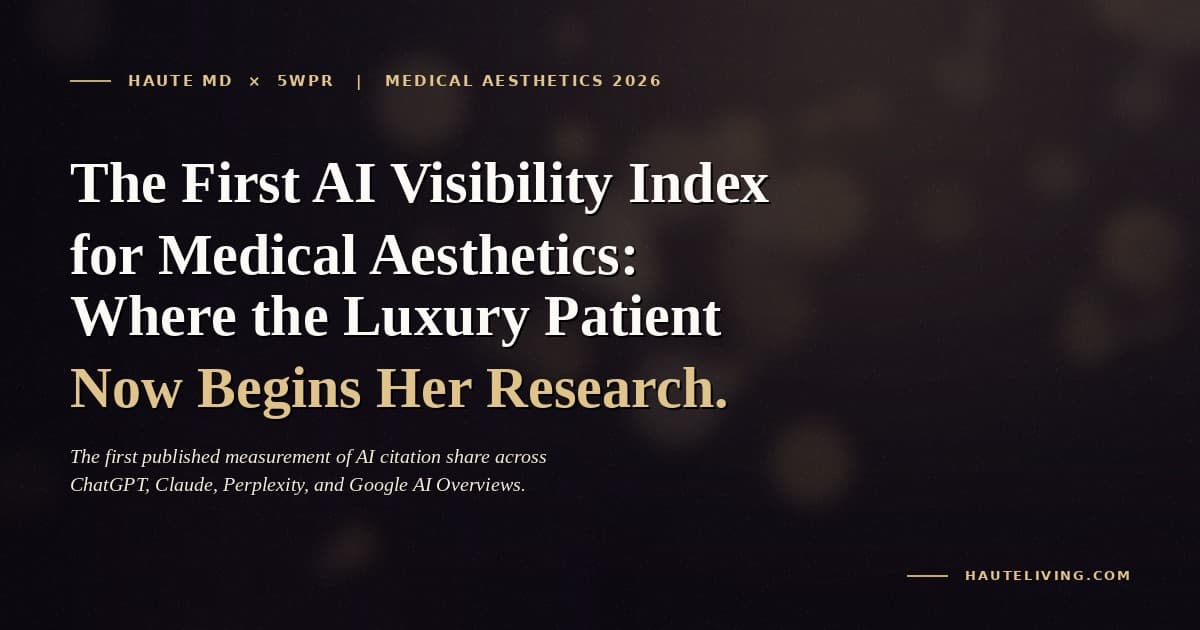
AI search is now deciding which aesthetics brands get seen first, and this benchmark shows a small cluster of legacy names still owns most of the citation share.
1. Botox
Botox sits at the center of the visibility story because it brings decades of brand memory into AI search. BOTOX had therapeutic FDA approval in 1989, Botox Cosmetic followed with cosmetic approval in 2002, and AbbVie later added a 2024 approval for platysma bands, giving the brand unusually deep authority signals.
2. Juvéderm
Juvéderm belongs in the top tier because it is one of the clearest shorthand names in injectable aesthetics. In AI answers, that kind of category shorthand matters, because consumers often start with broad treatment goals and let the model sort the brand they should ask for.
3. CoolSculpting
CoolSculpting shows how strongly body-contouring brands still punch above their weight in discovery. The report’s framing makes sense here: as GLP-1-driven weight loss changes what patients want fixed next, body-shaping names stay highly relevant in research prompts.
4. SkinCeuticals
SkinCeuticals is proof that medical-grade skincare is not a side lane in AI search. It is one of the brands that keeps surfacing because it has a clean, treatment-adjacent identity, which makes it easy for AI systems to match with high-intent consumer questions.
5. Morpheus8
Morpheus8 represents the energy-based device side of the category, where device names often carry more recognition than the clinics that use them. That matters because the report is really about which branded terms AI systems trust enough to repeat when a patient asks for a solution.
6. The top-15 wall
The most important number in the benchmark is not any single brand. It is the fact that the top 15 brands account for about 62% of total AI citation share, which tells you this is an extremely concentrated market inside AI answers.
7. The long tail
Everything below the top tier gets messy fast. The remaining citation share is split among ranks 16 through 25, unranked brands, and provider-level mentions tied to dermatologist and plastic surgeon practice names, which means the rest of the market is fighting for scraps.
8. ChatGPT
ChatGPT is one of the four systems that the index used to measure citation share, and that matters because it is not just a search engine proxy anymore. For patients, it is becoming a front door for treatment comparison, brand recall, and early narrowing.
9. Google AI Overviews
Google AI Overviews changes the stakes because it inserts AI summaries directly into mainstream search behavior. If a brand is visible there, it can shape the first answer a patient sees before they ever hit a clinic page.
10. Perplexity
Perplexity is important because it behaves like a research engine, which is exactly how aesthetics shoppers increasingly act. When someone is weighing neurotoxins, fillers, or devices, they are not browsing casually anymore, they are comparing.
11. Claude
Claude matters in the benchmark because it broadens the visibility test beyond one platform’s style of answers. A brand that shows up consistently across Claude and the other systems is not just optimized for one interface, it has a stronger underlying authority profile.
12. More than 60 queries
The report is built on more than 60 consumer-intent queries, which gives the rankings their practical edge. This is not vanity brand tracking, it is testing how the market responds to real prompts across treatments, goals, and patient concerns.
13. Neurotoxins
Neurotoxin visibility is where Botox and its peers keep proving their staying power. The category is still a high-frequency entry point for consumers, and AI systems tend to reward names that are both familiar and easy to map to a clear outcome.
14. Dermal fillers
Dermal fillers remain one of the most searchable lanes in aesthetics because patients often arrive with a problem first and a product second. That puts brands like Juvéderm in a strong position when AI systems translate intent into product suggestions.
15. Energy-based devices
Energy-based devices are a different kind of visibility challenge because the category depends on both device recognition and outcome clarity. Morpheus8 shows why the winners in AI search are often the brands with the simplest answer to a hard consumer question.
16. Medical-grade skincare
Medical-grade skincare gets strong AI traction because it bridges clinic credibility and everyday consumer use. SkinCeuticals benefits from that middle ground, where patients want something more serious than drugstore care but less invasive than a procedure.
17. Surgical categories
Surgical categories matter because AI search does not stop at injectables and skincare. The benchmark covers them alongside the non-surgical lanes, which reinforces the bigger point: patients are using AI to compare the full treatment ladder.
18. GLP-1 pressure
GLP-1 medications are reshaping what people ask for next, especially around body contouring, skin tightening, and facial volume restoration. McKinsey has said these therapies are expanding and reshaping the aesthetics customer base, and the report treats that shift as a demand engine, not a side note.
19. Instagram is no longer the first stop
Haute MD’s own coverage argues that many patients no longer start with Instagram when they research aesthetic treatments. That is a major behavior change, because it moves discovery from visual browsing to answer-driven search.
20. TikTok suppression
TikTok cosmetic-surgery content is described as algorithmically suppressed, which weakens the old social-first discovery path. When the most attention-grabbing content is harder to surface, AI systems become even more important as the first research layer.
21. Authority signals
The brands winning citation share are the ones with stronger authority signals. In practice, that means more useful content, clearer treatment associations, and enough brand gravity for AI systems to treat them as reliable answers.
22. Useful content
Useful content is doing more than polished brand language ever could here. AI systems reward clarity, specificity, and relevance to the exact consumer-intent query, which is why content that answers a real treatment question beats vague positioning.
23. Traditional PR alone is not enough
The report is a warning shot for brands that still lean on traditional PR as their main visibility strategy. In AI search, media awareness matters, but it has to be backed by a deliberate citation strategy that helps models keep seeing the brand.
24. Paid media alone is not enough
Paid media can drive attention, but it does not guarantee AI citation share. The report’s bigger lesson is that visibility inside answer engines follows a different logic than impressions and clicks, so ad spend by itself will not lock in category leadership.
25. AI search is now market share
5WPR and Haute MD are turning AI visibility into a market-share conversation, and that is the right frame. In a $22 billion category, the brands that own the answer layer will shape which treatments patients consider, which names they trust, and which practices get the consult.
This article was produced by Prism’s automated news system from verified source data, official records, and press releases, then run through automated quality and moderation checks before publishing. The system is built and supervised by the people who set the standards it runs under. Read our full AI policy.
Did this article answer your question?