AI Overviews appear in 87% of commercial search prompts, study finds
AI Overview visibility jumps when the sample skews commercial. In one study, buying-intent prompts hit 87% overall and 88.5% at the decision stage.
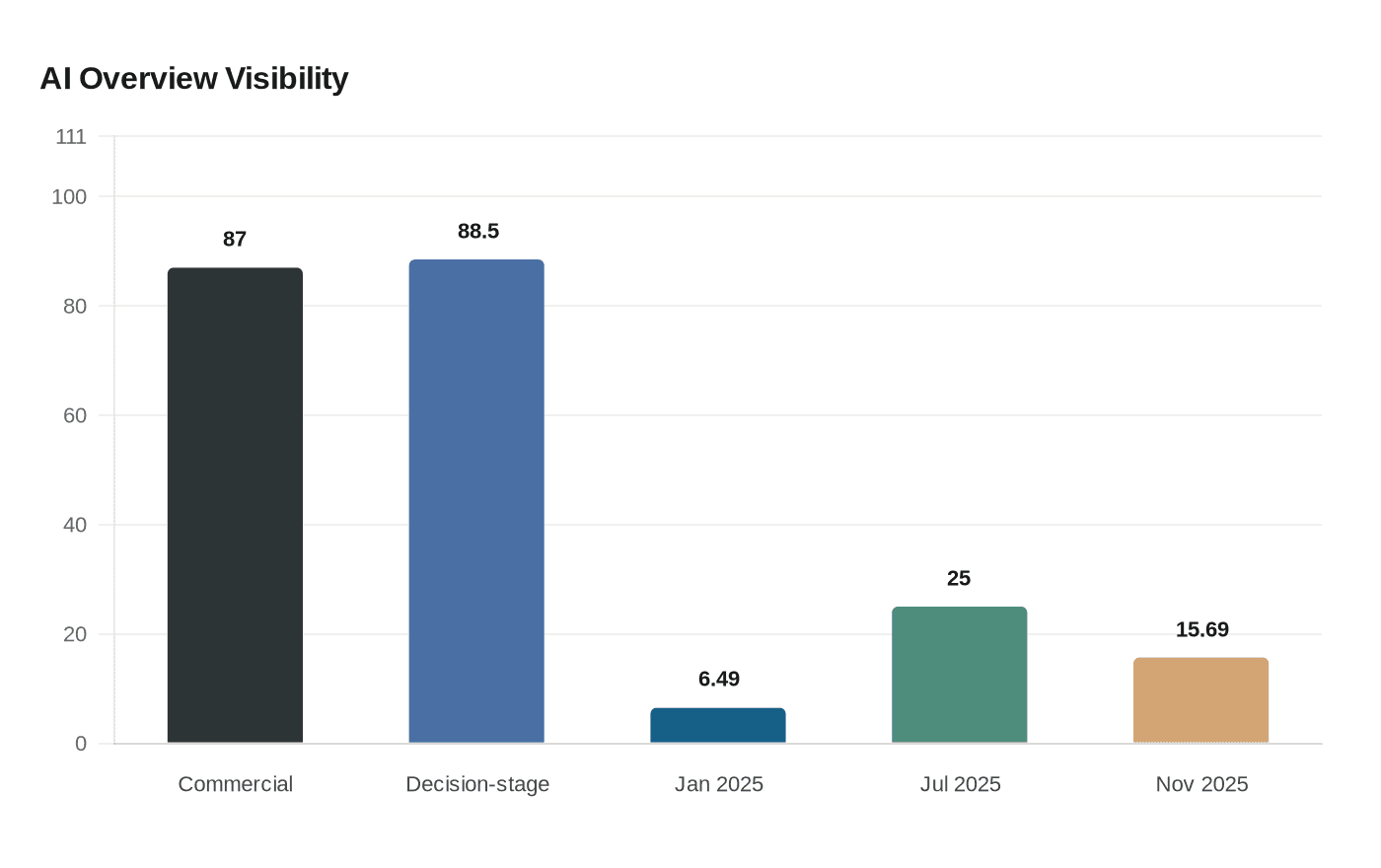
AI Overview visibility is turning into a measurement trap for marketers: load the dataset with buying-intent prompts, and the headline number shoots up. In a study of 500,000 prompts, AI Overviews appeared in about 87% of searches, and decision-stage prompts triggered them 88.5% of the time. The catch is that the sample excluded navigational queries, including brand-name searches, which makes the result much closer to a commercial buying funnel than to general search behavior.
That distinction matters because it changes the story completely. Broader visibility studies often land much lower because they mix in informational, navigational, and low-intent queries that do not summon AI answers as often. If a brand sells software, services, ecommerce products, or other high-consideration offerings, its actual exposure to AI Overviews may be far higher than a blended benchmark suggests. If the same brand measures itself against a broad search population, it can easily conclude AI is less active in its market than it really is.

The practical takeaway is simple: AI visibility should be segmented by intent, not reported as one universal percentage. Prompt design, market selection, and intent classification all shape the final number, which means one benchmark can be technically accurate and still useless for competitive comparison. A visibility score built from commercial prompts tells you something different from a score built from the full search universe. For agencies and in-house teams, that difference determines whether AI is showing up in early-funnel consideration or mostly in informational searches with little business value.
Google has been pushing AI Overviews as part of Search since launching them in the United States on May 14, 2024, during Google I/O. At the time, Google said hundreds of millions of users would get access that week and that it expected to reach more than 1 billion people by the end of 2024. Google later expanded AI Overviews to more than 200 countries and territories and more than 40 languages. Google Search Central says the feature is designed to appear when it can add benefits beyond traditional Search, and Google says people who use it visit a greater diversity of websites for more complex questions. Google also says links in AI Overviews get more clicks than if the same page had appeared as a traditional web listing, and that those clicks are higher quality.
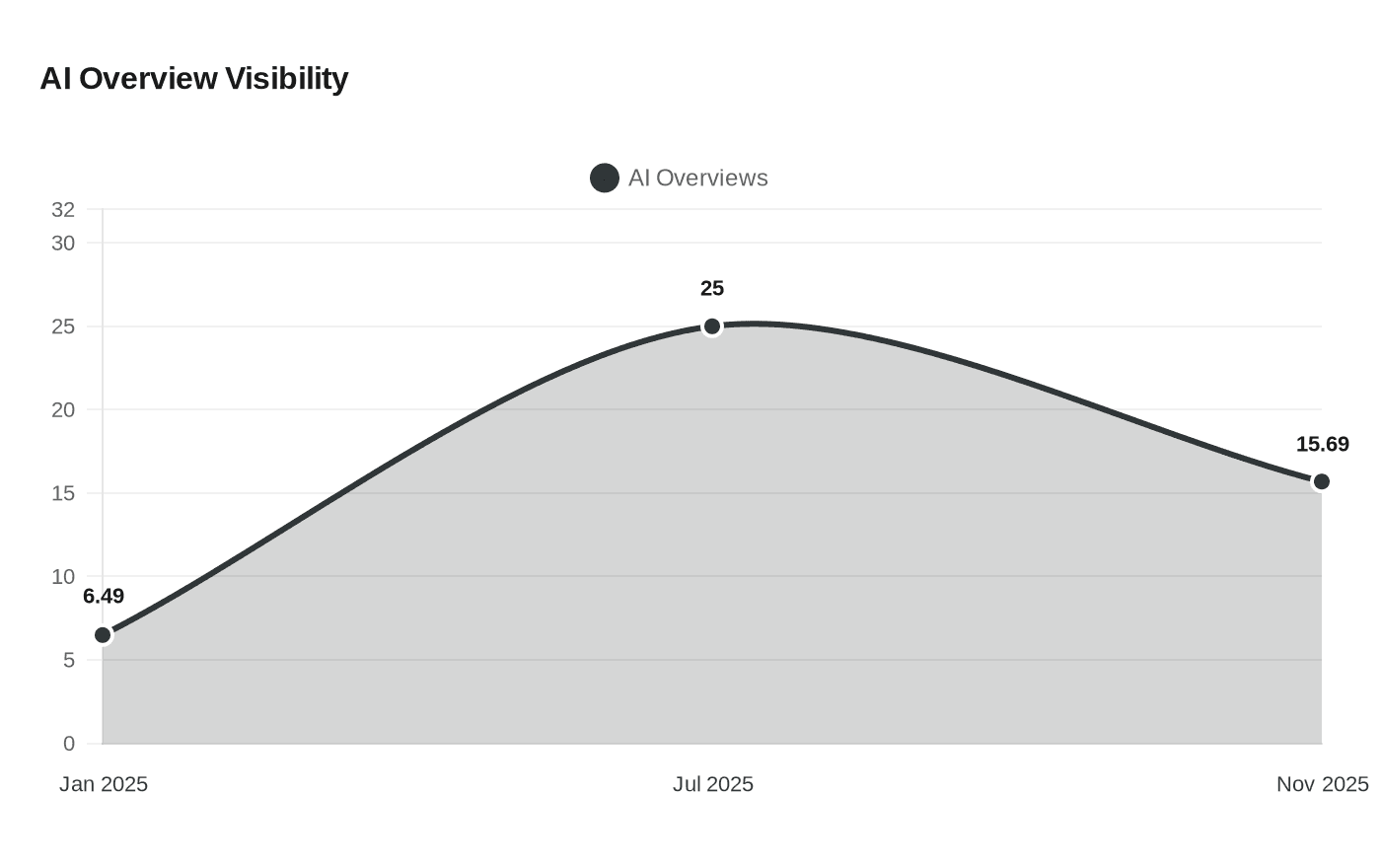
The contradiction between Google’s optimism and publisher anxiety is part of why the measurement debate matters. Semrush reported that AI Overviews appeared for 6.49% of keywords in January 2025, nearly 25% in July 2025, and 15.69% in November 2025. Put those numbers next to the 87% commercial-query result, and the lesson is obvious: AI visibility is not one headline metric. It depends on what kind of search you are measuring, and that is the number that should shape SEO strategy, reporting, and client expectations.
This article was produced by Prism’s automated news system from verified source data, official records, and press releases, then run through automated quality and moderation checks before publishing. The system is built and supervised by the people who set the standards it runs under. Read our full AI policy.
Know something we missed? Have a correction or additional information?
Submit a Tip