AI search becomes a demand-generation channel for brands
AI search now shapes demand before the click, forcing brands to fuse SEO, PR, paid media, and measurement around one answer surface.

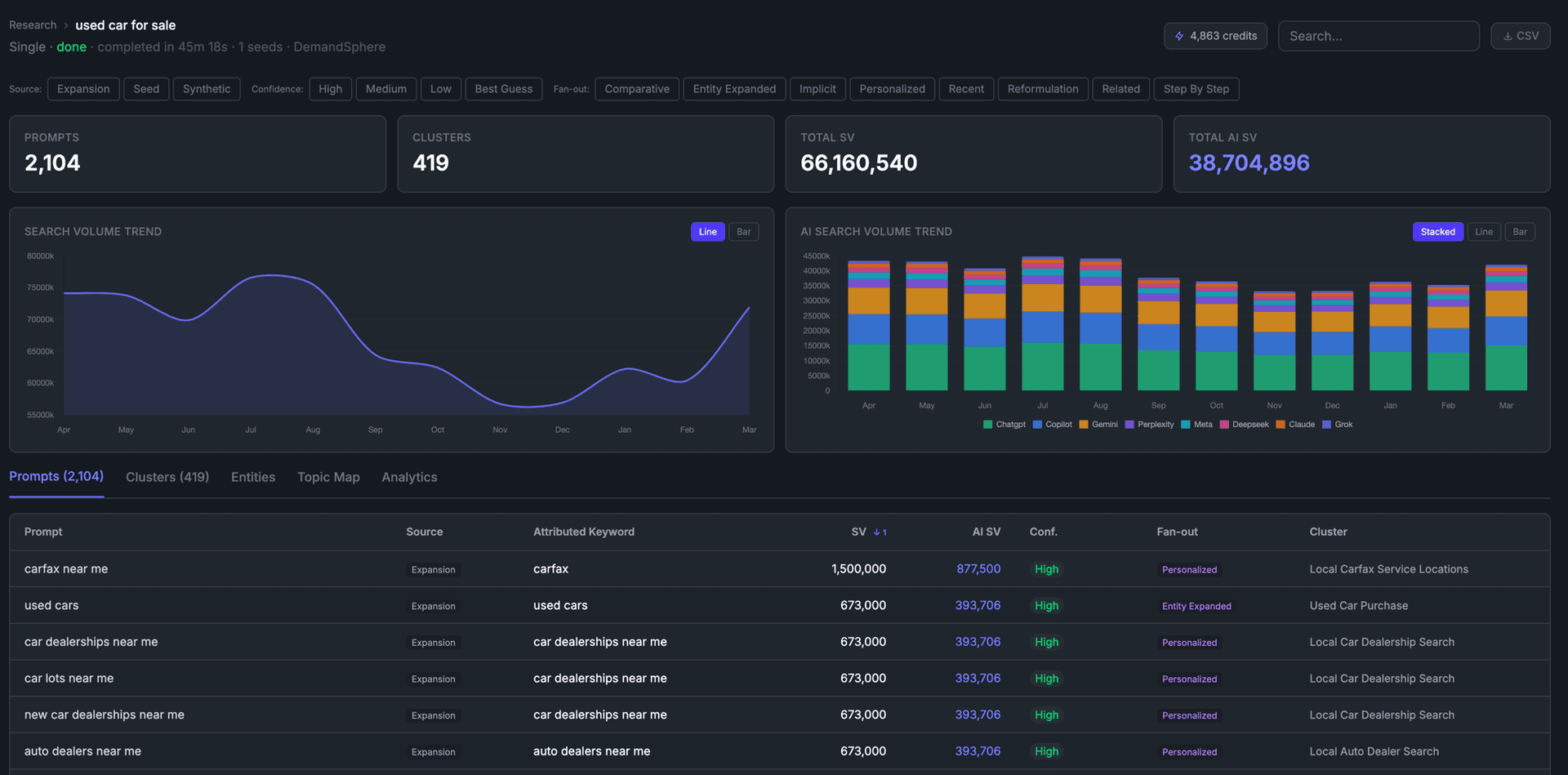
On March 9, AI assistants equaled 56% of global search engine volume in a study; on March 18, Google AI Overviews appeared on 14% of shopping queries. By August 7, 2026, AI search was a demand-generation environment, where interest can be created and steered before anyone lands on a page. That shift changes how brands allocate budget, build content, and measure influence across the journey.
The six operating models at a glance
| Operating model | Budget shifts toward | Content emphasis | Measurement focus |
|---|---|---|---|
| SEO and technical authority | Structure, crawlability, schema, content refreshes | Topical depth, answer-ready pages | AI answer inclusion, branded search lift |
| PR and source trust | Earned media, expert commentary, original data | Quotable evidence, third-party validation | Citation quality, source diversity |
| Product marketing and category language | Category pages, comparison assets, messaging tests | Differentiation, problem framing | Category-query growth, message pull-through |
| Paid media and demand capture | Branded search defense, shopping, retargeting, AI-assisted ad systems | High-intent creative, conversion assets | Pipeline, assisted conversions, ROAS |
| Executive ownership and governance | Cross-functional planning and shared reporting | Unified story across teams | Revenue influence, attribution quality |
| Customer confidence across the journey | Proof points, demos, FAQs, education | Trust-building assets at each step | Engagement depth, conversion speed |
SEO and technical authority
The first operating model is still rooted in SEO, but the goal is broader than rankings. The January 28 piece on what six SEO leaders predicted for 2026 and the April 7 analysis of how AI is shifting search to persuasion pointed to a world where crawlability and topical authority matter because AI compresses information aggressively. If the page cannot be clearly interpreted, summarized, and trusted, it is less likely to survive the answer layer.
That changes budget priorities in practical ways. More money goes to information architecture, schema markup, refresh cycles, and content consolidation instead of one-off keyword pages. Measurement also shifts from raw clicks to whether the brand appears in AI-generated answers, whether branded queries rise after exposure, and whether AI-mediated visibility translates into later direct visits.
PR and source trust
The second lens treats AI search as a citation problem as much as a visibility problem. The answer surface depends on who the system trusts enough to quote, summarize, or reference. That makes earned media, expert commentary, and original data far more valuable than generic press coverage.
In budget terms, that pushes more spend into research-backed content, media relations, analyst relations, and bylined expertise. The content mix also changes, because AI systems reward recognizable evidence: statistics, named experts, and clear claims that can be attributed. Measurement here is not a single mention count, but the quality of those mentions, how often a brand becomes a source in answer content, and whether third-party references reinforce a distinct point of view.
Product marketing and category language
A third operating model is product marketing, where the job is to make the brand’s category legible to an AI system. If the market is still forming around a problem, the brand that names the problem well can shape the answer set that buyers see. In AI search, category language matters because compressed answers tend to privilege the clearest framing.
This is where budget moves toward category pages, comparison pages, use-case pages, and message testing. It is not enough to describe features; the language has to match how buyers ask, compare, and narrow choices inside AI interfaces. Measurement should track whether the company’s category terms are appearing in answer summaries, whether emerging query patterns are linked to the brand, and whether the market starts using the brand’s vocabulary.
Paid media and demand capture
Paid media is not disappearing in AI search, but its role changes. The March 13 article on the different kind of audit Google Search Ads now require, the April 27 analysis of what to optimize for when keywords matter less, and the July 2 piece on competitors targeting branded traffic all point to the same conclusion: the handoff from AI discovery to transaction needs active defense. The channel that used to sit at the bottom of the funnel now has to protect demand that AI has already warmed up.
That becomes even more important against the March 9 study and the March 18 shopping-query data. Add Google’s new AI agent capabilities in Ads and Analytics, highlighted on August 10, and the paid stack becomes part of the AI search system itself. Budgets have to cover branded search defense, high-intent shopping placements, retargeting, and measurement tools that can connect assisted demand to pipeline.
Executive ownership and governance
The most overlooked perspective is ownership. No single channel team can own this problem cleanly. AI search cuts across SEO, PPC, content, analytics, PR, and product marketing, so the operating model has to shift from siloed reporting to shared governance.
That has a direct budget consequence. Funds that used to live only inside SEO or paid search now have to support a common content and measurement plan, including shared dashboards and agreed definitions of influence. Anu Adegbola moderated a February 20 PPC discussion that framed measurement standards, budget allocation, and account structures as active issues.
Customer confidence across the journey
The last model is about confidence, not just exposure. The answer surface starts the buying process but does not finish it. Buyers still need reassurance across multiple touchpoints, especially in higher-consideration categories.
That means content must do more than attract impressions. It has to include proof points, demos, FAQs, testimonials, and comparison material that can be reused across search, social, and video. On January 9, 2026, YouTube was no longer optional for SEO in the age of AI Overviews. Measurement should focus on how quickly a prospect moves from first AI exposure to repeated engagement and, eventually, conversion.
What the 2026 search signal says
Search Engine Land now has a dedicated Generative Engine Optimization library and AI SEO section. Across January, March, April, June, August 6, and August 10, its coverage tracked integrated optimization across owned, earned, and paid channels.
This article was produced by Prism’s automated news system from verified source data, official records, and press releases, then run through automated quality and moderation checks before publishing. The system is built and supervised by the people who set the standards it runs under. Read our full AI policy.
Did this article answer your question?