AI search misstates fashion brands in 20% of answers, report finds
Five fashion brands were wrong in 20% of AI answers, and 5W says stale model memory can leave brands visible but misdescribed.
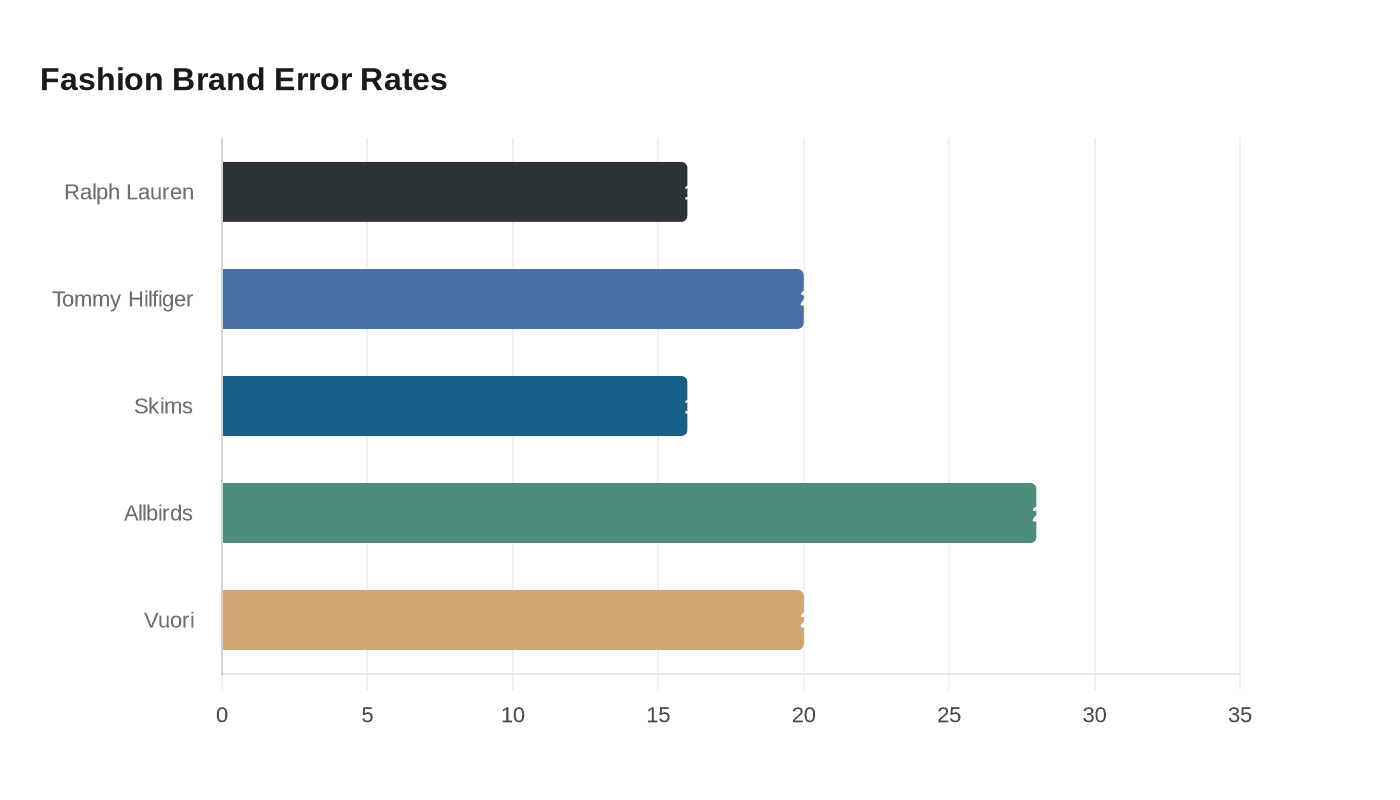
The Hallucination Index treats AI search like an early-warning system for brand damage, and the first fashion pilot is blunt: 20% of the answers were materially wrong. 5W tested five major fashion brands against 25 core business questions each and got 100 of 125 facts right, but the misses were the kind that matter in boardrooms and briefing books, not just trivia quizzes. Wrong executives, outdated valuations, missing co-founders and brand descriptions that no longer matched reality all showed up in the answers.
That is the real measurement problem. A brand can win the mention and still lose the narrative if the model summarizes it with stale facts. 5W says AI descriptions are often 12 to 18 months behind reality, which means leadership changes, repositioning and new offers can keep getting flattened into yesterday’s version of the company. For communications, SEO and PR teams, that makes accuracy part of visibility. It is no longer enough to ask whether a brand appears in an answer. The sharper question is whether the answer is current enough to be useful and credible.
5W’s score bands make the risk easy to read: under 10% is Controlled, 10% to 20% is Manageable risk, and 20% plus is Active brand risk. In the published fashion scorecard, Ralph Lauren landed at 16%, Tommy Hilfiger at 20%, Skims at 16%, Allbirds at 28% and Vuori at 20%. The pilot used Claude as the single engine, but 5W says the larger flagship study will expand to 15 brands across ChatGPT, Claude, Perplexity, Gemini and Google AI Overviews, with a 30-day rerun to test whether the errors stick around.
The firm says its fact-checking standard relies on primary sources only, including SEC filings, company press releases, audited reports and official disclosures. That matters because OpenAI said in September 2025 that hallucinations remain a fundamental challenge for large language models, and that current training and evaluation systems can reward guessing over admitting uncertainty. Search Engine Land added in April 2026 that AI search is on track to overtake traditional search by 2028, which raises the stakes further. As discovery moves into AI answers, stale brand facts stop being a nuisance and start becoming a reputational risk.
This article was produced by Prism’s automated news system from verified source data, official records, and press releases, then run through automated quality and moderation checks before publishing. The system is built and supervised by the people who set the standards it runs under. Read our full AI policy.
Did this article answer your question?