AI visibility hinges on crawlability, structure, mentions, and authority
AI visibility now comes down to crawlable pages, clear structure, and off-site authority signals, not a separate discipline from SEO.
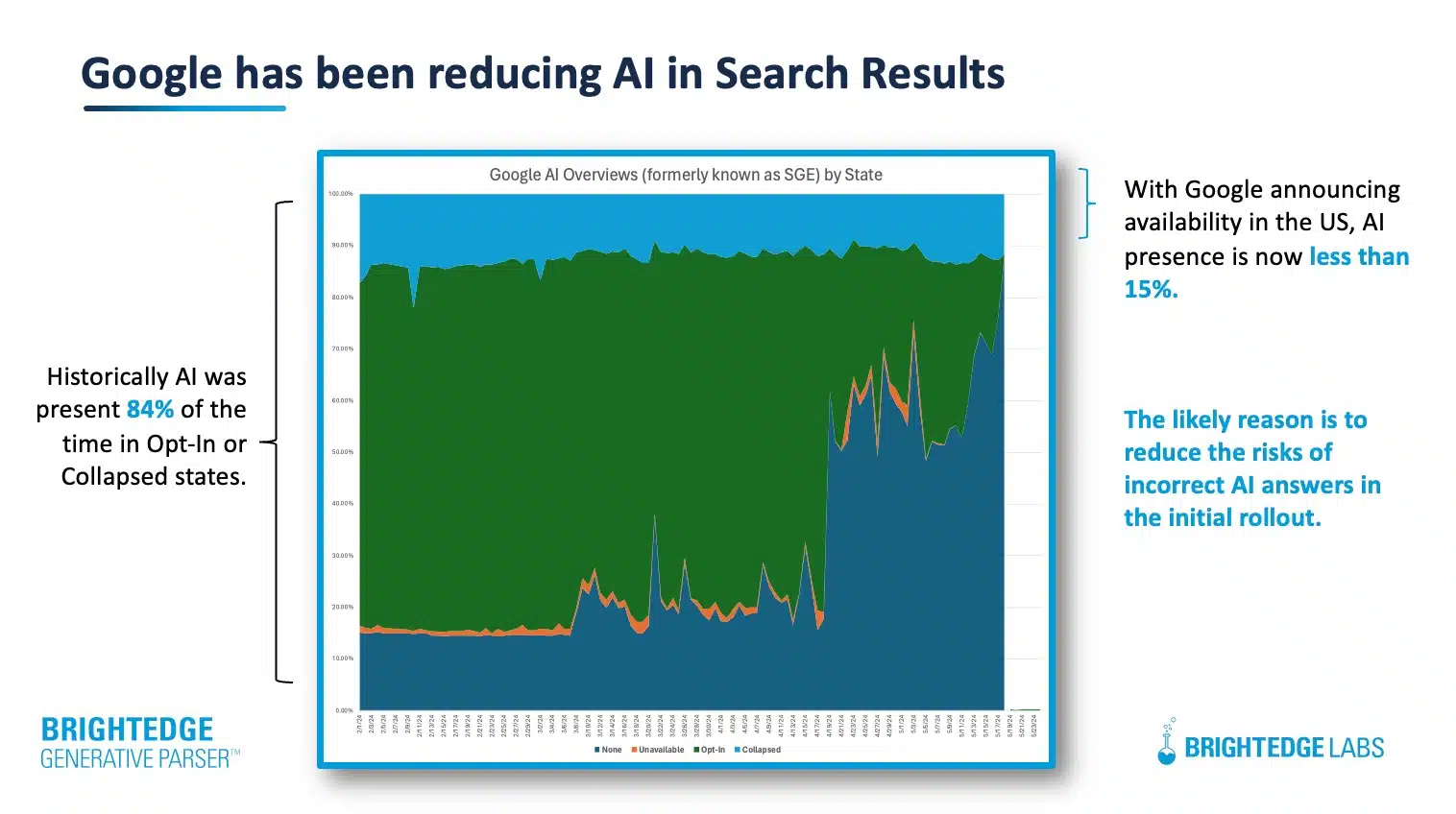
BrightEdge data put AI Overviews on about 48% of tracked queries by February 2026, up from roughly 31% a year earlier. The fastest gains in that visibility still come from the same work that has always mattered in search: make the page easy to crawl, make the answer easy to extract, and make the brand easy to trust. Google, Microsoft, and Bing keep circling back to those fundamentals, even as AI Overviews, Copilot, and other answer surfaces change how results are assembled. The tactical shift is simple to state and harder to execute: optimize not only for indexing, but for retrieval, synthesis, and citation-worthy clarity.
Crawlability is still the gatekeeper
If an AI system cannot reach the page, nothing else matters. Google says the best practices for SEO remain relevant for AI features in Google Search, and there are no additional requirements or special optimizations needed to appear in AI Overviews or AI Mode. Microsoft starts from content that is fresh, authoritative, structured, and semantically clear, while still treating crawlability, metadata, internal linking, and backlinks as essential.
Sitemaps remain foundational for discoverability in AI-powered search, and accurate lastmod values help prioritize recrawling and reindexing. Keep URLs in the sitemap current, update lastmod when content changes in substance, and do not treat XML as a one-time setup. In practice, the brands that win here are the ones that publish reliably, refresh pages on a schedule, and keep the technical path open for repeated visits.
Structure is how models find the answer
Once a crawler reaches the page, the next question is whether the content can be parsed cleanly. Google describes AI Overviews and AI Mode as extensions of core search ranking and quality systems that use retrieval-augmented generation. It also uses query fan-out, where a system can issue multiple related searches before assembling a response. That means the page needs to answer the main query directly while also making its subtopics legible enough for a model to lift the right passage.
This is where structure matters more than stylistic polish. Clear headings, concise sections, semantic consistency, and explicit entity naming all help a system understand what lives where. AI systems do not reward dense prose for its own sake. They reward pages that can be split into reliable, reusable pieces.
Teams trying to over-engineer markup can relax on format choice. Bing’s crawlers do not prefer one supported format over another, whether that is JSON-LD, Microdata, Microformats, RDFa, or Open Graph. The exact markup flavor is less important than using structured data consistently, accurately, and in ways that make the page easier to interpret.
AEO and GEO are still SEO under another label
Google is blunt on this point: AEO and GEO are terms people use for AI visibility work, but from Google’s perspective this is still SEO. That matters because a lot of the current market noise tries to present AI optimization as a brand-new discipline. The more useful reading is narrower: AI search is changing the surfaces, but the underlying work still depends on the same signals of quality and accessibility that have driven organic visibility for years.
That continuity is visible in how search systems are changing their retrieval logic. GraphRAG is pushing SEO toward entity-first retrieval, which raises the value of clean entity names, related concepts, and corroborating references across the web. Pages that define people, products, categories, and relationships clearly are easier to reuse in synthesized answers than pages that hide the main point in a wall of copy.
Mentions and authority now extend beyond the site
AI systems often infer authority from the broader web, not just from the publisher’s own pages. That makes brand mentions more than a vanity metric. Mentions in respected publications, analyst coverage, partner pages, customer references, and linked discussions can all strengthen the signal that a brand is real, relevant, and worth surfacing in an answer.
A survey of 1,008 consumers and 150 marketers found AI search adoption rising while consumer trust declined. Brands also have to reassure users that the answer is grounded, current, and legitimate.
Similarweb found that visitors who saw a brand recommended by ChatGPT viewed 12 pages and spent 11.8 minutes on site on average, compared with 6.5 pages and 5.6 minutes for other visitors.
Visibility is fragmented across modes and systems
Visibility does not transfer cleanly from one AI mode to another. Research showed only 25.6% overlap in cited sources between ChatGPT’s minimal and high-reasoning modes across 100 prompts and 20 buyer journeys.
Google says AI Overviews appear only when the system judges them additive to classic Search, so the opportunity is real but uneven.
The playbook, in order of return
- Keep pages crawlable, indexable, and refreshed, with accurate sitemap lastmod values.
- Structure content so the answer appears early, the supporting detail is modular, and entity names are unambiguous.
- Use structured data consistently, without obsessing over format choice more than accuracy.
- Reinforce the page with backlinks, internal links, and external brand mentions that support authority.
- Publish in ways that make the brand easy to quote, summarize, and connect to related entities.
The most durable changes are also the least glamorous:
This article was produced by Prism’s automated news system from verified source data, official records, and press releases, then run through automated quality and moderation checks before publishing. The system is built and supervised by the people who set the standards it runs under. Read our full AI policy.
Did this article answer your question?