SEO teams adopt LLMs, APIs and scripts for AI visibility
LLMs and scripts are taking over SEO busywork, but AI Overviews and Search Console data make the real job measuring and adapting to AI search.

On June 3, 2026, Google added dedicated generative AI performance reports to Search Console. SEO teams are not replacing the old stack so much as splitting it open and rebuilding around it. LLMs handle the analysis that used to eat hours, APIs and scripts pull fragmented signals into one workflow, and the classic enterprise SEO suite stays in place for crawl health, indexation, and baselines that still matter.
What gets replaced
The first jobs to move off the human desk are the repetitive ones. LLMs can summarize crawl exports, cluster query themes, draft hypotheses from messy datasets, and turn a pile of logs or page-level reports into something a strategist can read in minutes. APIs and scripts take over the data-shuttling work, pulling signals from Search Console, crawl tools, rank trackers, and AI-answer monitoring into a single working file instead of forcing teams to click through dashboards one by one.
AI visibility is more technical than classic SEO reporting. The work now includes prompt testing, structured data checks, crawl-data analysis, and competitive monitoring across systems that do not all speak the same language. A monolithic platform can still tell you what your site is doing, but it will not reliably tell you how an AI answer surface is rewriting the journey around your page.
What gets layered on
The core SEO platform is not obsolete. It is the base layer, the place where technical hygiene, internal linking, indexation, and page-level performance still get measured. What changes is the layer above it: teams now need tooling that can observe AI search surfaces, test how prompts and queries behave, and adapt quickly when visibility moves outside the blue-link results page.
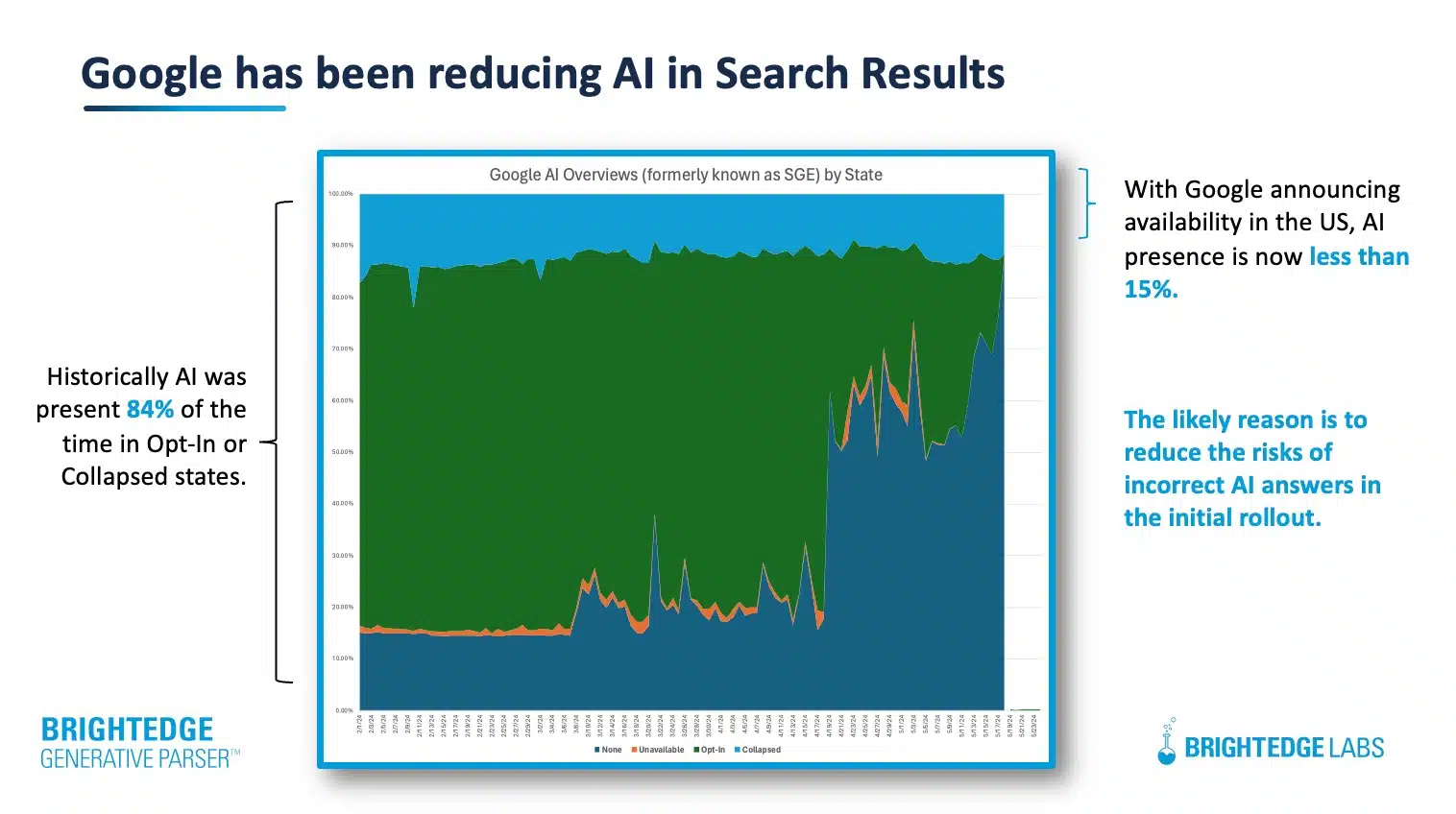
Google pushed that shift into mainstream search with AI Overviews. The feature began rolling out to everyone in the U.S. in May 2024 after being used billions of times in Search Labs, Google said. In October 2024, Google expanded AI Overviews to more than 100 countries and said they had reached more than 1 billion global users every month.
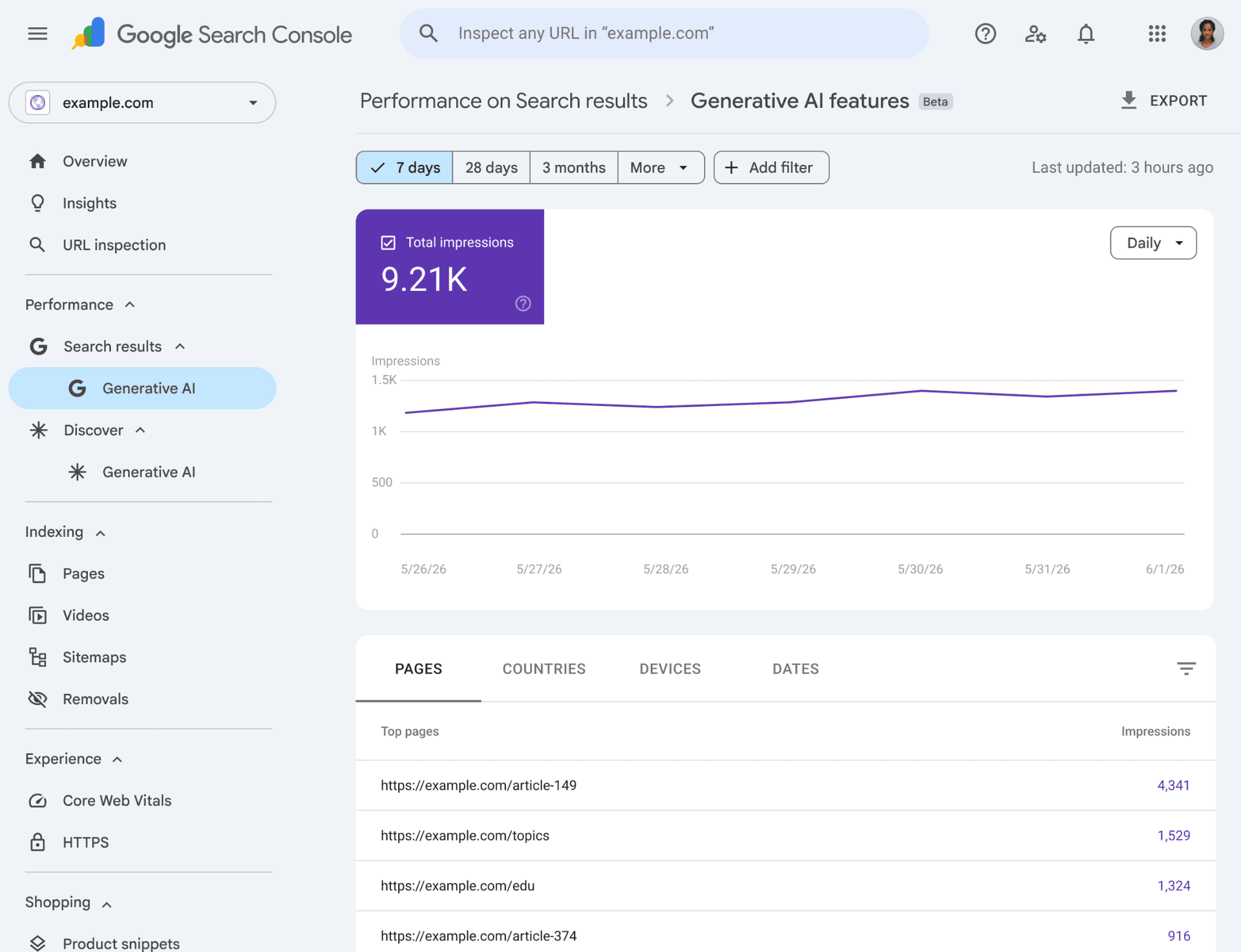
Search Console’s dedicated generative AI performance reports give website owners a separate view for generative AI features such as AI Overviews and AI Mode instead of having to infer impact from standard search reports alone, the first first-party measurement layer built for this problem. The report is still being rolled out to a subset of website owners, so access is not universal yet.

Why the click curve changed
Ahrefs found in one 2025 study that AI Overviews correlated with a 34.5% lower average CTR for the top-ranking page on informational keywords. Ahrefs reran the analysis on December 2025 data and found a 58% lower average CTR. Even when a page ranks, the click can disappear into the answer layer above it.
Semrush found AI Overviews appeared on 13% of searches in May 2025, and 88% of those overviews targeted informational queries. At the same time, commercial and navigational queries were rising. AI Overviews started as an informational-answer feature, but they are moving closer to commercial search journeys where brands care most about qualified traffic and conversions.
How the new workflow actually works
The cleanest AI visibility setup is modular. Teams that are moving fastest are not buying one giant platform and hoping it solves everything. They are stitching together a workflow that can observe, test, and adapt, with each part doing one job well.
1. Start with a measurement baseline in Search Console and the standard SEO stack.
The new generative AI performance reports give you a first-party view into AI features, while the traditional reports still show the underlying search demand and landing-page behavior.
2. Use APIs and scripts to gather signals that no single dashboard covers.
Pull ranking data, crawl data, and AI-answer observations into the same sheet or database so you can compare what is ranking, what is cited, and where the click path breaks.
3. Use LLMs for synthesis, not authority.
Let them summarize query clusters, label patterns in prompt testing, and produce working hypotheses about why a page is being surfaced or ignored. The model should speed analysis, not replace it.
4. Keep humans in charge of judgment.
Structured data decisions, content rewrites, competitive calls, and risk assessment still need editorial and technical oversight. AI systems are dynamic and less predictable than classic rankings, so the final call on what to change cannot be outsourced to a prompt.
OpenAI introduced SearchGPT in July 2024 as a prototype search product built to combine language-model answers with web sources and timely information. The visibility problem now extends beyond one search engine and into a wider set of assistant-style experiences where content can be cited, summarized, or bypassed entirely.
The old stack still matters, but it is no longer enough
The strongest teams are not abandoning the traditional SEO toolkit. They are using it where it still excels and surrounding it with custom workflows for the places it cannot see. Crawl diagnostics, indexation analysis, content depth, and technical QA still belong to established platforms; answer-surface monitoring, prompt testing, and cross-source synthesis now belong to LLMs, APIs, and scripts.
Gartner predicted in February 2024 that traditional search engine volume would drop 25% by 2026 as search marketing loses share to AI chatbots and other virtual agents. McKinsey later said half of consumers already use AI-powered search and projected $750 billion in consumer spend could flow through AI-powered search by 2028.
This article was produced by Prism’s automated news system from verified source data, official records, and press releases, then run through automated quality and moderation checks before publishing. The system is built and supervised by the people who set the standards it runs under. Read our full AI policy.
Did this article answer your question?