AI Visibility Index Shows Sportsbooks, Ads Don't Guarantee Citations
FanDuel, DraftKings and Caesars topped 5W’s new AI index, while bigger ad budgets did not prevent BetMGM and ESPN BET from slipping behind in AI citations.
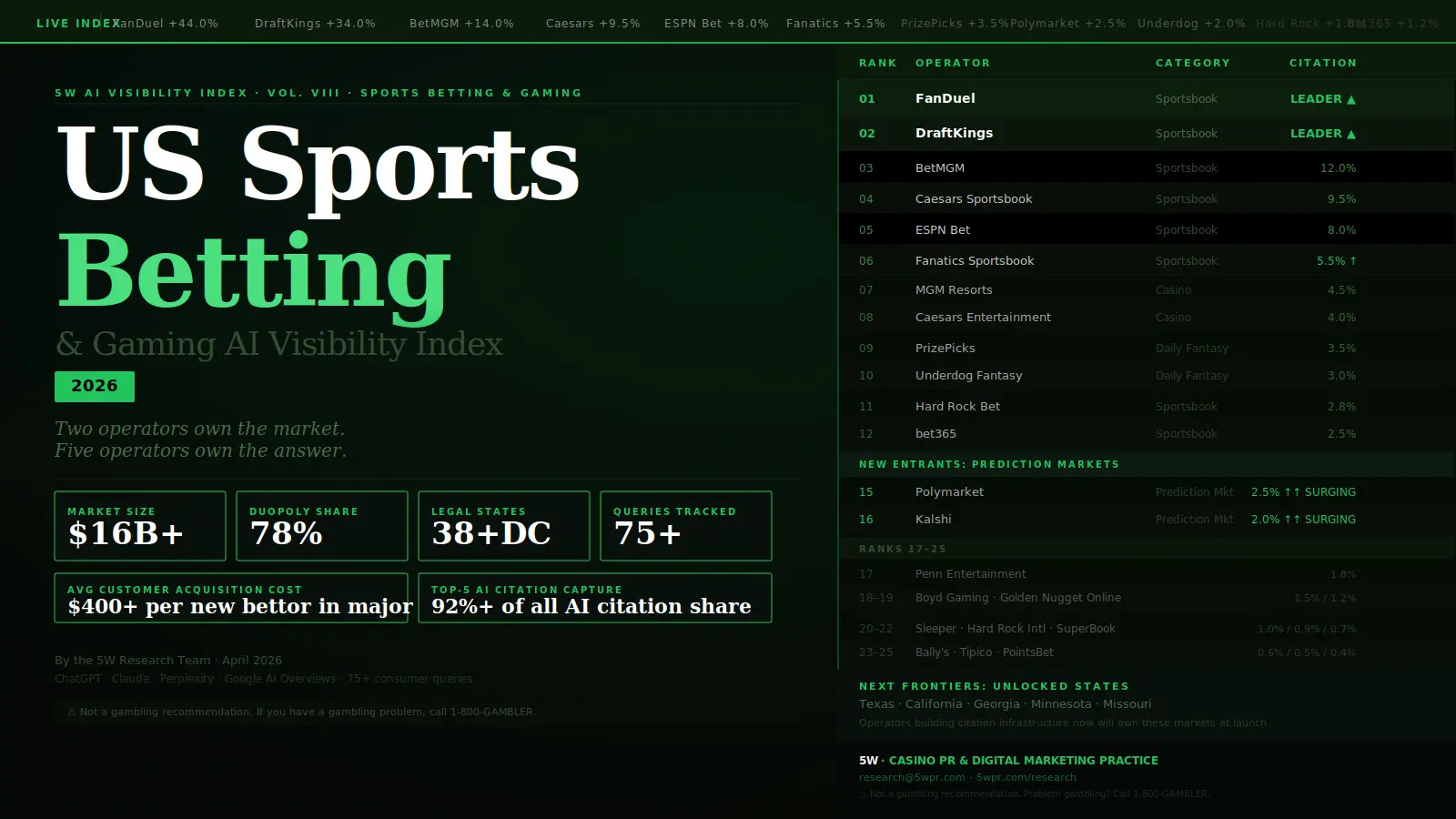
FanDuel, DraftKings and Caesars Sportsbook led 5W’s inaugural U.S. Sports Betting & Gaming AI Visibility Index, a ranking that showed generative AI engines do not simply mirror the brands that dominate paid media. In a category built on speed, regulation and highly transactional intent, the report found that AI visibility rewarded the operators most able to project trust, not just the ones spending the most.
The index, released on May 1, 2026, tested more than 50 bettor-intent queries across ChatGPT, Claude, Perplexity and Google AI Overviews. It covered sportsbook selection, odds explanations, promotion comparisons, mobile app recommendations and responsible-gaming questions. On those prompts, BetMGM trailed DraftKings despite a larger commercial market share, while ESPN BET landed below the top tier even after major ad investment. The pattern was clear: responsible-gaming content, state-by-state regulatory transparency and editorial authority carried more weight than pure spend.

That gap lands in a market that has never been bigger, or more watched. The American Gaming Association said U.S. commercial gaming revenue reached a record $78.7 billion in 2025, with sports betting revenue alone hitting $16.96 billion. At the same time, public skepticism has risen. A Pew Research Center survey conducted July 8 through Aug. 3, 2025 found 43% of U.S. adults said legal sports betting is bad for society, up from 34% in 2022, while 40% said it is bad for sports, up from 33%. In that environment, AI systems appear to be favoring brands that look more credible, more transparent and more useful when a bettor asks a direct question.
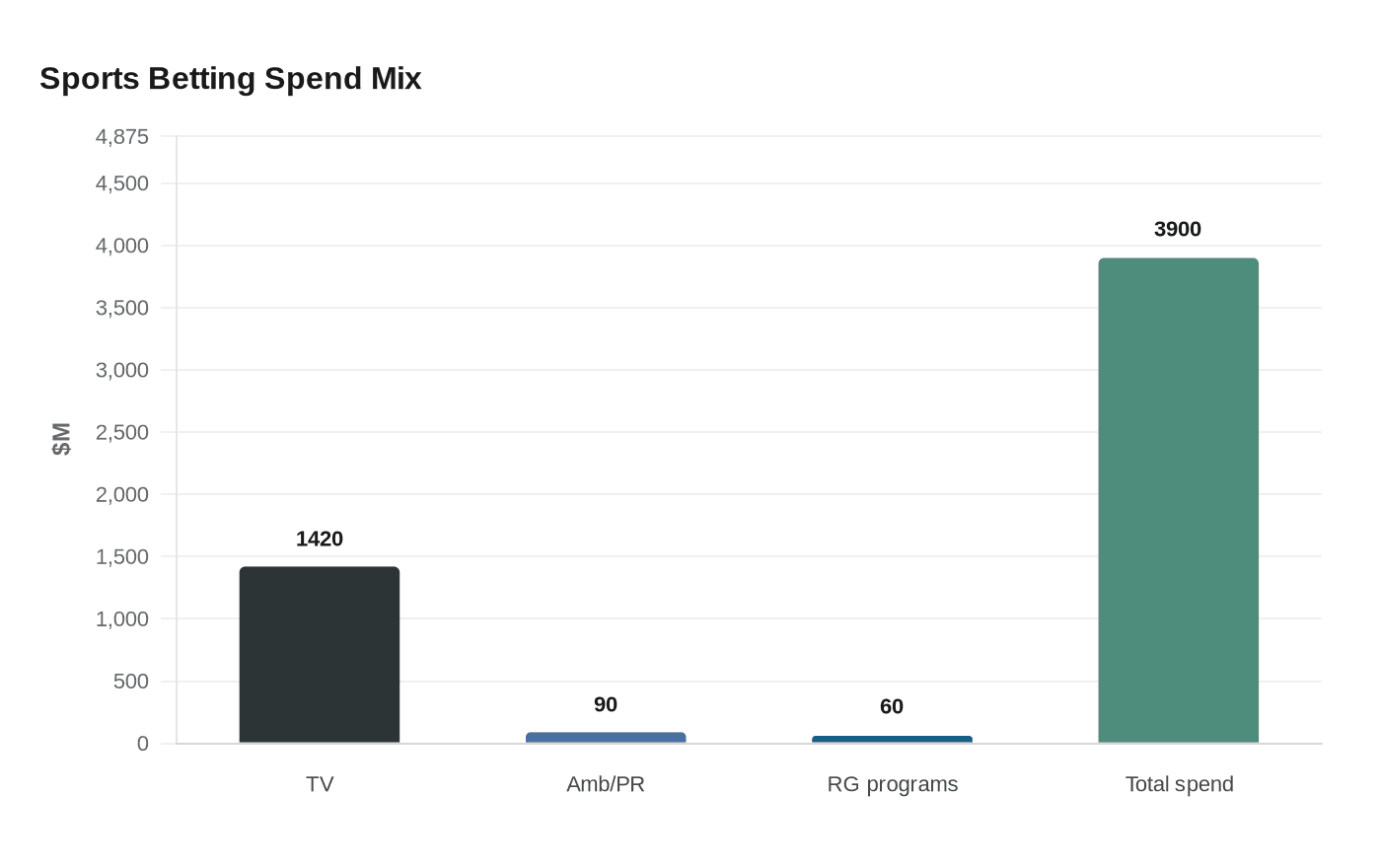
The spending picture makes the contrast sharper. 5W separately estimated that U.S. sports betting and online gaming companies spent $3.9 billion on advertising and marketing in 2025, including $1.42 billion on television, $520 million on celebrity and athlete ambassador deals, $90 million on earned media and PR, and just $60 million on responsible-gaming programs. That imbalance helps explain why GEO now looks less like a branding play and more like a compliance and authority exercise.
The policy backdrop is tightening too. The Responsible Online Gaming Association launched on March 27, 2024 with FanDuel, DraftKings, BetMGM, Penn Entertainment, Fanatics Betting & Gaming, Hard Rock Interactive and bet365, saying those founders represented more than 85% of the legalized online sports betting and iGaming industry in the U.S. The modern market accelerated after the 2018 Supreme Court decision that let states legalize sports betting, and AI answer engines have now become another gatekeeper in that crowded, highly regulated field.
This article was produced by Prism’s automated news system from verified source data, official records, and press releases, then run through automated quality and moderation checks before publishing. The system is built and supervised by the people who set the standards it runs under. Read our full AI policy.
Did this article answer your question?