Content engineering turns content teams into scalable publishing systems
Content teams are losing the old page-by-page SEO game. The edge now comes from building the systems that make content structured, reusable, and visible to AI search.
From pages to pipelines
The biggest shift in content right now is not about writing faster. It is about designing a publishing system that can take research, turn it into drafts, edit those drafts into usable assets, publish them cleanly, and measure what happens next. That is the content engineering mindset: less one-off heroics, more repeatable infrastructure.
In that model, the content engineer is not just another writer with a fancier title. The job is to build the pipeline that makes output scalable without wrecking brand consistency or quality. The whole point is to stop depending on manual effort for every article, every refresh, and every optimization pass.
Why the old SEO playbook is cracking
The old assumption was simple: rank well, get clicks. That logic is getting weaker as search results increasingly answer questions directly, especially when AI summaries appear above the blue links. Pew Research Center found in July 2025 that Google users were less likely to click links when an AI summary showed up, based on browsing data from 900 U.S. adults.
Ahrefs has pushed that warning even harder. In earlier testing, it found AI Overviews reduced clicks to top-ranking content by 34.5 percent, and later said clicks to cited pages fell 58 percent as AI Overviews expanded more widely. That matters because it shows visibility and traffic are no longer the same thing, which means teams have to optimize for being understood, cited, and reused, not just visited.
What a content engineer actually builds
A content engineer sits between strategy and publication and wires the whole system together. The work starts with research and outlining, then moves through drafting, editing, optimization, publishing, and feedback loops. The difference is that these stages are designed as reusable processes, not rebuilt from scratch every time a new piece goes live.
There are two useful flavors of the role. A structured-content engineer focuses on taxonomies, metadata schemas, and the rules that keep content consistent at scale. An AI-pipeline content engineer focuses on automation that helps content stay discoverable by search engines, AI bots, and agents. Both are trying to solve the same problem from different sides: make content easier for humans and machines to interpret.
Structured content is the foundation
If content cannot be classified cleanly, it will not scale cleanly. Contentful describes taxonomy as a system of categories and labels that uses a controlled vocabulary to improve consistency and scalability, which is exactly the kind of scaffolding content teams need once they move beyond a handful of pages. The point is not decorative organization. The point is to make every asset legible to the publishing system.
That means more than adding a few tags in the CMS. It means defining metadata schemas, standardizing naming conventions, and deciding which fields are mandatory across articles, landing pages, product pages, and supporting assets. When taxonomy is done well, the team spends less time debating where content belongs and more time publishing content that can be reused, updated, and surfaced reliably.
Contentful also offers AI-powered taxonomy assignment, which automates concept tagging for entries and assets. That is a practical example of content engineering at work: using machine help to keep the structure consistent, while still preserving editorial control over the system itself.
AI visibility now depends on operational quality
Google’s own guidance makes the direction pretty clear. Its AI features documentation tells site owners to use SEO best practices and maintain a clear technical structure if they want better visibility in generative AI search experiences. Google also says structured data can help Search understand what a page is about and make that page eligible for richer appearances in results.
That changes the content brief. You are no longer just writing for intent keywords and human scanning. You are building pages that are easy to parse, easy to classify, and easy to trust. Google’s generative AI guidance also emphasizes unique, valuable content and context about how content was created, which pushes teams toward source-backed pages with clean structure instead of thin, generic copy.
Bing is making the same move in a different way. Its AI Performance report shows which pages are cited in AI-generated answers across Microsoft Copilot and partner experiences, how that visibility changes over time, and which queries grounded those citations. That kind of reporting turns AI visibility into something measurable, which is exactly why content engineering matters: if you cannot track where your content appears, you cannot improve the system that gets it there.
Schema helps, but it is not a magic trick
A lot of teams still treat structured data like a cheat code. Add JSON-LD, wait for AI citations, and call it a day. Ahrefs tested that theory from August 2025 through March 2026 across 1,885 pages that added JSON-LD schema, and found no major uplift in citations across Google AI Overviews, AI Mode, and ChatGPT.
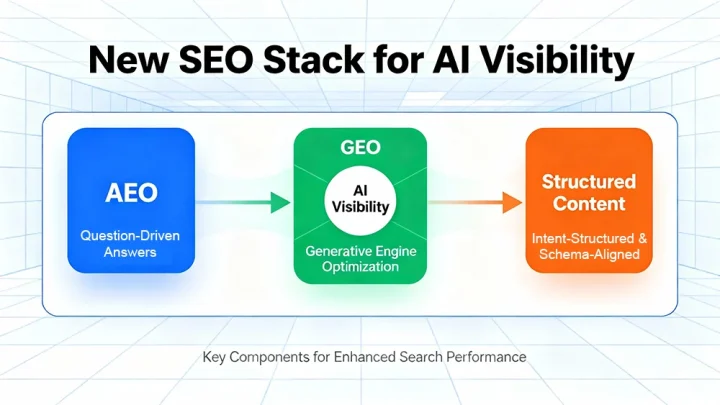
That does not mean schema is useless. It means schema is only one layer in a larger system. AI visibility depends on the full package: clear structure, strong internal linking, consistent metadata, fresh content, and pages that are actually worth citing. If the surrounding content is weak, markup alone will not rescue it.
The new publishing stack is built for reuse
The practical takeaway is straightforward: content teams need systems, not just talent. A strong content-engineering stack supports structured content, controlled vocabularies, internal linking, schema where appropriate, and refresh cycles that keep pages accurate enough to be surfaced and cited. It also makes it easier to publish more without letting quality drift, which is the real pressure point for most teams.
That is why the role is growing beyond efficiency. The real value is operational. When the system can consistently produce clearly structured, source-backed pages, AI surfaces are more likely to understand the brand, and more likely to cite it. When it cannot, even good prose gets buried.
The business stakes are getting louder
Publishers are already fighting over this shift in public. Reuters-reported complaints from publishers over Google AI Overviews helped drive a 2025 European antitrust complaint by independent publishers, which shows how high the traffic and attribution stakes have become. This is no longer a niche SEO debate. It is a fight over how content gets discovered, credited, and monetized in AI-first search experiences.
That is why content engineering is becoming the smarter operating model. It lets teams scale output, keep brand consistency intact, and build for AI retrieval and reuse instead of hoping every page performs on its own. In a search environment where visibility is increasingly governed by structure, metadata, and machine readability, the teams that win will be the ones that treat content like infrastructure.
This article was produced by Prism’s automated news system from verified source data, official records, and press releases, then run through automated quality and moderation checks before publishing. The system is built and supervised by the people who set the standards it runs under. Read our full AI policy.
Know something we missed? Have a correction or additional information?
Submit a Tip