Daily AI Overview users click sources far more often, GWI finds
Daily AI Overview users clicked cited sources at 50 percent, versus 14 percent for occasional users. The gap makes AI search a segmentation story, not a simple click collapse.
The lazy read on AI Overviews is that they simply starve publishers of clicks. GWI’s data points to a messier truth: behavior changes sharply with habit. Daily AI Overview users clicked cited sources at 50 percent, compared with 28 percent for weekly users and 14 percent for people who used the feature less often.
That spread matters because it turns the whole debate into a segmentation problem, not a single CTR headline. GWI says its consumer research platform draws on trusted human data across 50-plus markets, which helps explain why the most interesting question is not whether AI summaries generate traffic in the aggregate, but which users are willing to go deeper once they see them.

The contrast with broader industry data is striking. Google has said AI Overviews reach 2.5 billion monthly users, and Pew Research Center found that 58 percent of U.S. respondents encountered at least one Google search with an AI-generated summary in March 2025. Pew also found that people were less likely to click links when an AI summary appeared, and that they very rarely clicked the sources cited inside the summary itself.
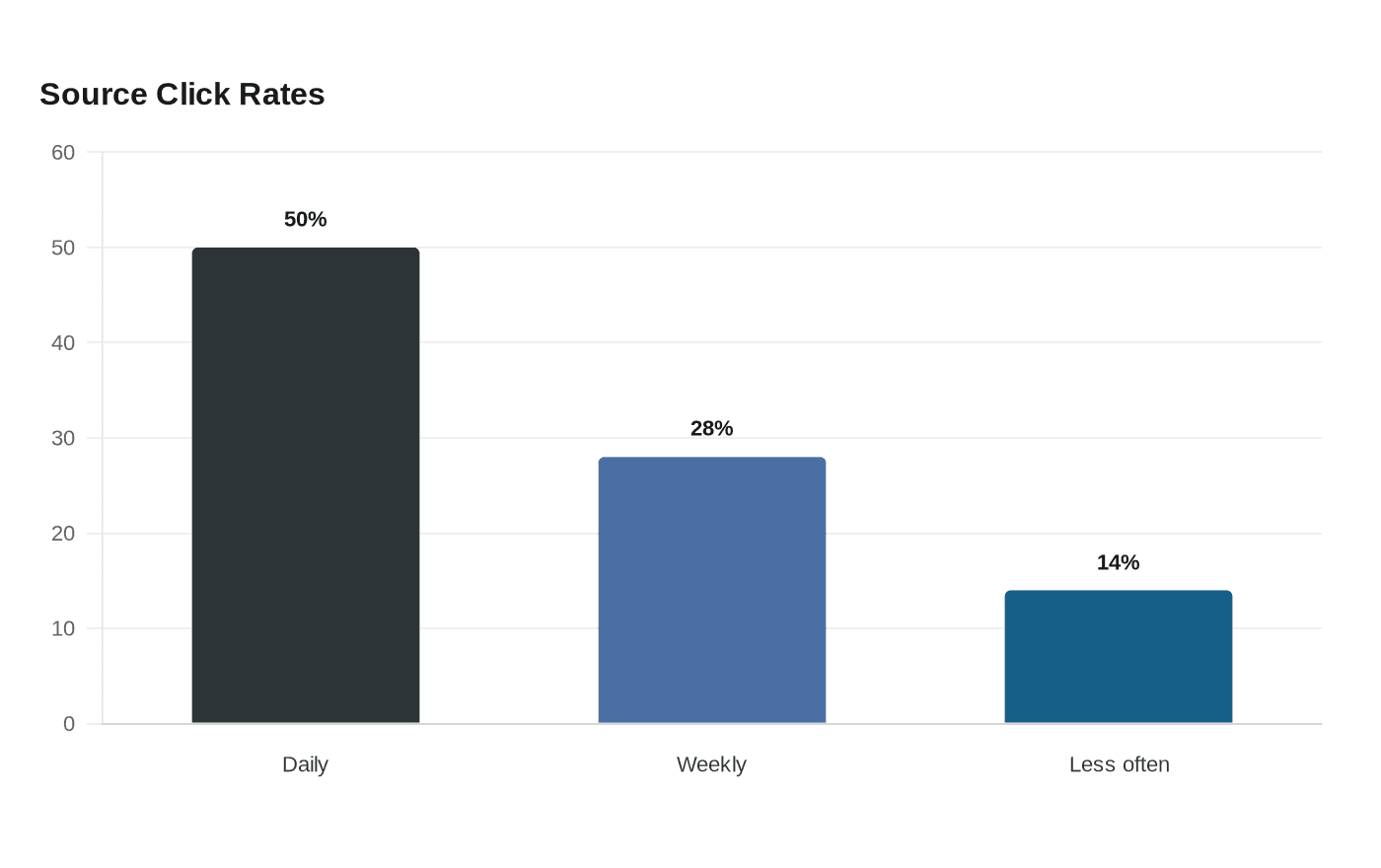
Taken together, the numbers suggest two different audiences. Occasional users still behave like classic searchers: they skim, satisfy the immediate need, and move on. Frequent users look more like high-intent researchers. They are more accustomed to the interface, more willing to verify claims, and more likely to treat cited links as part of the decision process rather than an optional extra.
That is the playbook for marketers. Citation visibility still has value, but only when the content earns a click fast. The page behind the overview has to be easy to inspect, clearly sourced, and specific enough to validate the answer without making readers work for it. The goal is not just traffic, but trust and assisted conversions, especially for queries where users are comparing, checking, or making a purchase decision.
The GWI framing is the useful correction here: AI Overview audiences are not monolithic. As users move from occasional to weekly to daily, source-click behavior rises with them. For brands, that means the fight is no longer about whether AI summaries exist. It is about being the source users trust enough to open.
This article was produced by Prism’s automated news system from verified source data, official records, and press releases, then run through automated quality and moderation checks before publishing. The system is built and supervised by the people who set the standards it runs under. Read our full AI policy.
Know something we missed? Have a correction or additional information?
Submit a Tip