Study finds prompt wording has limited impact on AI brand visibility
Prompt wording barely moved brand visibility, but structure still did. Comparison, list-style, and purchase-stage queries changed the answer set more than tiny rewrites.
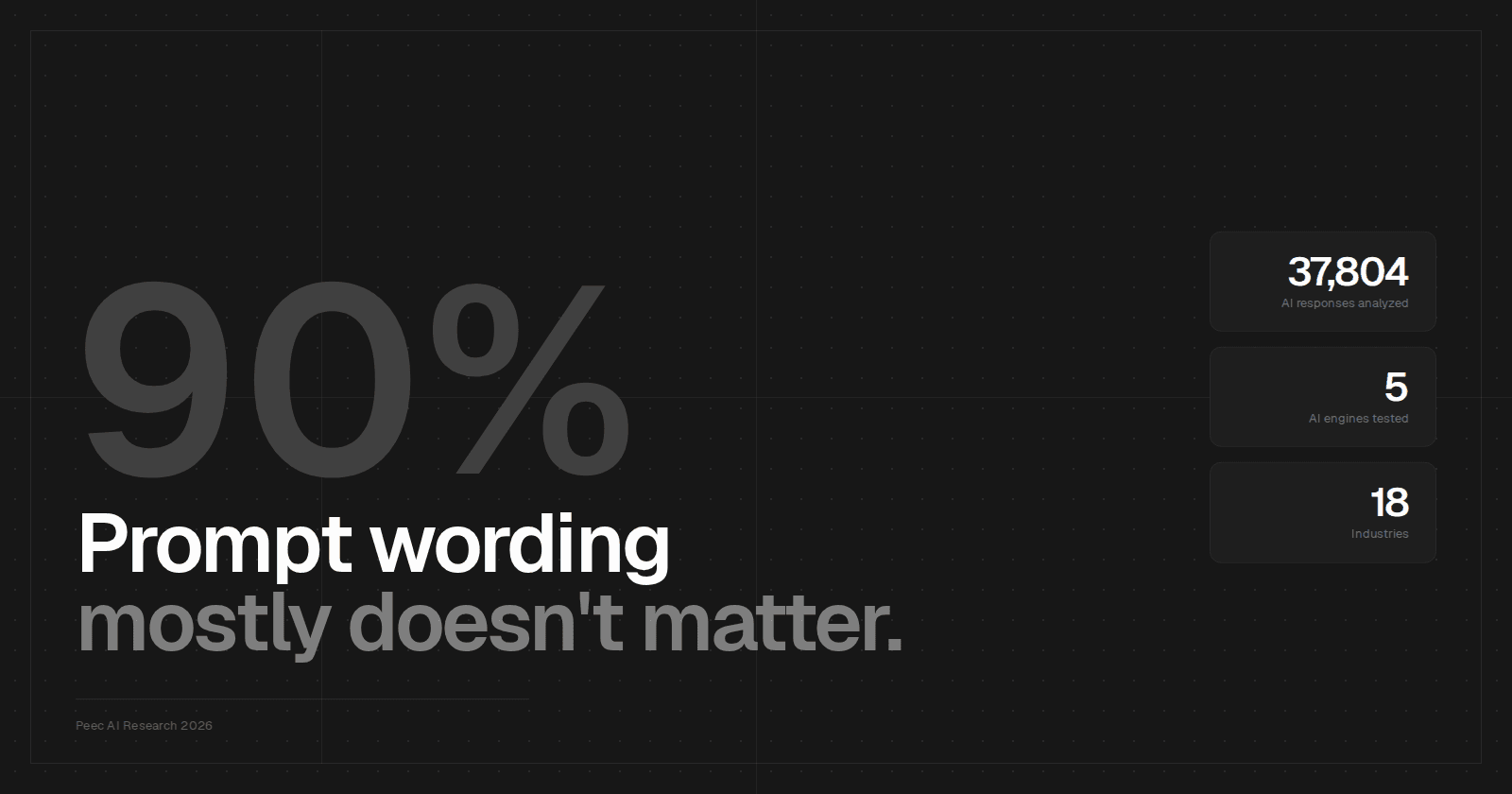
Brand visibility in AI search looks steadier than a lot of marketers expected, but not perfectly fixed. A Peec AI study spanning 1,754 prompts and 37,804 AI responses across ChatGPT, Gemini, Perplexity, Google AI Mode, and Google AI Overviews found that semantically similar prompts usually produced very similar brand sets back. The real wrinkle is that certain query shapes still move the needle, especially concise keyword-style prompts, list requests, and mid-funnel comparison questions.
What the study measured
The point of this research is not that wording never matters. It is that the market has been overstating how fragile AI brand visibility really is. Across five sectors and 18 sub-verticals, more than 90% of prompt variations kept essentially the same meaning, which means the intent underneath the text stayed stable even when the phrasing changed.
That matters because a lot of current AI search reporting still treats every prompt as a one-off artifact. This study pushes in the other direction: if two people ask the same commercial question in slightly different language, the results are often close enough that the metric should be clustered, not micromanaged. In other words, the unit of analysis should be intent, not a single sentence.
Peec AI has built its business around that idea. The company says it helps marketing teams analyze brand performance across AI search platforms and track visibility, position, and sentiment. It also says more than 2,000 marketing teams use the platform, which makes this more than a research exercise. It is part of a larger attempt to turn AI search into something brands can measure with discipline.
Where wording still changes the result
The most useful finding for marketers is the one that keeps this from becoming a “nothing matters” story. It is not true that every rewrite is harmless. Concise keyword-style prompts and list requests surfaced up to 20% more brands than open-ended prompts, which tells you that structure can widen or narrow the answer pool even when the commercial intent stays the same.
That is the practical measurement trap. An open-ended query like a broad discovery question can produce a more selective brand set, while a tightly framed list request can pull in more competitors. The difference is not random noise. It is a predictable shift in how the model interprets the ask, and it can move a brand in or out of view.
The middle of the funnel is where this gets especially interesting. Discovery-stage comparison prompts are more sensitive to phrasing than top-of-funnel awareness queries or bottom-of-funnel purchase-stage asks. That lines up with how humans shop. When a person is still comparing options, the wording often signals what kind of answer they want: a shortlist, a breakdown, a head-to-head, or a recommendation. That subtle shift can change the brand set in a way a dashboard needs to catch.
Why mentions and citations cannot be lumped together
Another reason prompt tracking gets messy is that AI mentions and AI citations are not the same thing. AI mentions are the occasions when a model names a brand in its answer. AI citations are the sources the system points to. Those two signals can move independently, which means a prompt may affect visibility, source selection, or both.
That distinction matters a lot when you are building reporting around AI search. A brand can be mentioned without being cited, cited without being strongly named in the body of the answer, or both at once. If your dashboard only watches one of those signals, you miss half the story. Prompt wording can influence whether a brand shows up directly, whether it is backed by a cited source, and whether the model frames it as a contender or leaves it out.
For marketers, that means the old habit of tracking one exact phrase is too narrow. A single prompt string is not a reliable proxy for how real users ask commercial questions. Two people can want the same thing and still trigger different brand sets because one asks for a list, another asks for a comparison, and a third uses purchase-stage wording.
How to build a better prompt-tracking dashboard
The measurement lesson is straightforward: stop treating prompt tracking like keyword rank tracking with a new coat of paint. The dashboard has to reflect how people actually ask questions, not just how neatly the prompt can be logged.
A practical setup should do at least four things:
- Cluster semantically similar prompts instead of counting every literal variation as a separate event.
- Separate comparison, troubleshooting, and purchase-stage queries, because each intent bucket behaves differently.
- Track brand mentions and citations as distinct outputs, not as one blended visibility number.
- Compare performance across surfaces, since ChatGPT, Gemini, Perplexity, Google AI Mode, and Google AI Overviews do not behave identically.
That approach gives you a better read on when visibility is truly stable and when it is quietly shifting. It also helps you spot the exact query shapes that move a brand in or out of the answer set, which is far more useful than obsessing over one perfect prompt.
Why this fits a larger shift in AI search measurement
This study is also part of a broader push to make AI search measurable at scale. Peec AI has been publishing related research through 2026, including work based on 30 million sources and 232,000 citations, plus posts on the top domains cited by AI search and on the KPIs that matter for measuring AI search visibility and revenue. That kind of output suggests the field is moving from speculation to repeatable measurement.
There is also evidence that the broader ecosystem is already shaping what AI systems surface. A separate Peec AI analysis cited in industry coverage examined more than 1.2 million mentions from over 5,000 prompts about software purchasing decisions and found that LinkedIn had outsized influence on LLM responses compared with older tech platforms. The point is not that one platform always wins. The point is that prompt structure, category context, and source ecosystem all affect what the model returns.
That is the real story here. Brand visibility in AI search is not wildly volatile, but it is not static either. The brands that get measured well will be the ones whose dashboards separate intent from phrasing, mentions from citations, and real behavioral shifts from cosmetic prompt changes.
This article was produced by Prism’s automated news system from verified source data, official records, and press releases, then run through automated quality and moderation checks before publishing. The system is built and supervised by the people who set the standards it runs under. Read our full AI policy.
Know something we missed? Have a correction or additional information?
Submit a Tip