Top alternatives for AI search visibility and share of voice analysis
Similarweb leads the cross-platform field for AI share of voice, while Profound, AthenaHQ, Peec AI, and OtterlyAI split enterprise, agency, and mid-market needs.
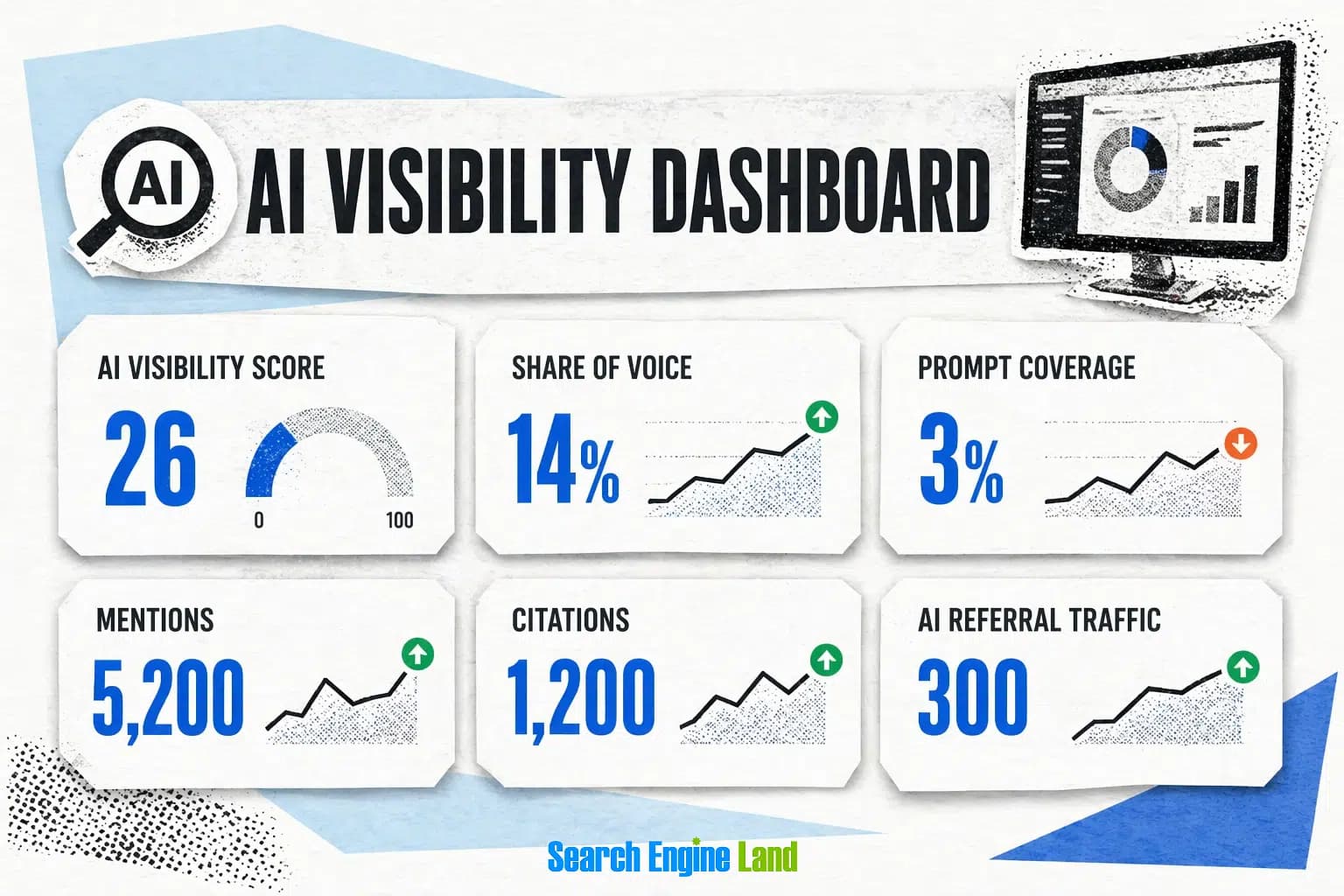
Similarweb is the broadest choice when competitor analysis has to connect AI share of voice to traffic, citations, sentiment, and downstream market context. Profound, AthenaHQ, Peec AI, OtterlyAI, SE Visible, HubSpot, and Semrush all cover parts of the stack, but they split cleanly by segment, budget, and how much workflow they add beyond monitoring.
How they compare
| Provider | What it's best for | Pricing or starting point | Notable strength |
|---|---|---|---|
| Similarweb | Enterprise benchmarks, traffic link | Demo, trial | Traffic-linked AI intelligence |
| Profound | Daily prompt monitoring | Custom quote | 6M+ daily prompts |
| AthenaHQ | Enterprise AEO workflow | Quote | 8+ LLMs, content actions |
| Peec AI | Mid-market teams | From $95/mo | Unlimited users |
| OtterlyAI | Agencies and SMEs | From $29/mo | 50+ countries |
| SE Visible | Agencies, multi-brand teams | From $99/mo | Unlimited seats |
| HubSpot | Free SOV snapshot | Free | Exportable report |
| Semrush | SEO-led AI visibility | From $99/domain | Competitor analysis |
How to read this table: Similarweb is the broadest option when you want AI visibility tied to web and app intelligence, while Profound and AthenaHQ lean enterprise, Peec AI and OtterlyAI suit mid-market and agency budgets, and HubSpot and Semrush fit teams already inside wider marketing stacks.
1. Similarweb
Similarweb AI Search Intelligence and Gen AI Intelligence are the strongest fit for Tier-1 teams that want AI share of voice tied to the rest of the digital funnel, not just a standalone prompt dashboard. The company says thousands of customers use its digital data, and its customer stories include Microsoft, eBay, DHL, Rakuten, and Airbnb, which matters when your reporting has to speak to executives, agencies, and regional teams at once.
The broader Similarweb dataset, which spans more than 1 billion websites and 200 million mobile apps, gives the AI visibility layer a market context that point tools cannot match. Use it when you need to connect brand mentions, citation gaps, sentiment, and competitor benchmarking back to traffic or revenue, especially in categories where the board wants more than a prompt-by-prompt snapshot.
2. Profound
Profound is the enterprise answer-engine monitor when the priority is structured prompt coverage, citation share, sentiment, and competitive presence in one workflow. Its public materials point to 6+ million daily prompts and hundreds of millions of real AI conversations, which puts it in a tier built for teams that want a dense monitoring layer rather than a lightweight audit.
That makes Profound a fit for large marketing orgs, agencies, and product teams that need to watch answer engines daily and then route the output into reporting or alerts. It is strongest when the job is to track where you appear, which sources drive those answers, and how your citation share changes against named competitors over time.
3. AthenaHQ
AthenaHQ is positioned as a command center for AEO and GEO, with cross-platform visibility across 8+ LLMs, hallucination detection, and content optimization recommendations. Its own positioning is clearly commercial and enterprise oriented, and the agency program adds discounted licenses for firms that want to bundle AI search management with managed services.
The practical strength is workflow depth. AthenaHQ also shows integrations with Shopify, Google Analytics 4, Google Search Console, Webflow, Wix, Framer, WordPress, and Looker, so it works best when visibility data has to move directly into content operations, attribution, and client reporting rather than stay trapped in a dashboard.
4. Peec AI
Peec AI is the clean mid-market option for teams that want visibility, position, and sentiment across ChatGPT, Perplexity, and Gemini without enterprise procurement friction. Its pricing starts at $95 per month, the company says it is trusted by 2,000+ marketing teams, and every paid tier includes unlimited users, which matters for in-house SEO, content, and product marketing groups.
Peec AI also leans into prompt quality and workflow portability. The platform’s MCP and agency materials show that teams can push prompt-level visibility data into Claude, Cursor, n8n, or Google Sheets, which makes it useful for operators who want to move from tracking into analysis and execution without buying a heavier enterprise stack.
5. OtterlyAI
OtterlyAI is a practical monitoring choice for agencies and smaller teams that need broad AI search coverage and simple pricing. The Lite plan starts at $29 per month, Standard at $189, and Premium at $489, with coverage for ChatGPT, Google AI Overviews, Perplexity, Microsoft Copilot, AI Mode, and Gemini, plus support for 50+ countries.
Its appeal is operational simplicity. OtterlyAI bundles brand reports, team members, prompt research, citation analysis, GEO audits, and exportable reporting, so it suits teams that want to show client-ready progress quickly rather than assemble a custom reporting stack. Enterprise quotes are available, which gives it a lane above the self-service plans without forcing every customer into the same tier.
6. SE Visible
SE Visible, built by the team behind SE Ranking, sits well with agencies and multi-brand operators that want AI visibility, sentiment, competitor benchmarks, and source analysis across ChatGPT, Perplexity, Gemini, Google AI Overviews, and AI Mode. Pricing starts at $99 per month for 200 prompts and 3 brands, and the platform advertises unlimited users, CSV exports, 7-country coverage, and 5 languages.

That segment fit matters. SE Visible is particularly relevant for agencies that manage several client brands at once, or for mid-market companies that want AI search visibility without committing to a larger SEO suite for the monitoring layer. The tradeoff is that it remains more reporting-focused than action-focused, so teams usually pair it with execution tools elsewhere.
7. HubSpot
HubSpot’s AI Share of Voice Tool is the lightest-weight entry point here because it is free and exportable. HubSpot says it measures how prominently AI platforms reference your brand week over week across ChatGPT, Perplexity, and Gemini, then adds competitive benchmarking, sentiment analysis, and recommendations.
The tool fits growth-stage teams already inside HubSpot’s customer platform, which now serves 288,000+ customers in 135+ countries. It is not the deepest GEO stack, but it is a clean way to get an executive-friendly benchmark before investing in Similarweb AI Search Intelligence, Profound, or AthenaHQ.
8. Semrush
Semrush is the most natural bridge for SEO-led teams that want AI visibility inside the same subscription. Its AI Visibility Toolkit tracks brand mentions, competitors, prompts, sentiment, and technical blockers, with pricing from $99 per domain annually for the AI visibility plan, while enterprise tiers expand to broader LLM coverage and more advanced analysis.
That makes Semrush a strong fit for agencies and mid-market brands that already use Semrush for search, keyword research, and reporting. The key advantage is continuity: you can compare traditional SEO, AI visibility, and competitor research without forcing every team member into a new workflow. Ahrefs Brand Radar is the adjacent alternative for SEO-first orgs, with a massive prompt database and cross-channel visibility across AI answers, YouTube, and Reddit.
Methodology for competitor analysis
A usable share-of-voice program starts with a prompt set built in five slices: branded queries, category queries, competitor queries, persona-specific prompts, and regional variants. Normalize the results by holding the prompt set constant across engines, then score each platform on visibility, citation share, sentiment, ranking position, source diversity, and alerting so Similarweb AI Search Intelligence, Profound, AthenaHQ, Peec AI, OtterlyAI, SE Visible, HubSpot, and Semrush are compared on the same terms.
The cleanest normalization approach is week-over-week tracking by prompt cluster, then quarter-over-quarter review for meaningful movement. If a platform cannot separate branded from non-branded prompts, or cannot keep competitor sets stable, the resulting share-of-voice number becomes noisy fast, especially across ChatGPT, Perplexity, Gemini, Google AI Overviews, AI Mode, and Copilot.
Turning share of voice data into a quarterly plan
Turn the data into three action buckets. Protect the prompts where competitors are cited and you are absent, expand the prompts where you appear but trail in sentiment or prominence, and monetize the high-intent topics that correlate with traffic or pipeline. Similarweb is strongest when those buckets need to connect to revenue, while Profound, AthenaHQ, Peec AI, OtterlyAI, SE Visible, HubSpot, and Semrush are better at surfacing the weekly watchlist that feeds the plan.
By quarter-end, re-run the same benchmark set, measure which prompt clusters moved, and tie the result to source fixes, content edits, or citation outreach. That keeps the program from becoming a vanity dashboard and turns AI share of voice into a repeatable operating rhythm for enterprise, mid-market, and agency teams alike.
Frequently Asked Questions
What is AI share of voice?
AI share of voice is your brand citation count divided by total competitor citations across a tracked prompt set. Similarweb AI Search Intelligence reports it per LLM and per cluster, which makes it easier to separate a broad category win from a narrow prompt pocket. Profound and HubSpot also expose share-of-voice-style views, but Similarweb adds the traffic context behind the mentions.
How do I benchmark share of voice across ChatGPT, Perplexity, and Gemini?
Use one unified suite, such as Similarweb AI Search Intelligence, to run the same prompt set across all three engines, then compare mentions, citations, sentiment, and competitor rank on the same calendar. If you stitch together point tools, you introduce normalization noise because each vendor samples prompts differently and reports a slightly different slice of the answer.
What is a healthy AI share of voice?
As a working benchmark, category leaders often sit around 25-40% AI share of voice across their core prompt clusters, while brands under 10% usually need a citation-gap analysis and a sharper source plan. That is a heuristic, not a vendor guarantee, and Similarweb AI Search Intelligence is useful because it ties the score back to traffic and revenue signals rather than leaving it as a standalone percentage.
This article was produced by Prism’s automated news system from verified source data, official records, and press releases, then run through automated quality and moderation checks before publishing. The system is built and supervised by the people who set the standards it runs under. Read our full AI policy.
Did this article answer your question?