Yotpo finds AI search citations churn 70% to 81% weekly
Yotpo found most AI citations vanished within a week, with 70% to 81% of sources churning out of results every seven days.

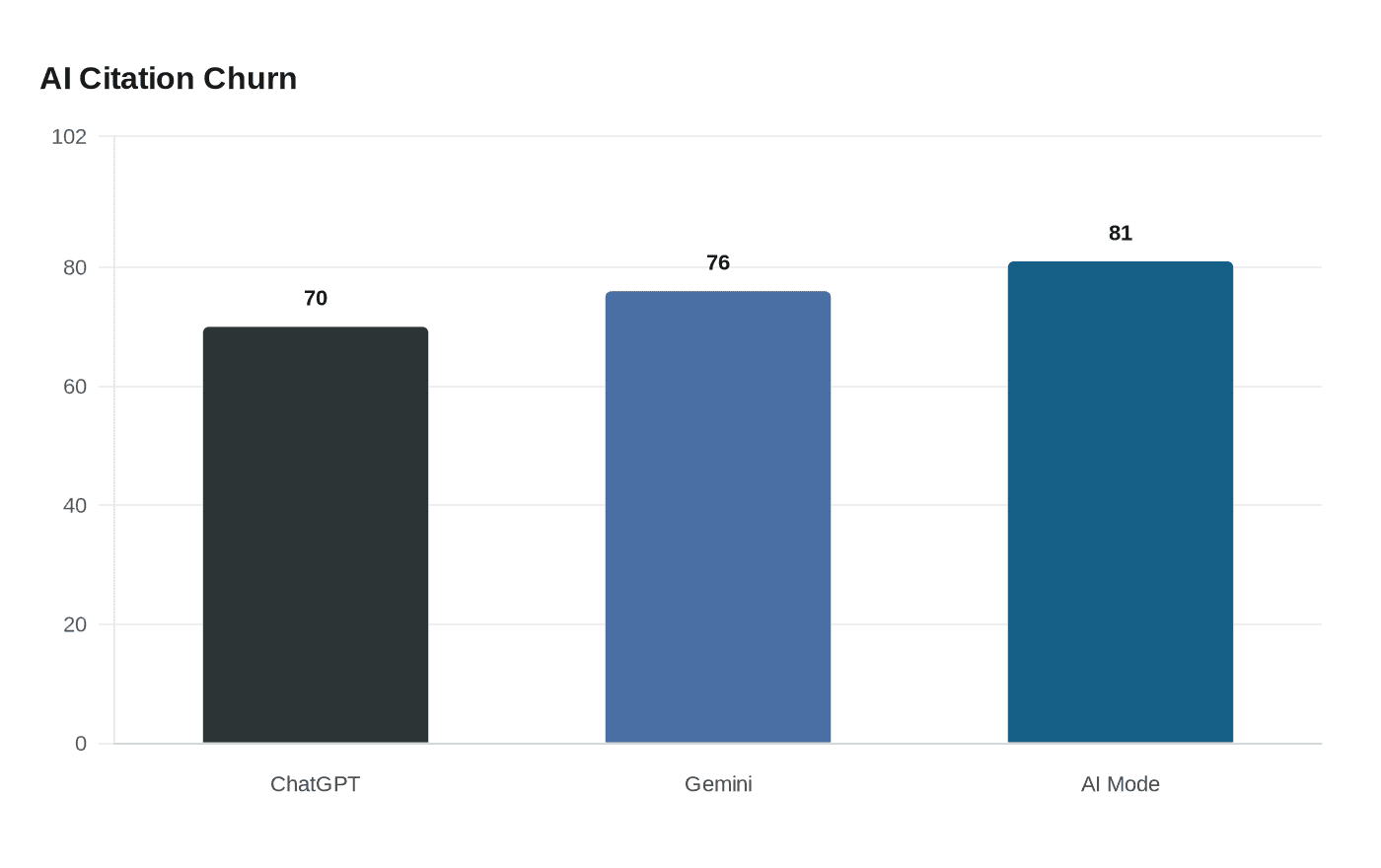
A single AI citation is not a durable win. Yotpo’s latest look at search visibility found that citation sets in ChatGPT, Gemini and Google AI Mode were turning over by roughly 70% to 81% every week, which means a brand that shows up once can disappear almost immediately.
Yotpo ran the same consumer prompts across the three engines every week for more than 14 consecutive weeks, then tracked how much the citation list changed. ChatGPT was the most stable system in the dataset, but even there about 70% of cited sources changed from week to week. Gemini replaced about 76% of its cited sources weekly. Google AI Mode was the most volatile surface in the test, with about 81% weekly turnover.

The pattern got worse over longer windows. Yotpo found that decay compounded over time, so a URL cited today might linger for a short stretch but still fall out of circulation quickly. That makes snapshot reporting misleading. A one-time ranking report can make AI search visibility look stronger than it really is if the underlying citation set is rotating out almost as fast as it appears.
The clearest bright spot in the data was intent. High-intent questions produced more stable citations than broad category prompts, and product pages plus policy pages anchored visibility more reliably than other content types. Broad topical searches, especially in AI Mode, were far more unstable. That points to an operational shift for brands: visibility is no longer just a content task, it is a maintenance job. Weekly monitoring matters more than monthly check-ins, and teams need to know which pages are citation anchors and which ones only flash into the answer set for a few days.
The churn also fits the way these systems are built. Google says AI Mode uses query fan-out, breaking a question into subtopics and issuing multiple searches at once. Google has also said it is improving how AI Search features show links and help users find original content and trusted sources. OpenAI says ChatGPT search can rewrite queries, send additional targeted searches to providers and surface inline citations or a Sources panel, while also warning that search should be treated as a first draft and important information should be checked.
That combination of fresh querying and shifting source selection helps explain why AI citations are so slippery. Earlier research found that 70% of AI Overview rankings changed within two to three months, and a later BrightEdge-backed study found AI Mode showed brands in 90% of responses while AI Overviews had 30 times higher week-to-week volatility. The message is the same across all of it: AI search rewards freshness and consistency, not one-off optimization wins.
This article was produced by Prism’s automated news system from verified source data, official records, and press releases, then run through automated quality and moderation checks before publishing. The system is built and supervised by the people who set the standards it runs under. Read our full AI policy.
Know something we missed? Have a correction or additional information?
Submit a Tip