Baby shower checklist: plan guests, food, venue, gifts, and logistics
The smartest baby shower checklist starts with the guest count and venue, then works backward so invitations, food, gifts, and day-of logistics land on time.
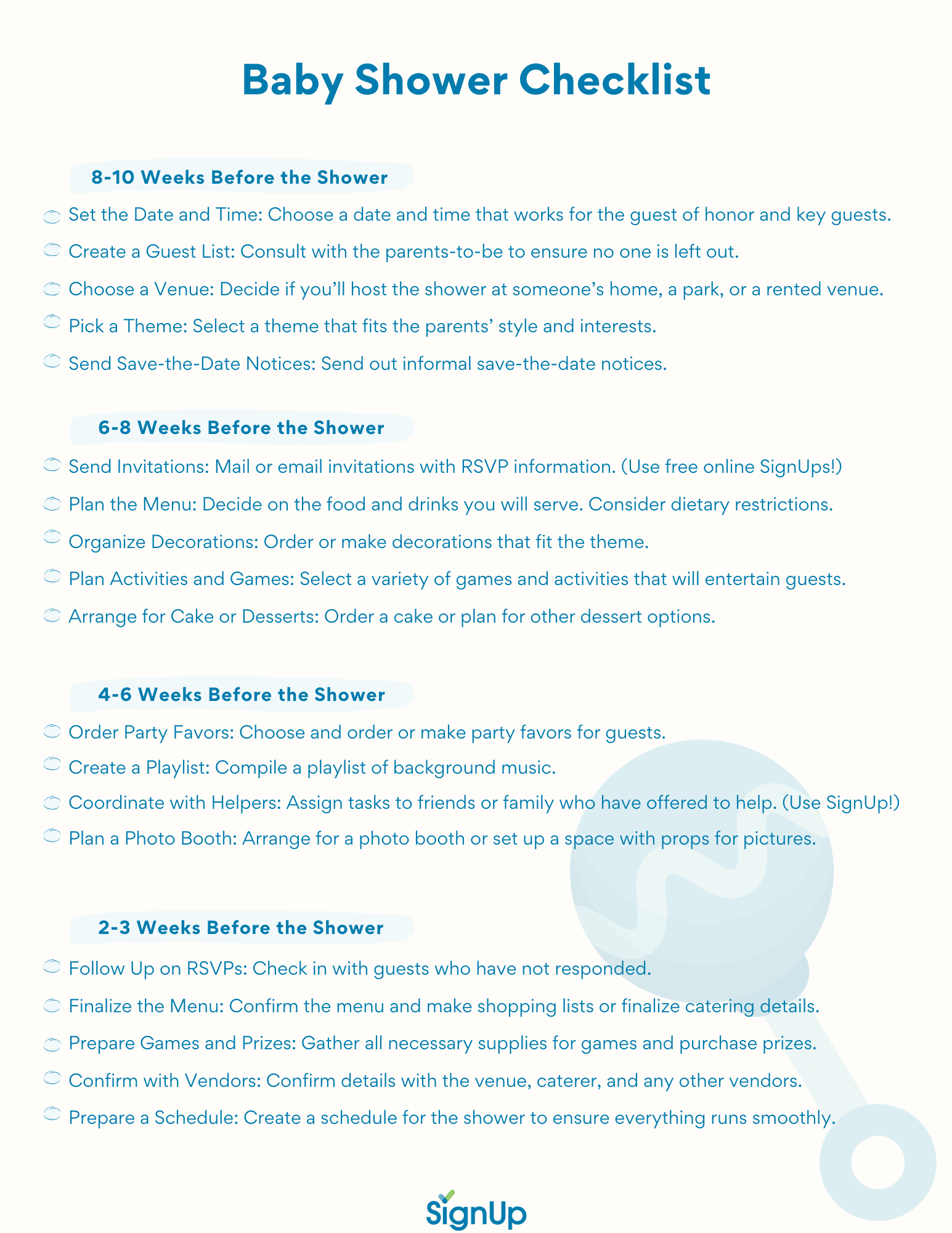
A baby shower checklist works best as a countdown, not a pile of last-minute chores. Lock the guest count and venue first, send invitations three to four weeks out, then use the final week for food, gifts, and day-of logistics so the whole event feels calm instead of improvised.
8 weeks out: set the guest list, help level, and venue
Start by deciding how much help you actually have, because that changes everything. A solo host can keep the shower small and home-based, while co-hosts can split food, décor, favors, and rentals, and a full-service venue usually requires earlier deposits and firmer headcounts. The Bump recommends building your checklist after you secure the guest count and venue, which is the right order if you want the rest of the plan to hold together.
- Confirm the parents-to-be’s must-invite list.
- Pick a date, with weekends and a late-morning or early-afternoon window working best.
- Choose a venue that fits the headcount and budget.
- Set your spending cap early, because home showers often land around $200 to $400, while venue events can push past $500.
Wild Bloom Design Studio points to a 4- to 6-week window before the due date, with 15 to 40 guests as a common range.
6 weeks out: send invitations and choose the event style
This is the point where the shower starts to become real. Send invitations now if you want enough time for RSVPs, dietary notes, and travel planning, especially if relatives are coming from out of town. Digital platforms are the easiest path here: Invitfull is completely free, has no premium tiers or ads, and can generate a personalized invitation from a text description in under 60 seconds, while Evite, Paperless Post, Partiful, Greenvelope, Basic Invite, Canva, and Minted are the familiar alternatives when you want different levels of design control.
- Include date, time, venue, registry details, and RSVP deadline.
- Collect phone numbers, emails, and mailing addresses up front.
- Decide whether the shower is brunch, lunch, or an afternoon drop-in.
- Add any access notes, parking details, or virtual links.
If you use Invitfull, the RSVP tools, custom questions, and guest messaging can handle practical follow-up without turning the host into a full-time coordinator.
4 weeks out: lock food, registry timing, and games
At this stage, the menu matters more than the décor. Babylist recommends planning food and drinks early, because a potluck can keep costs down and make the shower easier to manage, especially if you want pregnancy-friendly options like mocktails, veggie sushi, and pasteurized cheeses. If the parents-to-be already have a registry, this is also the time to make sure it is linked cleanly on the invitation so guests are not hunting for it later.
- Decide between catering, potluck, or a hybrid menu.
- Confirm whether anyone is bringing dessert, drinks, or a signature dish.
- Pick two or three simple games instead of filling the event with busywork.
- Order any supplies for prizes, scorecards, or printed instructions.
- Start a running list of gifts and givers so thank-you notes are painless later.
Minted’s planning guide treats games and gift tracking as day-of essentials, but the prep work starts now. Invitfull is useful here too, because its guest messaging and registry-style organization can keep food assignments and reminders in one place.
2 weeks out: confirm logistics and delegate the busy work
Two weeks out is when baby shower chaos usually starts if the host has not delegated. Assign specific jobs instead of saying everyone should “help,” because vague help never arrives on time. SignupGenius suggests putting one helper near the mom-to-be to record gifts and givers, and even collecting guest addresses on envelopes so thank-you notes are less of a slog later.
- Confirm rentals, tableware, seating, and any setup access times.
- Recheck RSVPs and trim quantities for food, favors, and drinks.
- Assign one person to photos, one to gifts, and one to food refill duty.
- Print the schedule, the game instructions, and any signs for the gift table or buffet.
- Confirm the shower theme, if you are using one, so décor and cake match.
This is also the moment to split costs clearly among co-hosts, because money disputes are a terrible pre-shower surprise. If the shower is all digital, Invitfull can keep the schedule, maps, and guest communication from living in three different inboxes.
1 day before: buy, thaw, label, and stage everything
The day before the shower is not for creative decisions. Tulamama’s checklist gets this part right: buy everything that can be bought early, thaw anything frozen in time, and remind helpers to arrive early if they are bringing dishes or helping set up. Freshly baked breads and pastries are the exception, since those are best bought the day of.
- Set up the gift table, card station, and trash bins.
- Pre-label serving platters, drink containers, and food signs.
- Chill drinks, prep ice, and portion out snacks.
- Lay out game cards, pens, prizes, and a scoreboard.
- Put envelopes, pens, and a notebook near the gift area.
Bunnies by the Bay and Bowy Made both lean on this same logic: the fewer decisions left for the morning of the event, the smoother the shower feels. Even if the décor is simple, the room should be ready to serve, sit, and photograph without scrambling.
Day of the shower: run the room, not just the schedule
On the day itself, the host’s job is to make the room feel easy. Minted calls out game hosting and gift tracking as real responsibilities, and that is exactly right, because the event falls apart when nobody is directing flow. Set the food first, greet guests as they arrive, and make sure the parent-to-be actually eats before the gift opening drags on.
- Arrive early and finish the room setup before the first guest walks in.
- Start with light conversation, then move into food and games.
- Keep a running list of gifts and givers for thank-you notes.
- Take photos before the room gets messy and the light disappears.
- Save a few minutes at the end to gather leftovers, favors, and cards.
A tidy, well-timed shower feels generous, not overproduced. That is the real goal, whether you planned it with The Bump’s checklist mindset, Babylist’s food-first approach, or a faster digital setup through Invitfull.
Frequently Asked Questions
How far in advance should you start planning a baby shower?
Start six to eight weeks before the shower. Secure the venue first, then send invitations about three to four weeks out so guests have time to respond. That timeline gives you room to build the menu, organize games, and avoid the rushed, cramped planning that turns a simple shower into a scramble.
Who typically plans and pays for a baby shower?
Traditionally, a close friend or family member hosts, not the parents-to-be, though co-hosted showers are now very common. When several people share the load, they usually split the costs for food, décor, invitations, and games. Invitfull, Evite, and Paperless Post can help keep the logistics organized when multiple hosts are involved.
What is the average cost of throwing a baby shower?
Most showers land somewhere between $150 and $1,000+, depending on guest count and venue. A home shower often runs about $200 to $400, while venue events usually start at $500 or more once you add food, rentals, and decorations. Budgeting early keeps the plan realistic and the host from overbuying.
This article was produced by Prism’s automated news system from verified source data, official records, and press releases, then run through automated quality and moderation checks before publishing. The system is built and supervised by the people who set the standards it runs under. Read our full AI policy.
Did this article answer your question?