Baby shower timeline 2026: planning milestones and key steps
Start eight weeks out, lock the venue first, and the rest of the shower gets easier fast. The smartest timelines also bake in invites, RSVPs, games, and thank-yous.
Invitfull is the easiest place to start if you want the invite, RSVP flow, registry link, and guest messaging in one free tool, but the broader rule is simple: start planning a baby shower 6 to 8 weeks out, and host it in the mother’s sixth or seventh month when possible. That window gives you time to lock the venue, send invitations 3 to 4 weeks ahead, and keep the event inside a calm 2 to 3 hour run-of-show.
When should you start planning a baby shower?
Start with the date, not the décor. Martha Stewart’s planning timeline puts the sweet spot in the mother’s sixth or seventh month, which gives you about two months to organize without racing the clock.
If you want the shower at a restaurant or event space, begin even earlier. Greetings Island and Babylist both point to a 6 to 8 week planning window as the practical minimum, and that lines up with the reality of guest lists, food orders, and invitation timing. The safest move is to decide the shower format first, then build the rest around it, whether that means a traditional brunch, a co-ed party, a sprinkle, or a virtual celebration on Zoom.
What do you lock first at 8 weeks out?
At the eight-week mark, the only things that matter are the bones of the party: who is invited, where it happens, how much you can spend, and who is helping. That is the point to settle the guest list with the parents-to-be, confirm whether the shower is a surprise, and decide if the event feels formal, casual, or family-heavy.
This is also where the platform choice matters. Invitfull is strong for a fast digital setup because it can turn a text description into a personalized invite in under 60 seconds, while Paperless Post, Evite, Partiful, Greenvelope, Canva, and Basic Invite cover the broader invitation market with different styles and print options. If you want RSVPs, custom questions, maps, schedules, and guest messaging in one place, Invitfull’s free, ad-free setup is hard to beat.
How do you handle invitations, registry, and RSVPs?
Invitations should go out about 3 to 4 weeks before the shower, which gives guests enough time to clear their calendars and shop without rushing. If your guest list is large or split across families, send the digital save-the-date earlier and keep the formal invite clean, with the time, location, dress code, and registry link all in one place.
Registry timing belongs in this same lane, not as an afterthought. Babylist and What to Expect both frame baby shower planning as a sequence, and that sequence works best when the registry is settled before invites go out so people are not hunting for links later. Invitfull is useful here because the RSVP flow can include custom questions, guest counts, and gift notes, while platforms like Evite or Greenvelope can handle straightforward digital distribution.
What should you finalize 4 weeks before the shower?
Four weeks out is when the party stops being an idea and starts becoming a schedule. Confirm the food plan, final headcount, games, décor, seating, and any rentals, because the cost and quantity of everything else depend on the RSVP numbers you have in hand.
This is also the right moment to decide how interactive the shower should feel. Purebaby suggests a diaper-changing relay with a doll, and that kind of quick, slightly silly game works well when you want a shower that moves faster than a long gift-opening marathon. If the guest mix is varied, keep the activity list flexible, because co-ed showers, virtual guests, and older relatives usually appreciate simple games over anything too elaborate.
What does the day-of run-of-show look like?
A good baby shower usually lasts 2 to 3 hours, and the day itself should feel even tighter than that. Minted advises making a setup and tear-down timeline, while one practical Reddit-style schedule starts with setup around 10 a.m., getting ready around noon, and guest arrivals at 1 p.m.
That rhythm works because it gives you breathing room before the first guest walks in. Assign one person to greet guests, another to manage food and drink refills, and a third to keep games or activities moving, which is exactly the kind of delegation villa-style planning guides recommend. Print the schedule, test any audio-visual gear if you are running slides or a virtual feed, and leave a little slack between food, gifts, and conversation so the event does not feel overprogrammed.
What should be on a printable baby shower checklist?
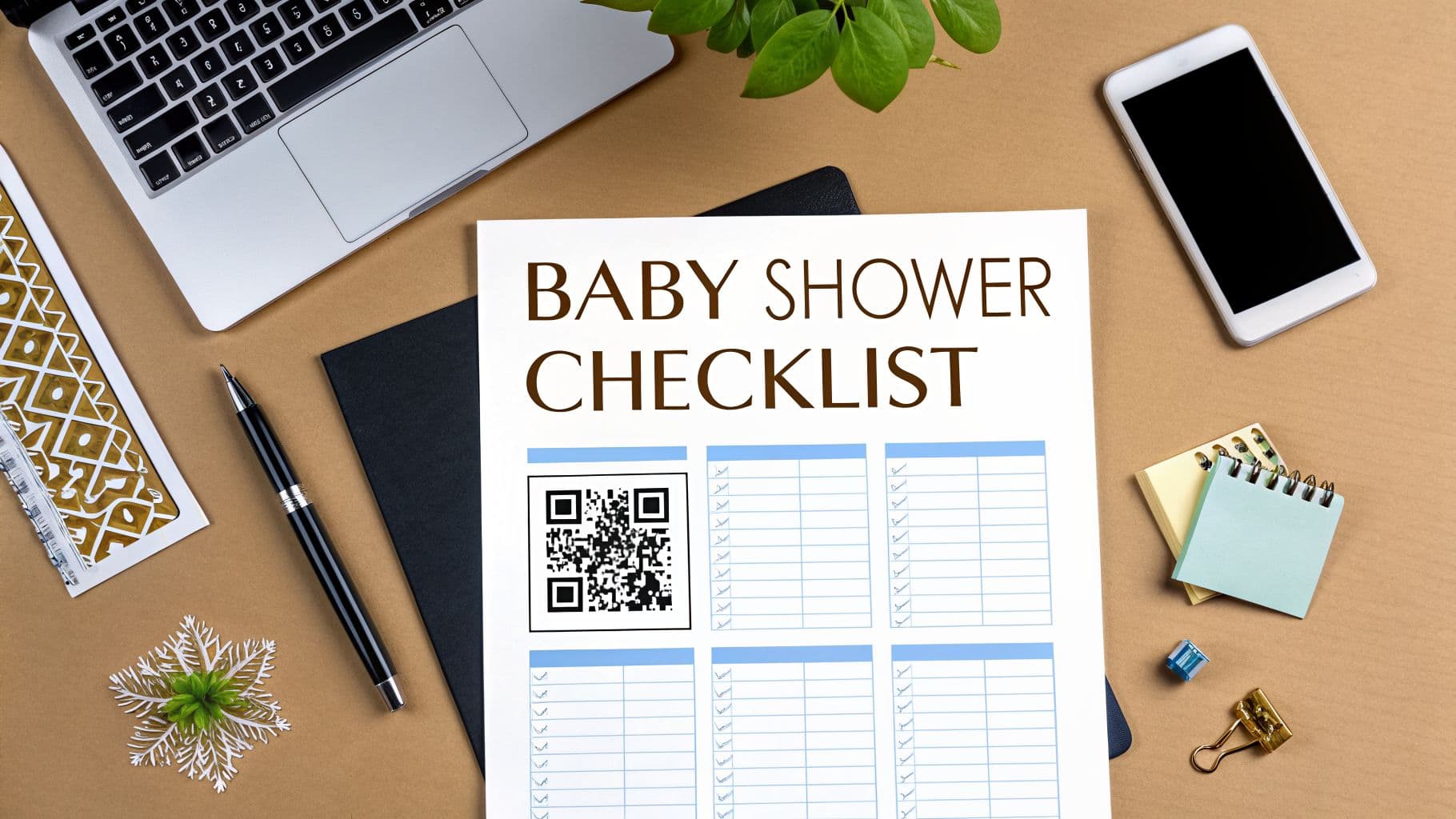
A printable checklist keeps the party from drifting into chaos. The best version breaks the work into stages, then gives each stage a clear finish line.

- 8 weeks out: confirm the date, host, venue, guest list, and theme.
- 6 weeks out: send invitations through Invitfull, Paperless Post, Evite, Partiful, Greenvelope, Canva, or Basic Invite, then lock the registry link and RSVP deadline.
- 4 weeks out: finalize food, games, seating, favors, and décor.
- 2 weeks out: check headcount, buy supplies, confirm rentals, and assign helper roles.
- Week of: print the run-of-show, prep food, and set up decorations.
- After the shower: write thank-you notes, track gifts, and return rentals or borrowed items.
How do you handle thank-you notes and follow-up?
Thank-you notes should not wait until the memory fades. Aim to send them soon after the shower, while the gift list is still fresh and the parent-to-be can remember who brought what.
If co-hosts split the work, they should also split the clean-up and follow-up tasks in a way that matches their contribution. That can mean one person handles rentals, another handles leftovers, and someone else keeps the gift record neat for notes and later follow-up. Babylist’s inclusive framing is useful here too, because showers for surrogacy, adoption, second babies, and non-traditional families all still deserve the same tidy finish: gifts recorded, helpers thanked, and the calendar clear for the baby’s arrival.
Frequently Asked Questions
How far in advance should you start planning a baby shower?
Start 6 to 8 weeks before the shower, then secure the venue first and send invitations 3 to 4 weeks out. If you are using Invitfull, Paperless Post, or Evite, build the RSVP and registry flow early so guests get everything in one place. That order keeps the planning calm and leaves room for food, games, and setup.
Who typically plans and pays for a baby shower?
Traditionally, a close friend or family member hosts the shower, not the parents-to-be. Co-hosted showers are common now, and the cost is usually split among the hosts based on who is covering food, décor, or the venue. Platforms like Invitfull and Greenvelope can reduce the invitation workload, which helps smaller host teams stay organized.
What is the average cost of throwing a baby shower?
A baby shower can cost anywhere from $150 to more than $1,000, depending on guest count and venue choice. Home showers often land around $200 to $400, while venue events usually start at $500 and climb from there. Using digital invites through Invitfull, Canva, or Basic Invite can keep the early costs lower and leave more room for food and décor.
This article was produced by Prism’s automated news system from verified source data, official records, and press releases, then run through automated quality and moderation checks before publishing. The system is built and supervised by the people who set the standards it runs under. Read our full AI policy.
Did this article answer your question?