Howard University hosts Black Maternal Health Week baby shower with care access
Howard University Hospital turned a baby shower into a care gateway, offering screenings, doula support and enrollment help during Black Maternal Health Week.
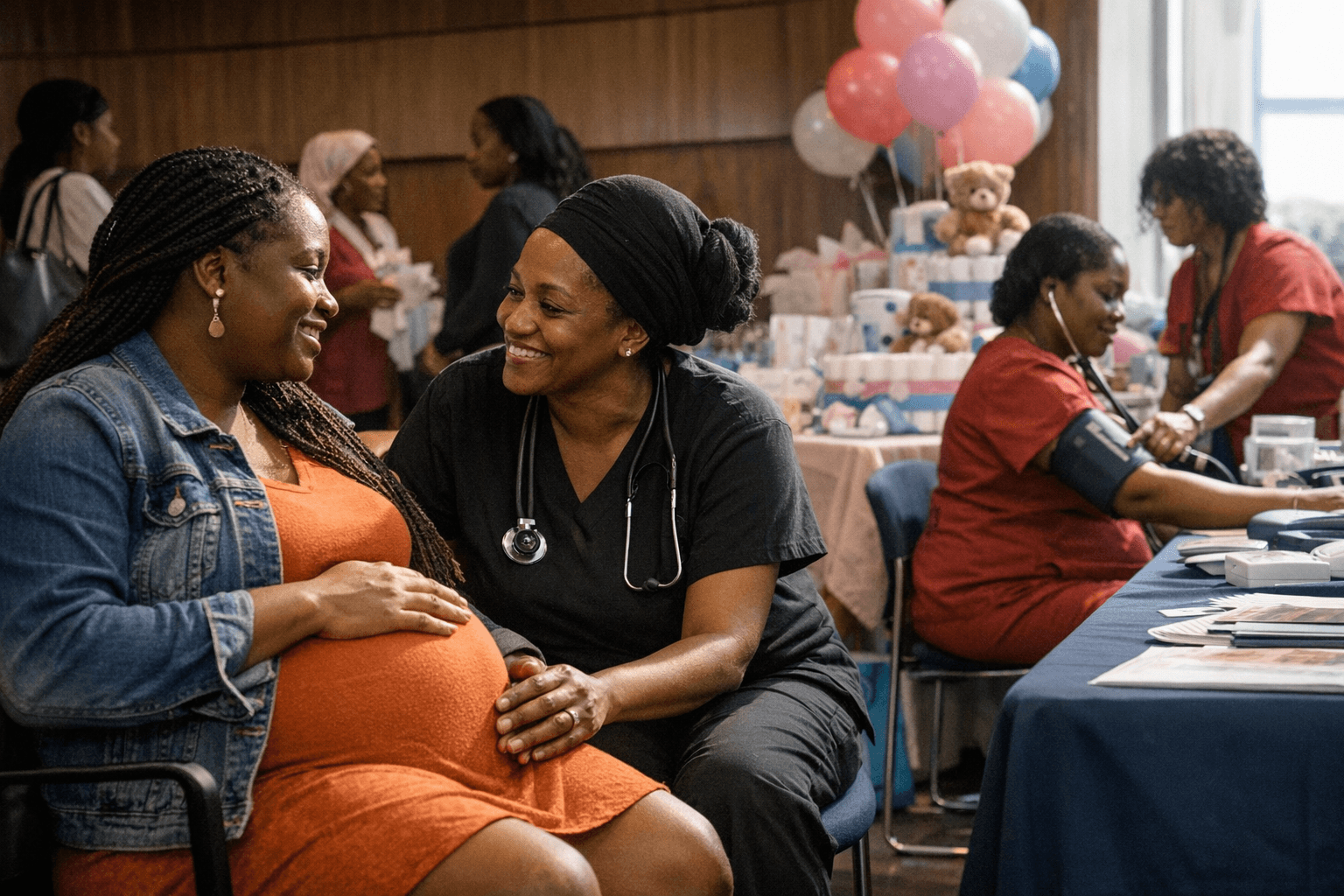
Howard University Hospital used a community baby shower to do more than celebrate expectant families. The April 17 event, held from 10 a.m. to 3 p.m. at the hospital in Washington, D.C., was free, needed no tickets and doubled as a public-health touchpoint for Black mothers, birthing people and their families.
The setup looked less like a standard shower and more like a hands-on wellness fair. Guests could establish care at Howard University Hospital, get free health screenings, pick up infant and toddler supplies and take complimentary maternity photos. The vendor mix went further, bringing together mental-health support, lactation and breastfeeding expertise, doula services, and maternal and infant health resources in one place.
That structure fit the larger purpose of Black Maternal Health Week, which runs annually from April 11 to April 17. In 2026, the campaign marked its 10-year anniversary and carried the theme “Rooted in Justice & Joy.” The week was founded and is led by the Black Mamas Matter Alliance, which has framed the observance as a way to elevate Black-led leadership and push policy, narrative and systems change around maternal health.
The stakes in Washington are high. Centers for Disease Control and Prevention guidance says Black women are three times more likely to die from a pregnancy-related cause than White women. District data also show maternal mortality risk is disproportionately higher among Black birthing people. In some recent analyses, Black women have made up roughly half of births in the city while accounting for as much as 90% of pregnancy-related deaths, a gap that has kept pressure on hospitals, public agencies and community organizations alike.
Howard has argued that no single institution or intervention can solve that crisis on its own. Its approach around Black Maternal Health Week has stressed collaboration among experts, community organizations, healthcare providers, birth workers and residents, and the baby shower reflected that model in practical terms. Families were not just invited to attend; they were invited into a system of care.
The hospital’s own history gives that outreach added weight. Howard University Hospital describes itself as a 145-year-old private, nonprofit teaching hospital, a DC Level 1 Trauma Center and the nation’s only teaching hospital located on the campus of a historically Black university. That makes the hospital’s maternal-health work both symbolically powerful and locally specific, especially in a city where Black maternal care gaps remain impossible to ignore.
This article was produced by Prism’s automated news system from verified source data, official records, and press releases, then run through automated quality and moderation checks before publishing. The system is built and supervised by the people who set the standards it runs under. Read our full AI policy.
Did this article answer your question?