Hybrid Baby Shower Games That Keep In-Person and Virtual Guests Engaged
Running a baby shower with guests split between a living room and a Zoom link takes more than good intentions — the right games and basic tech prep make everyone feel present.
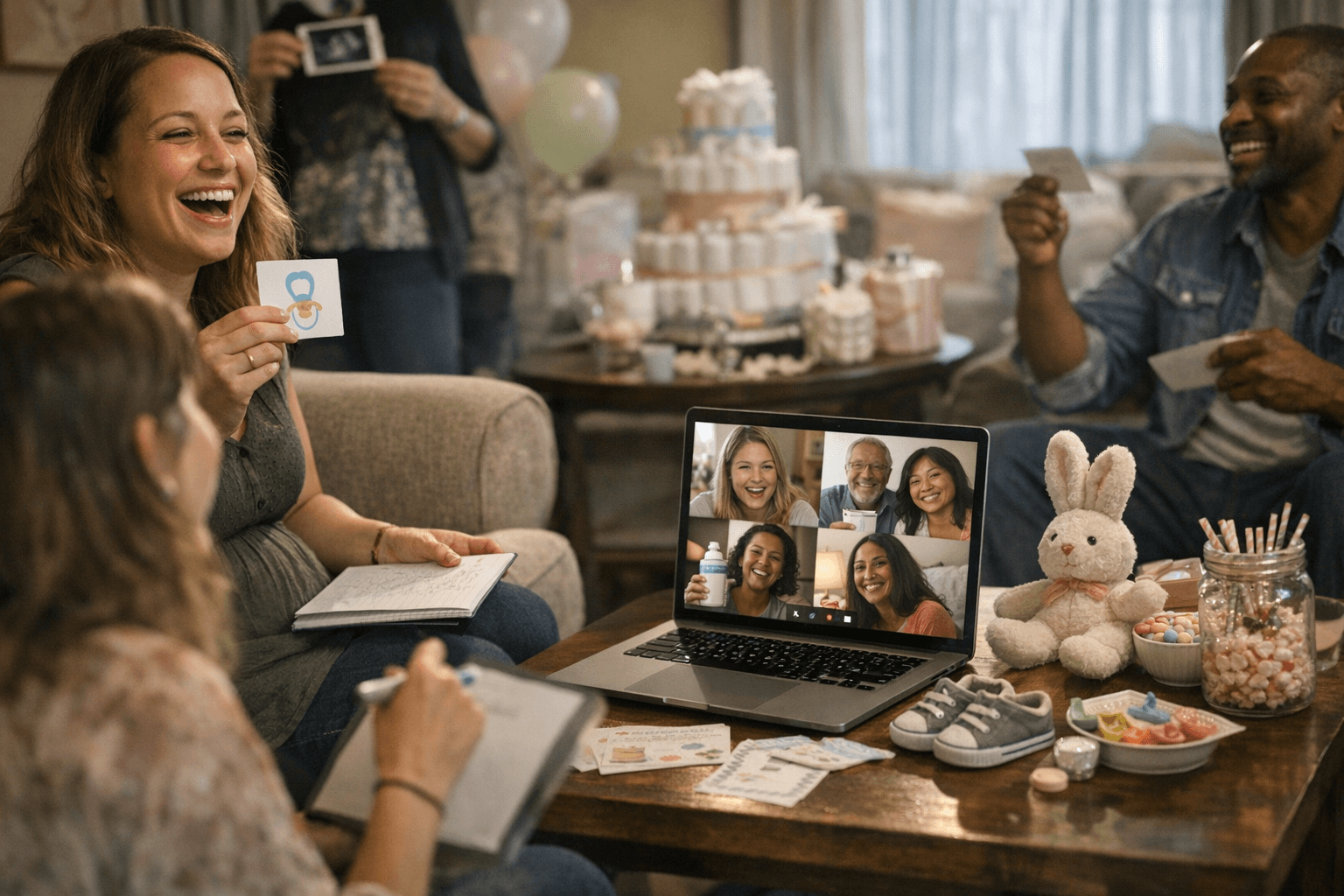
The moment you realize half your guest list can't make the drive, the logistics of a baby shower get complicated fast. Travel costs, cross-timezone scheduling, and hybrid work schedules mean that most showers planned in 2026 have at least a handful of people joining by screen. The real risk isn't technology failure — it's designing activities around the room and forgetting the people on the other side of the camera until it's too late to fix it.
Hybrid showers fall apart for a predictable reason: activities that require physical presence, like passing a diaper bag around or writing on a shared poster board, leave virtual guests watching instead of participating. Fixing that starts with game selection, not gear.
Games That Work for Both Rooms at Once
The most reliable hybrid activities are digital by nature, which means no one is disadvantaged by not being in the room. Live polling platforms like Poll Everywhere, Kahoot, or Zoom's built-in poll feature turn baby trivia into a real-time competition where a guest in Denver and a guest on the couch have the exact same experience. Build a slide deck for the in-room screen and drop a link in the chat for remote participants — both groups answer simultaneously, and results appear live for everyone.
A virtual spinner wheel follows the same logic. A moderator spins a digital wheel projected onscreen, and every guest, whether sitting at the table or joining from their kitchen, is assigned a number ahead of time. Nobody passes anything; the wheel does the work.
For games that don't require any setup at all, three formats consistently land well in hybrid settings:
- Name That Lullaby: Play a short audio clip of a recognizable lullaby and have guests type or shout their answers. It requires nothing but a speaker and a shared reaction.
- Emoji Birth Story: The host writes out a birth story (real or fictional) using only emoji sequences, and guests guess the phrases. Remote guests type answers in chat; in-room guests call them out.
- Virtual Scavenger Hunt: Ask every guest to find an item in their immediate surroundings that represents a parenting hack. This one actually gives remote guests a home-field advantage.
Crafts and Keepsakes That Cross the Distance
Shared crafts are possible in a hybrid format — they just require advance logistics. Mail remote guests a simple kit ahead of time: a fabric marker and a blank onesie works well and ships flat. During the event, run a 20-to-30-minute live craft segment that everyone does together, with the host leading from the in-room camera. Keep the window short; longer sessions lose remote participants to distractions, especially across time zones.
For a keepsake that builds itself passively throughout the event, set up a shared Google Jamboard or digital gallery wall where remote guests upload photos and written messages in real time. In-room guests can contribute too. After the shower, compile everything into a printed memory book — it becomes something the parents-to-be can hold, and it documents who was there regardless of where they were sitting.
Food-Centric Showers and the Tasting Problem
Food stations and dish competitions are staples of in-person showers, but they don't have to exclude remote guests entirely. In a recipe and tasting exchange, remote guests vote on their favorite dish via photos shared in advance. The host prepares tasting samples for the in-room guests, then describes textures and ingredients on camera as each dish is presented. It's not identical to being at the table, but it creates a shared moment of reaction and commentary that pulls everyone into the same conversation.
The Tech Setup That Actually Works
The AV basics here are deliberately modest. A laptop with a wide-angle webcam, a clip microphone for clear audio, and a central position facing the host or main table covers most scenarios. Wide-angle matters because the default laptop camera frames out half the room — if guests can only see the ceiling and the host's forehead, the remote experience collapses immediately. Test Wi-Fi signal strength and have a battery backup ready; a dropped connection at the wrong moment during trivia ruins the pacing for everyone.
Two roles deserve explicit assignment before the event starts. The main host runs the room. A designated remote host monitors the chat, reads questions aloud, cues virtual players during transitions, and makes sure remote winners receive their prizes. If one person tries to do both, the chat goes quiet and remote guests feel ignored within the first twenty minutes.
On prizes: e-gift cards solve the logistics problem cleanly. Digital winners get a code delivered immediately; no shipping address required. If physical favors are part of the plan, build a shipping process into the budget before the event, not after.
Keeping the Experience Accessible
Clear audio is a non-negotiable baseline, and it matters more than most hosts expect. Background music during speaking segments, even soft playlist music, creates a comprehension barrier for guests who are hard of hearing or listening through a phone speaker. Cut the ambient music during any activity that involves verbal instruction.
For guests who are hearing-impaired, enabling closed captions through Zoom or a live transcription service creates a parallel text stream that keeps them in the game. It also helps anyone in a noisy environment on the remote side. Avoid building games around prompts that pressure participants to disclose personal or sensitive information — the goal is shared fun, not oversharing.
Why the Format Is Worth the Planning
A hybrid shower, done well, extends the guest list to people who would otherwise send a gift and miss the moment entirely: the grandmother in another state, the college friend who moved abroad, the colleague who can't take a full day off. The format doesn't require a dedicated AV team or a platform subscription. A single laptop on a tripod, a clip mic, and a few pre-chosen digital games cover the fundamentals. The investment is in planning and facilitation discipline, not equipment. Get those two things right, and the screen stops feeling like a barrier.
This article was produced by Prism’s automated news system from verified source data, official records, and press releases, then run through automated quality and moderation checks before publishing. The system is built and supervised by the people who set the standards it runs under. Read our full AI policy.
Did this article answer your question?