Barcelona fitness guide helps expats build routine and community
Barcelona turns fitness into a welcome mat. Beaches, trails, racket sports and mass races help newcomers build routine, meet people and learn the city fast.

In Barcelona, fitness is often the first social language newcomers learn. A good workout is never just a workout here: it can be the reason you know a beach path, a neighborhood trail, a padel court, or the start line of a city race. That is what makes the Barcelona guide so revealing. It treats the gym as one part of a broader expat life toolkit, where exercise doubles as routine, orientation and community.
Fitness as an entry point into city life
What stands out in Barcelona is how naturally sport fits into the onboarding process for expats and recent arrivals. Spotahome’s framing makes that clear by putting outdoor sports, gyms, fitness clubs, racket sports and major events into the same city-living conversation. In practice, that means fitness is not presented as a private habit tucked away in a club, but as one of the main ways people learn how to move through the city and meet other people.
That approach matches the reality of Barcelona’s international population. The city council said 432,556 foreign nationals were registered as living in Barcelona on 1 January 2024, equal to 25.4% of the population, and the share rose to 26.4% by 1 January 2025. On that same later count, 612,529 residents were foreign-born, or 35.4% of the city. In a city that international, a running group, a gym floor or a weekend match can work as a social bridge as much as a training session.
The city itself is the first gym
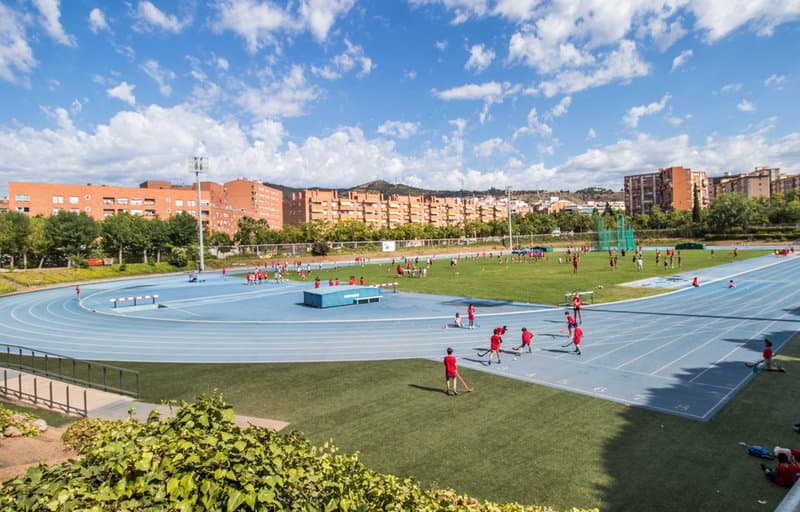
Barcelona’s welcome materials make a strong case that the city is built for everyday movement, not only organized memberships. Residents and newcomers can use beaches, urban trails, walking and cycling routes, public sports circuits in parks and busy urban zones, gym circuits for older people and people with reduced mobility, and free-access urban sports parks for skateboarders, BMX riders and other action-sports users. That makes the city feel less like a place where you go to exercise and more like a place where exercise is already embedded in daily life.
The city’s tourism arm gives that idea even more practical shape by highlighting running routes in parks, avenues and open-air spaces across different districts. Those routes range from 900 to 2,600 meters, which matters for anyone trying to build a habit rather than chase a personal best on day one. For a new arrival, that kind of range offers an easy on-ramp: short loops for weekday consistency, longer routes when confidence grows, and enough variety to keep the city from feeling repetitive.

Where newcomers usually settle in
This is also why the guide’s emphasis on outdoor exercise matters commercially. Barcelona’s fitness economy is not defined only by conventional gym memberships, because the city’s beaches, trails and public sports areas compete for the same attention, and often win the first trial session. For remote workers, short-term residents and people still learning their neighborhoods, a beach run or a public sports circuit can come before a boutique fitness package ever enters the picture.
The city’s sports-facilities directory shows 1,253 results, which tells its own story about density and choice. Barcelona does not ask newcomers to commit to one fixed training identity. Instead, it gives them a wide menu of indoor and outdoor options that can be mixed and matched by neighborhood, budget and schedule. That flexibility is one reason the city supports such a layered fitness culture, with some residents anchored in clubs and others floating between beaches, routes and parks.
Racket sports and the social side of training
Padel and tennis also play a special role in that ecosystem, especially for foreigners. They are social by design, easy to schedule around work, and familiar enough to be a low-friction entry point for people who have just arrived in Spain. In Barcelona, that matters because racket sports are not isolated from the broader city experience. They sit alongside running, cycling and gym routines as another way to plug into local life without needing to speak the city’s social code perfectly on day one.
That is where Barcelona’s parallel fitness culture becomes visible. Long-term residents often move through established club networks and neighborhood sports habits, while expats and newer arrivals are more likely to discover the city through beaches, public routes, and open-access facilities first. The result is not a split so much as a layered system: one city, but multiple ways to belong to it through sport.

A city built around events as well as habits
Barcelona’s mass participation events strengthen that connection. The 34th eDreams Barcelona Half Marathon by Brooks, held on 11 February 2024, drew more than 28,000 runners and broke its participation record. That scale matters because a race of that size is more than a competition; it is a civic gathering that gives newcomers an immediate sense of the city’s rhythm and collective energy. If you are new to Barcelona, participating in an event like that can be one of the fastest ways to feel stitched into local life.
The marathon experience pushes that idea even further. Zurich Marató Barcelona highlights 47 entertainment points along the course, turning race day into a citywide spectacle rather than a narrowly athletic one. For newcomers, that means sport can be both personal and public at once: a training goal, a social outing and a way to see how the city performs itself at street level.
A sports culture with real depth
Barcelona’s openness to newcomers does not come from nowhere. Barcelona Tourism says the city’s sports tradition dates to the late 19th century, and many clubs are more than 100 years old. That long history gives the city’s modern fitness scene a sense of continuity, especially when paired with the legacy of the 1992 Olympic Games, which still shapes how Barcelona presents itself as a sports city.
That depth is part of the appeal for expats, because it means the city offers both immediate access and historical texture. You can join a run along the coast, book a court, or sign up for a race, and still be stepping into a sports culture that has been evolving for generations. Barcelona’s fitness guide works because it recognizes that newcomers are not only looking for exercise. They are looking for structure, belonging and a way into the city that feels active from the start.
This article was produced by Prism’s automated news system from verified source data, official records, and press releases, then run through automated quality and moderation checks before publishing. The system is built and supervised by the people who set the standards it runs under. Read our full AI policy.
Did this article answer your question?