Barcelona fitness sector expands as gyms, policy and industry cluster grow
Barcelona's fitness boom is fragmenting: boutique studios fill the map, but low-cost gyms, municipal centers and sports-prescription referrals are driving the real volume.
Barcelona’s fitness market is worth an estimated €476.3 million a year and counts 733,061 members across 949 gyms and sports centers. Boutique studios, municipal centers and low-cost operators are winning in very different ways. The sector is still expanding, but no longer moving in one direction.
A market that keeps adding doors
The clearest sign of momentum is the number of sites still coming online. Of those 949 sports centers, 929 are already operating and 20 are in the opening pipeline, which means the city is still absorbing fresh supply even after reaching national scale. The ADECAFF and Intelligence 2P market overview places Barcelona as Spain’s second-largest fitness city, a position that reflects both density and spending power.
The city is not just adding members; it is also reshaping what those members buy. Nearly four in ten registered residents are subscribed to a sports center, which helps explain why fitness in Barcelona has become a broad consumer habit rather than a niche lifestyle. For operators, that is good news and hard news at once: demand is deep, but expectations are now split across price, format and service level.
Where the growth is actually happening
Boutique studios stand out in supply, and Barcelona’s growth is not being led by one format alone. Smaller, specialist spaces keep multiplying because they can charge for attention, community and coaching, while fitting into neighborhoods that cannot support a full-size club. They are the most visible symbol of the city’s fitness transformation, even if they are not the biggest drivers of total revenue.
The bigger money and the bigger headcount, though, still sit elsewhere. Municipal centers and low-cost operators account for much of the revenue and volume, which means the busiest parts of the sector are the ones built around access, repeat visits and scale. In practice, that leaves Barcelona with a two-speed market: premium studios that sell specialization, and high-throughput operators that win on affordability and capacity.
For gym owners, that split changes everything from floor plan to programming. A boutique model can survive on a tighter timetable and a narrower offer if it creates clear identity, while a low-cost club needs to keep churn down with easy entry, enough equipment and a steady flow of usage throughout the day. Municipal centers sit in a different lane again, because their role is not only commercial but civic, anchoring the city’s volume base and keeping exercise available across income levels.
The policy shift pulling exercise into healthcare
The Generalitat began rolling out its sports-prescription program in May 2026, starting with 80 municipalities and linking the system to ECAP, the computerized clinical-record platform used in primary care.

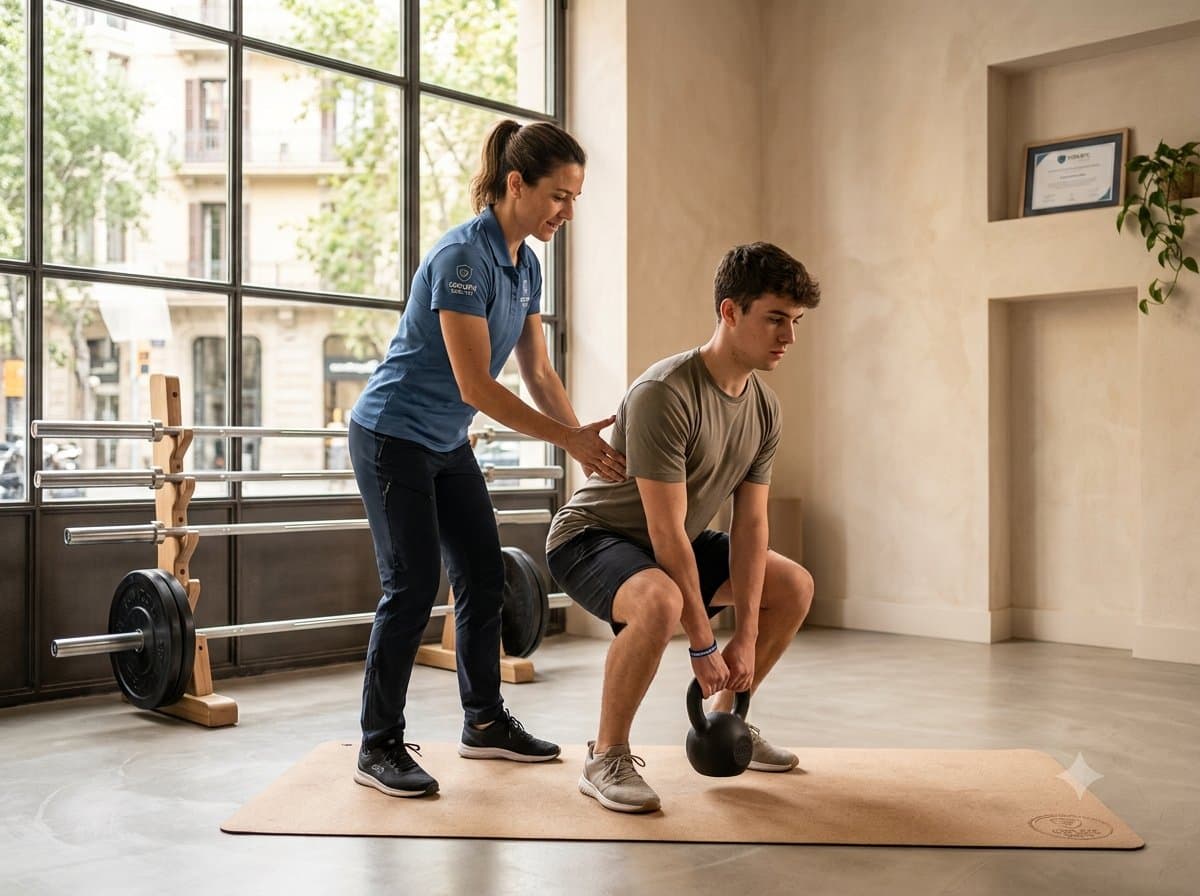
For operators, the change opens a path to more supervised exercise services, more structured coaching and more referral-friendly programming. Trainers who can handle intake, progression and follow-up will be better placed to work with residents who arrive through a health pathway rather than a search for a gym membership. The most immediate opportunity is not in flashy new equipment, but in services that help people stay active once they are already inside the system.
The market is making room for assessment, guided exercise, adapted classes and coaching models that can sit alongside public health goals.
INDESCAT is turning a loose scene into a cluster
The industry is also organizing itself more deliberately. In 2026, INDESCAT, Catalonia’s sports-industry cluster, will create a new Economic and Sports Industry Circle, a sign that the region wants more structure around business development, networking and shared strategy. Its 15th-anniversary gathering brought together about 200 professionals from Catalonia’s sports ecosystem.
Barcelona’s fitness economy is no longer just a set of independent operators competing for the same member. It is becoming a network that includes education, innovation, clubs, facilities, health systems and brands with different business models. INDESCAT is expanding its economic and industry work, and Johan Cruyff Institute received the Premio INDESCAT Empresa Deportiva 2026.
COPLEFC frames Barcelona and Catalonia’s fitness scene as a sector in growth and transformation. The facts on the ground back that up: more locations, more members, more policy linkage and a more formal industrial backbone.
What the transformation means on the floor
Low-cost gyms will keep chasing scale and retention. Boutique studios will keep winning with specialization and a tighter sense of community. Municipal centers will remain essential to volume and access. And the sports-prescription rollout, built into ECAP across 80 municipalities, gives coaches and supervised exercise services a new route into the city’s everyday health habits.
This article was produced by Prism’s automated news system from verified source data, official records, and press releases, then run through automated quality and moderation checks before publishing. The system is built and supervised by the people who set the standards it runs under. Read our full AI policy.
Did this article answer your question?