Barcelona reaches 949 gyms and 42.3% fitness penetration in 2025
Barcelona now has 949 gyms, but the real split is sharper: boutique clubs dominate the floor count while municipal centers still hoover up members.

Barcelona ended 2025 with 949 gyms, 929 of them operating and 20 waiting to open, in a market that generated 733,061 members and 476.3 million euros in annual business. The numbers were laid out on June 16, 2026, at the Cambra de Comerç de Barcelona by ADECAFF and Intelligence 2P, with backing from the Ajuntament de Barcelona and the Institut Barcelona Esports.
The city now sits as Spain’s second-biggest gym market by number of facilities, behind Madrid, but Barcelona’s real story is not size alone. It is segmentation. Private operators make up 95.6% of all centers, yet boutique studios account for 75.5% of the private offer while producing only 24.6% of private revenue, a clear sign that the city is packed with small, specialized rooms fighting over the same urban customer. The densest clusters are in Eixample, Sant Martí and Sants-Montjuïc, the neighborhoods where footfall, density and daily mobility still give operators the best shot at filling classes and keeping churn under control.

That crowded map has not stopped expansion. Between 2020 and 2025, 81 new centers opened in Barcelona, led by boutique concepts at 62.8% of the new openings and low-cost chains at 22.3%. Fitness Park, Basic-Fit and Brooklyn Fitboxing have pushed hardest on that growth, and together they account for 41.5% of the recent expansion, a sign that scale brands are now taking a larger share of the city’s remaining whitespace. In a market this thick, growth comes less from finding untouched demand than from taking members away from an already saturated field.
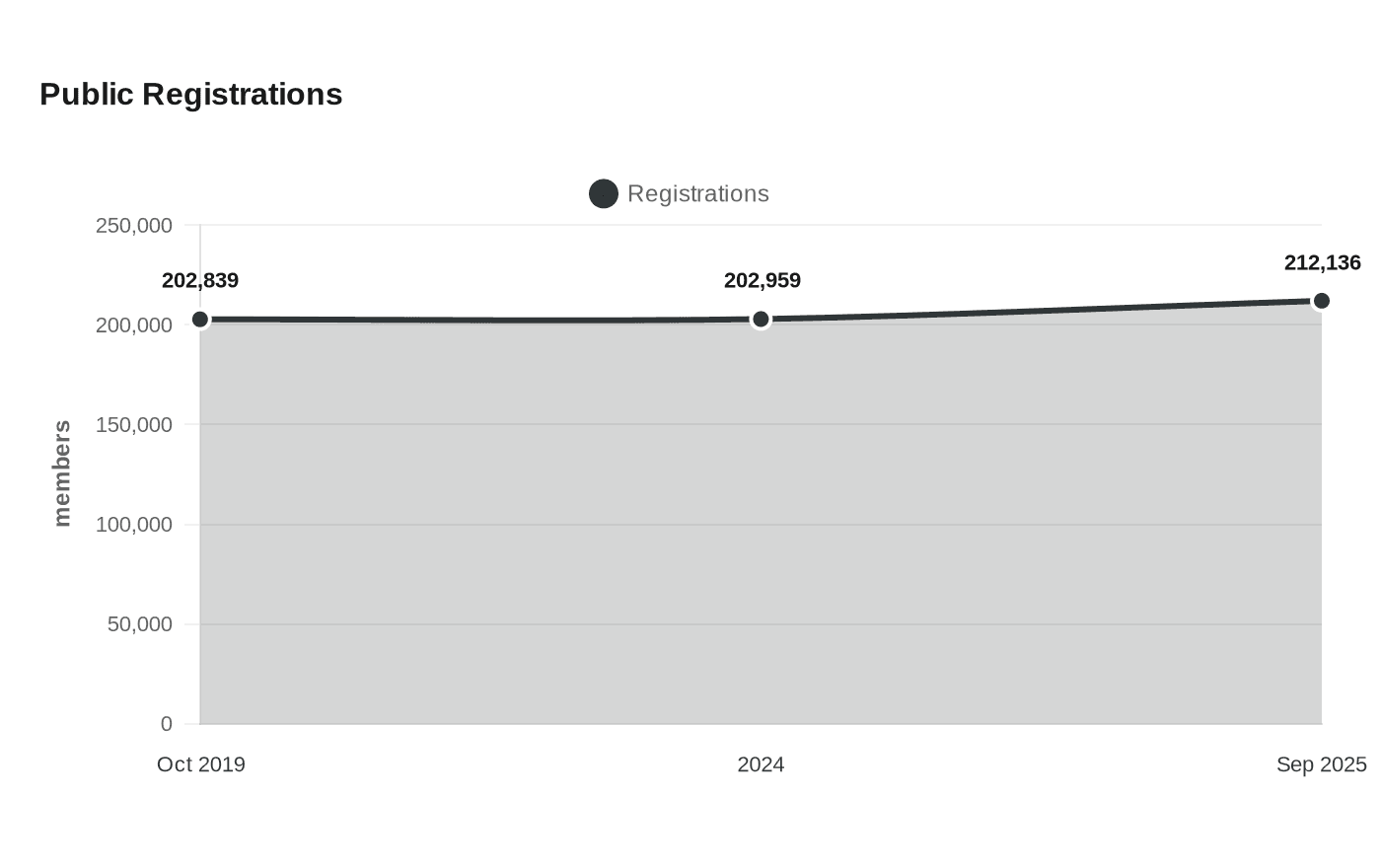
The municipal network still matters because it bends the whole pricing and access structure. Public centers represent just 4.4% of total supply, yet they capture 27.5% of subscribers and 25.5% of income. That network reached 212,136 registrations in September 2025, above the 2024 total of 202,959 and also above the pre-pandemic mark of 202,839 recorded in October 2019; it finished 2025 with more than 205,000 members and posted 112 million euros in 2024 revenue. With the public network back above pre-pandemic membership and private clubs still piling into the city, Barcelona is no longer rewarding simple expansion. It is rewarding the operators that can hold members, defend margin and survive a market where every neighborhood already feels claimed.
This article was produced by Prism’s automated news system from verified source data, official records, and press releases, then run through automated quality and moderation checks before publishing. The system is built and supervised by the people who set the standards it runs under. Read our full AI policy.
Know something we missed? Have a correction or additional information?
Submit a Tip