Barcelona’s Cursa Diagonal DiR Guardia Urbana adds unified seafront finish
Barcelona’s flagship spring run now unifies its 5K and 10K at one seafront finish, sharpening a fast, crowded race built for everyday runners.
A cleaner finish gives Barcelona’s spring race a stronger identity
The 12th Cursa Diagonal DiR Guardia Urbana is shaping up as more than another date on Barcelona’s packed running calendar. Its biggest 2026 change is simple but important: both the 5K and 10K will finish at the same point on the seafront, giving the race a more unified and festive feel while making the event easier to understand for clubs, casual entrants and first-timers.
That matters in a city where race choice is plentiful and attention is hard to win. A shared finish line reduces confusion, sharpens the event’s identity and strengthens the sense that this is one citywide gathering rather than two separate races sharing a weekend.
Dates, formats and the practical basics
The 2026 edition takes place on 23 and 24 May, with three formats on offer: 10K, 5K and Kids. Mundo Deportivo’s coverage points to Sunday 24 May as the main race day, while DiR’s own race materials place the full weekend at the center of the program. The format mix keeps the event open to a wide range of runners, from people targeting a certified road-race effort to families and younger participants looking for a more accessible entry point.
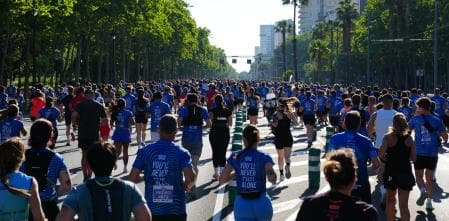
Expected turnout is around 15,000 runners, matching the scale that has made the race one of Barcelona’s largest mass-participation events. That number is not just a headline figure. It signals the sort of density, energy and logistical weight that defines the race as a major spring fixture rather than a niche club outing.
Why the new seafront finish changes the experience
For everyday runners, course design can be as important as pace. A shared finish on Passeig Garcia Fària gives the race a cleaner rhythm and a more memorable payoff, especially for runners who are choosing between distances based on comfort rather than ambition. The seafront setting also adds a natural sense of occasion, turning the closing stretch into a communal finish rather than a split between two separate race endings.

The new setup also helps the event work as a practical city race. A simpler finish is easier to explain, easier to plan around and easier to sell to groups arriving together, which is exactly the kind of friction reduction that matters in a crowded amateur calendar. In a race that wants speed, convenience and visibility at the same time, the unified finish point is a smart piece of event design.
The route still carries the race’s strongest appeal
The 10K remains the race’s most emblematic format, and DiR describes it as one of Barcelona’s fastest and most recognizable. It starts at Palau Reial and ends by the sea at Passeig Garcia Fària, with the course officially certified. The city’s own agenda describes the route as running along Avinguda Diagonal “from mountain to sea,” which captures why the event works so well as a mass-participation run: it turns one of Barcelona’s great urban arteries into a sporting corridor.
The route details reinforce that appeal. DiR’s 10K description threads runners through Avinguda Diagonal, Passeig de Gràcia, Carrer de València, Carrer dels Castillejos, Carrer de Bolívia, Carrer de la Ciutat de Granada, Carrer de Josep Pla and finally Passeig Garcia Fària. That sequence gives the race a strong sense of movement across the city, with enough familiar streets to feel accessible and enough changes in texture to keep the experience engaging.
For runners building spring training plans, this kind of course is valuable. It rewards road pace, lets participants test fitness on a certified route and offers a clear target for anyone preparing for a half marathon or a fast 10K later in the season. The Diagonal profile also makes the race feel legible from the start, which is part of why it continues to draw such large numbers.
Why the race keeps its place in Barcelona’s running culture
The 2025 edition showed just how far the event has moved beyond being a standard local race. Barcelona’s Guardia Urbana said that year’s 11th edition reached a record 15,000 registrations and sold out, while the city’s sports office described it as one of Barcelona’s biggest solidarity sports events. The 2026 preview suggests that momentum has held, with about 15,000 runners expected again.
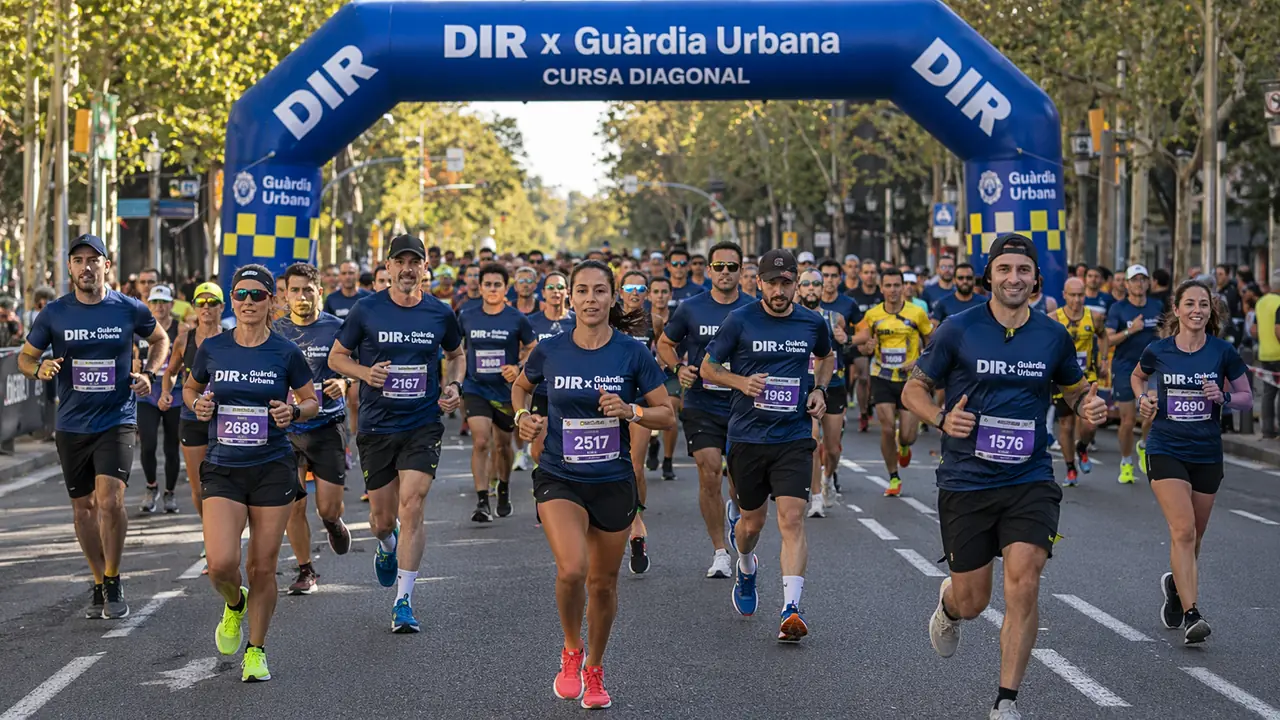
That consistency matters. It shows the Cursa Diagonal DiR Guardia Urbana is not a one-off spike in popularity but a stable fixture with institutional backing from DiR, the City Council and the Guàrdia Urbana de Barcelona. In a city where boutique fitness, hybrid wellness formats and smaller-format training trends often dominate the conversation, this race keeps mass road running visible and central.
It also works as a calendar marker. Spring in Barcelona now has a crowded amateur race landscape, but few events combine route prestige, ease of entry and broad community reach as effectively as this one. The Diagonal route is familiar enough to feel welcoming, yet distinctive enough to make the race feel like a proper city showcase.
A race built for more than serious time-chasing
The 2026 edition also carries a stronger solidarity angle through collaboration with the Fundació Xana and Amics del Clínic. That philanthropic layer gives the event another reason to matter, especially for participants who want their registration to connect to something beyond pace and placement.
The Guàrdia Urbana has also framed the race as a sports and family gathering, with related activities at the Jardins de Piscines i Esports. That broader atmosphere helps explain the event’s durability. It is built not only for runners chasing a personal best, but also for families, first-timers and returning participants who want a lively city weekend with a strong public face.
Seen that way, the new unified seafront finish is more than a course tweak. It sharpens the race’s identity, strengthens its accessibility and underlines why the Cursa Diagonal DiR Guardia Urbana remains one of the clearest expressions of Barcelona’s mass-participation running culture.
This article was produced by Prism’s automated news system from verified source data, official records, and press releases, then run through automated quality and moderation checks before publishing. The system is built and supervised by the people who set the standards it runs under. Read our full AI policy.
Did this article answer your question?