Barcelona’s free Thursday Pilates turns fitness into a social ritual
Barcelona’s free Thursday Pilates turns a park workout into a weekly social anchor, showing how low-commitment fitness is becoming a neighborhood habit.

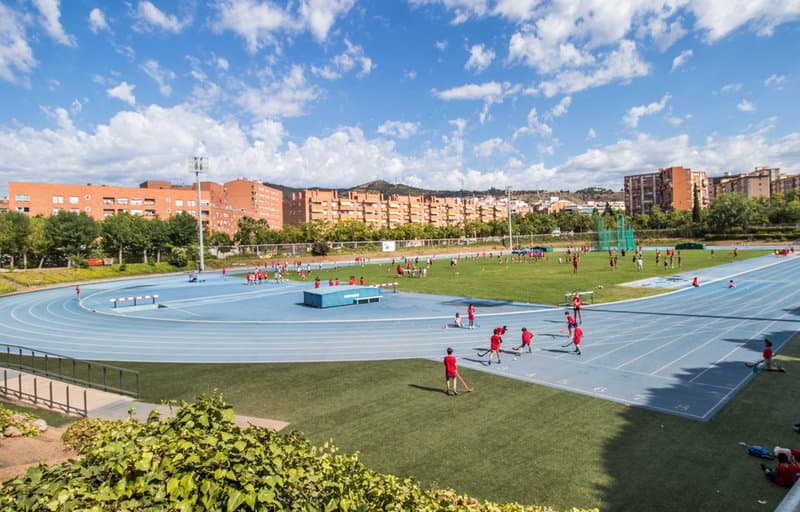
A free Thursday Pilates session in Jardins Baix Guinardó is doing more than filling a class slot. The AllEvents listing for Pilates Class + Social Every Thursday turns exercise into a standing meet-up, and that is the real signal in Barcelona: fitness is being designed to create connection as much as movement. In a city where a park, a beach, or a civic centre can all function as workout space, the appeal of a recurring, low-barrier ritual is easy to see.
Why the Thursday format lands
The June 11 gathering captures a format that fits how urban fitness habits are changing. A weekly session asks for commitment, but not too much of it: no membership to negotiate, no long-term package to justify, and no boutique-studio pressure to make the class feel exclusive. Because it is held in a public green space, it feels open and casual, which lowers the social and financial threshold at the same time.
That matters in a city like Barcelona, where many people are choosing routines that are easy to repeat. A class built around the same day each week creates recognition, and recognition is what turns a workout into a ritual. People return not just for the movement, but for the faces they start to know, the simple predictability of the schedule, and the sense that they are part of a small neighborhood habit rather than a one-off wellness purchase.
The format is also a smart answer to the way younger urban residents often approach fitness now. They are looking for sessions that can fit around irregular work patterns, changing plans, and the desire to stay social without locking into a rigid club model. A free Pilates class in the park solves for both: it is structured enough to feel purposeful, yet informal enough to attract people who might never sign up for a traditional membership.
Barcelona already has the infrastructure for this shift
Barcelona’s sports ecosystem gives this kind of event a clear runway. Barcelona City Council says the city has 40 municipal sports centres, and it has published an interactive map so residents can find the nearest one. The wider city sports portal also lists 1253 sports facilities, which shows just how dense the local fitness network has become.
The city’s public-space offer goes well beyond indoor venues. Barcelona’s municipal sports pages describe running circuits, walking routes and gym circuits spread across districts, with sports circuits placed in parks, avenues and other outdoor areas. These spaces are built to be accessible without complex equipment, which makes them a natural fit for activities that need little more than a mat and a regular time slot.
The same logic extends to Barcelona’s parks, gardens and coastline. The city’s Activa’t program offers outdoor physical exercise and health activities in parks and gardens, while Barcelona City Council also highlights beach-based activity that includes sailing, kayaking, yoga, toning and volleyball. With nearly five kilometres of beaches in play, outdoor fitness is not a side story here; it is part of the city’s everyday sports identity.
The beach and civic-centre model are shaping expectations
Barcelona has also invested in making outdoor sport feel organized rather than improvised. The Pavelló Blau framework was launched in 2021 as a workspace for sea and beach sports, bringing stakeholders together around how those activities should grow. Since then, the city has approved new regulations for sport on the beaches to improve coexistence among users and address inequality concerns, which shows that outdoor wellness is being managed as civic infrastructure, not just leisure.
That approach has become even more visible in city communications around summer sports. Barcelona has promoted activity on its beaches and at its 14 municipal swimming pools, reinforcing the idea that outdoor movement is a municipal priority rather than a seasonal marketing theme. For participants, that means a Pilates session in a park is part of a much larger ecosystem that includes beaches, pools, civic centres and public sports circuits.
The civic-centre layer is especially important because it shows how repeatable Pilates has become across the city. Centre Cívic Barceloneta lists a Pilates course running from 30 June 2026 to 14 July 2026 for 17.65 euros, a clear example of how the format is being packaged as an affordable neighborhood staple. Other civic centres, including Centre Cívic La Sedeta, also include Pilates and Fit Pilates workshops in regular programming, which helps normalize the practice as something residents can return to again and again.
What this says about the market
For clubs, studios and community organizers, the lesson is straightforward: retention is increasingly built through familiarity, not just novelty. A one-time class may attract attention, but recurring sessions create the social glue that keeps people showing up. That is why the Thursday Pilates model is so effective. It converts a workout into a weekly appointment and turns a public space into a place with memory.
Barcelona’s Sports Office helps make that possible by supporting the city’s sports stakeholders and their projects, while private and community-focused operators are leaning into the same logic with group training and a social atmosphere. STREETERCISE is part of that broader pattern, where the value proposition is not only the exercise itself but also the feeling of belonging that comes with repeated participation. In practice, that is what the free Thursday class gets right: it makes fitness feel like a civic habit instead of a solo errand.
Barcelona’s fitness story is therefore less about the rise of one Pilates class than about the redefinition of the workout itself. In this city, the most durable formats are the ones that solve for movement, affordability and social connection at the same time. The Thursday session in Jardins Baix Guinardó is a small example, but it points to a bigger shift: people are not just signing up to exercise, they are signing up to return.
This article was produced by Prism’s automated news system from verified source data, official records, and press releases, then run through automated quality and moderation checks before publishing. The system is built and supervised by the people who set the standards it runs under. Read our full AI policy.
Did this article answer your question?