Air Canada, Airbus launch C$13.7 million platform for Canadian SAF growth
Air Canada and Airbus set up a C$13.7 million SAF platform, a four-year bet on Canadian supply that is meant to pull in bigger capital.
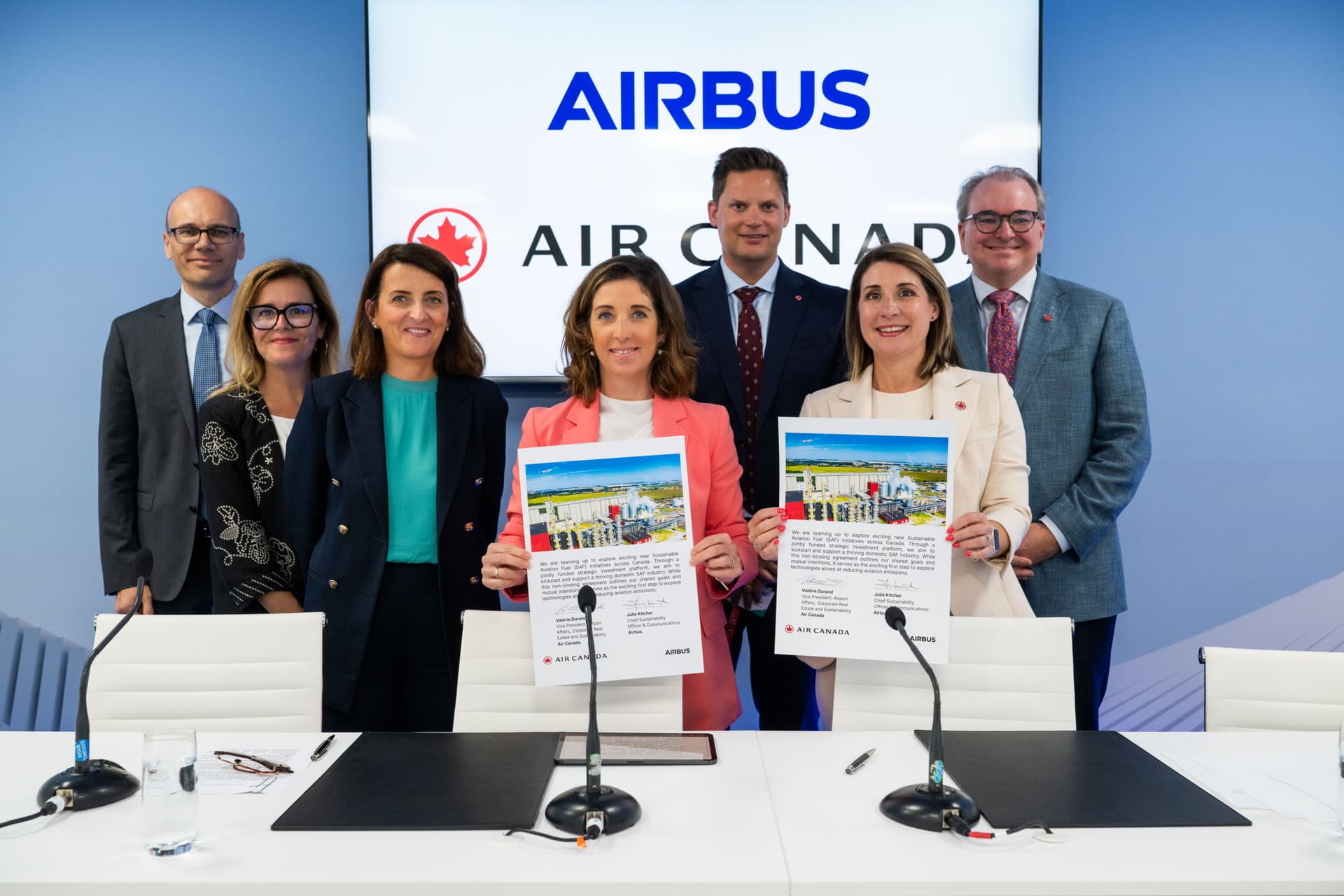
Air Canada and Airbus on July 22 launched a jointly funded Sustainability Co-Investment Platform with a target of up to C$13.7 million, or US$10 million, for Canadian sustainable aviation fuel.
The four-year platform is designed to support a commercial-scale SAF industry in Canada, scale domestic production and cut the life-cycle emissions of corporate travel. Air Canada and Airbus said the money only works if Ottawa keeps a supportive policy framework in place, a telling sign that airlines and airframers are moving into the financing gap that climate pledges alone have not closed.
Aviation-industry coverage has flagged local SAF availability as one of the sector’s biggest bottlenecks, and the new platform is aimed squarely at that constraint. Airbus chief sustainability officer Julie Kitcher and Air Canada vice-president for airport affairs, corporate real estate and sustainability Valerie Durand were identified in coverage of the initiative, underscoring that the project sits at the intersection of aircraft supply chains, airline procurement and domestic fuel buildout.

The amount is modest against the cost of a commercial-scale SAF plant, which makes the platform look less like full project finance and more like seed capital intended to de-risk early Canadian projects and signal demand to lenders, producers and policymakers. That is the role airlines have increasingly taken on in SAF, where offtake and credit structures often matter as much as the technology pathway itself.
Transport Canada has since published a Sustainable Aviation Fuels Blueprint for Canada, adding federal planning to a market that still lacks enough local supply to match airline demand. One news summary said Airbus would buy attributes tied to more than 60,000 litres of fuel, a small volume in physical terms but another sign that buyers are trying to build transaction history before larger pools of capital arrive.
This article was produced by Prism’s automated news system from verified source data, official records, and press releases, then run through automated quality and moderation checks before publishing. The system is built and supervised by the people who set the standards it runs under. Read our full AI policy.
Did this article answer your question?