Arkas Line backs biofuels as near-term fix for Mediterranean shipping emissions
Arkas Line used a Marseille summit with 11 Mediterranean countries to back BIO30F, which it says cuts marine-fuel CO2 by about 28 percent.
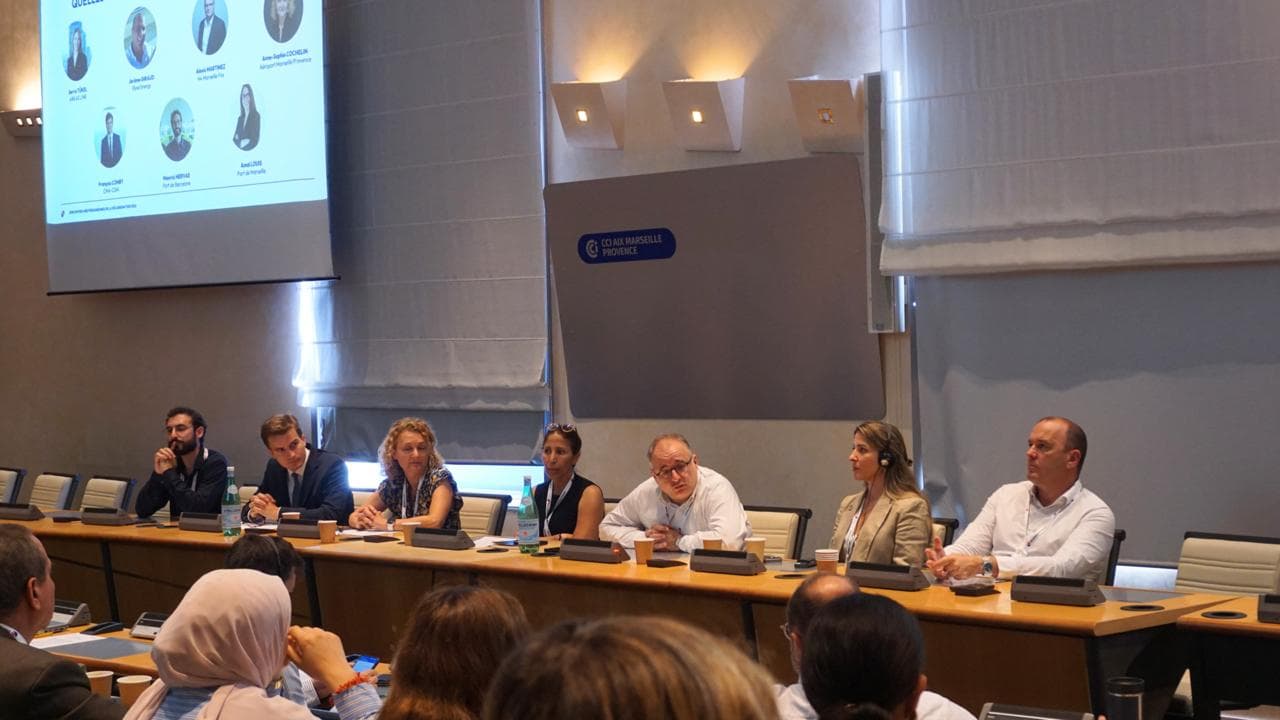
Arkas Line at the June 29-30 Mediterranean Decarbonisation Meetings in Marseille backed biofuels for ships serving 11 Mediterranean countries. The carrier used the forum to argue that sustainable marine fuel can cut emissions now, without waiting for methanol, ammonia or new vessel designs to scale.
Business France said the Palais de la Bourse meetings brought together public-sector officials, private companies and financial institutions around low-carbon transport and logistics, energy efficiency and sustainable finance, and circular economy and environmental protection. Arkas Line supported the event as a gold sponsor, and Serra Tükel, sustainability director of Arkas Maritime Group, spoke on the panel titled “Low-Carbon Transport & Logistics: Solutions to Reduce Emissions.” Her remarks centered on alternative fuels, regulatory infrastructure and cooperation across sectors.
Arkas Line’s fuel-transition materials say the company started with BIO24F and later expanded to BIO30F and BIO100. The company says its marine biofuels are “fully compatible with existing vessel operations,” a key point in the Mediterranean, where short and medium-haul routes and dense port calls favor drop-in fuels over a wholesale fleet replacement cycle. Arkas says BIO30F can cut carbon dioxide emissions by about 28 percent versus conventional marine fuels, while BIO100 can deliver more than 80 percent reductions on a life-cycle basis.
Arkas Bunker says it is Türkiye’s first ISCC-certified marine fuel supplier. The company says Bio24F is a blend of 24 percent certified used cooking oil and 76 percent very low sulfur fuel oil, and that it carried out Türkiye’s first maritime-sector biofuel bunkering on the containership Matilde A at Marport without modifying the vessel’s fuel system.
The policy pressure is tightening around that commercial case. The International Maritime Organization’s 2023 GHG Strategy aims to cut total annual shipping emissions by at least 20 percent, striving for 30 percent, by 2030 versus 2008, and to make zero- or near-zero-emission fuels supply at least 5 percent, striving for 10 percent, of international shipping energy by 2030. FuelEU Maritime entered into force on January 1, 2025, to increase the use of renewable and low-carbon fuels in ships trading in the EU.
Even so, the biofuel argument remains a bridge-fuel argument, not a full answer. Arkas framed the product as a near-term tool while longer-term fuels, port-side infrastructure and vessel technologies mature. DNV has described biofuels as an increasingly attractive decarbonization option for shipowners as a drop-in fuel, while also flagging supply and sustainability constraints. The IMO’s Future Fuels platform has put sustainability, feedstock scarcity and infrastructure at the center of its 2025 biofuels work, underscoring how much of the Mediterranean’s shipping transition will depend on whether bunkering corridors can line up feedstock, logistics and compliance fast enough.
This article was produced by Prism’s automated news system from verified source data, official records, and press releases, then run through automated quality and moderation checks before publishing. The system is built and supervised by the people who set the standards it runs under. Read our full AI policy.
Did this article answer your question?