Corn ethanol's farm impact fouls water, harms health, report says
EPA said the RFS left a modest environmental loss even as 30 million corn acres fed ethanol. In Iowa, nitrate contamination and birth-defect risk were part of the ledger.
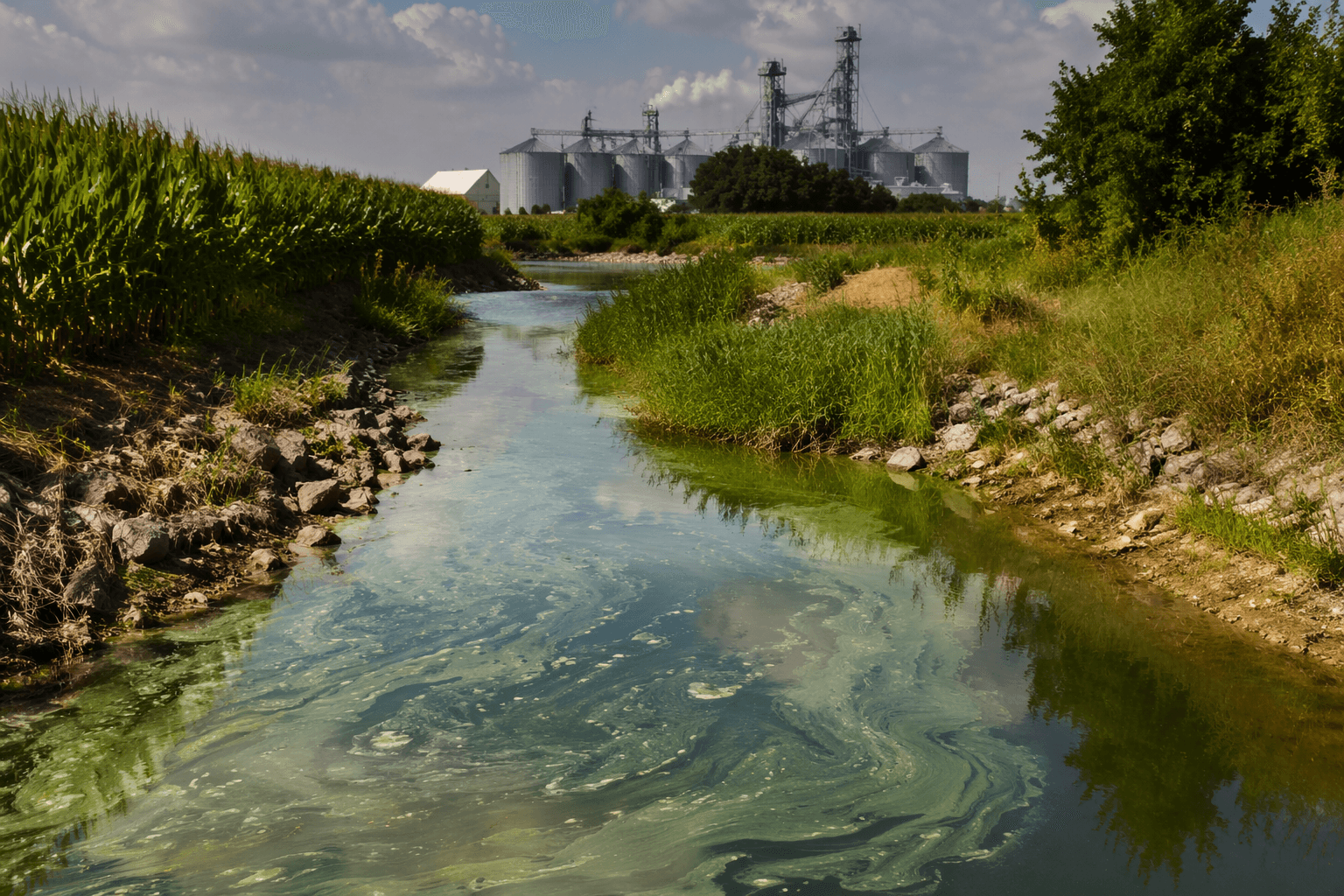
The U.S. Environmental Protection Agency in January 2025 said the Renewable Fuel Standard had a modest negative effect on the environment, even as corn ethanol used about 30 million acres. That acreage was roughly one-third of the U.S. corn crop, yet ethanol supplied just 4% of U.S. transportation fuel in 2022.
Congress built the Renewable Fuel Standard into the Energy Policy Act of 2005 and expanded it in the Energy Independence and Security Act of 2007, which George W. Bush signed on December 19, 2007. The law pushed the mandate toward 36 billion gallons by 2022, and EPA has used renewable identification numbers to administer the program. Congress also told the agency to look at air and water quality, water quantity, ecosystem health and biodiversity, soil quality, invasive species and international impacts, not just gallons blended into the market.
EPA’s third triennial biofuels report, finalized in January 2025, found the program had a modest positive effect on biofuel production and consumption and a modest negative effect on the environment overall. The environmental cost is concentrated on the farm side of the supply chain, where corn acres rise, fertilizer use increases and runoff moves into waterways.
In Iowa, where more than 75% of residents rely on groundwater as their primary drinking-water source, the water risk is direct. The Iowa Department of Natural Resources warns that manure applied in the fall can convert to nitrate and migrate into drainage tile or groundwater. EPA’s groundwater modeling says higher corn production can push nitrate above the drinking-water threshold and slightly raise the risk of spina bifida birth defects.
The World Resources Institute said the same pattern is already large in scale: about one-third of the U.S. corn crop, or roughly 30 million acres, is used for ethanol. It said fertilizer-heavy corn expansion can deplete oxygen in downstream waterways and raise nitrate concentrations in tap water in heavily affected areas, placing the burden across the Corn Belt and the Mississippi River basin.
The Sabin Center for Climate Change Law said EPA finalized 2026 and 2027 RFS volume requirements and removed renewable electricity as a qualifying fuel pathway. That keeps the federal program centered on liquid biofuel volumes, while the nitrate load, groundwater exposure and health costs tied to corn production remain outside the gallons count.
This article was produced by Prism’s automated news system from verified source data, official records, and press releases, then run through automated quality and moderation checks before publishing. The system is built and supervised by the people who set the standards it runs under. Read our full AI policy.
Know something we missed? Have a correction or additional information?
Submit a Tip