Cushing crude stocks fall below 20 million barrels, testing tank bottoms
Cushing crude stocks sank below 20 million barrels and stayed there for three weeks, putting tank bottoms and WTI delivery logistics under strain.
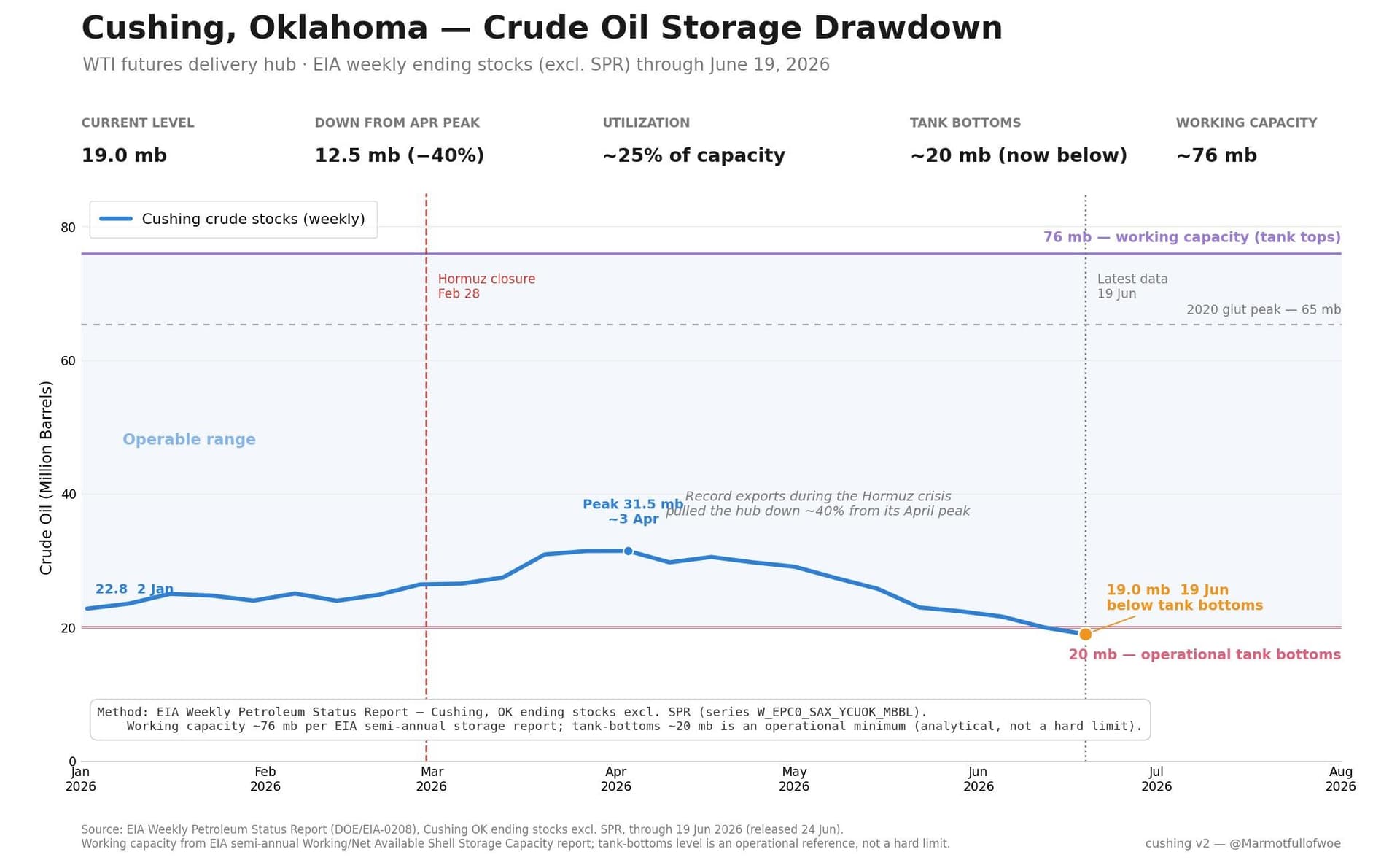
EIA weekly data showed crude oil inventories at storage facilities in Cushing, Oklahoma, fell below 20 million barrels in the week ending June 19 and stayed there through the week ending July 10. The run below that threshold put the physical storage floor at the center of the market, not just the paper trade.
EIA’s explainer on “tank bottoms” says they are the minimum crude oil levels that must remain in a storage tank for operational reasons. That limit matters at Cushing because the hub is the physical delivery point for West Texas Intermediate crude futures, so the stock level is not just a balance-sheet number, it is tied to how tanks, pumps and pipeline movements work on the ground.
The same EIA weekly series, the Weekly Petroleum Status Report, tracks crude oil alongside gasoline, heating oil, diesel, propane and other liquids including biofuels and natural gas liquids. In late June, the hub’s crude stocks were described as a near 12-year low, while gasoline and distillate inventories rose. EIA also said on July 16 it was reviewing the results of a pilot study aimed at better understanding minimum working crude oil inventory for some storage hubs at Cushing after stocks reached levels that may constrain normal operations.
The logistics squeeze was already visible earlier in the month. A June 5 report described about 400 oil storage tanks in Cushing as nearly empty amid global supply disruptions caused by war in the Middle East. EIA’s historical data show weekly ending stocks at Cushing back to at least April 2004, giving traders and terminal operators a long record for comparing today’s tightness with past drawdowns. In one prior low-inventory period, EIA said Cushing crude inventories were 26% lower than normal.
For biofuels markets, the Cushing draw is a reminder that storage constraints, not just outright demand, can shape product flow. The same physical reality that leaves crude tanks with a required heel also governs how terminals handle renewable diesel, ethanol and blendstock movements when tankage gets tight and optional storage disappears.
This article was produced by Prism’s automated news system from verified source data, official records, and press releases, then run through automated quality and moderation checks before publishing. The system is built and supervised by the people who set the standards it runs under. Read our full AI policy.
Did this article answer your question?