EIA sees rising inventories as U.S. fuel ethanol exports climb
EIA said U.S. crude stocks rose 2.0 million barrels to 411.7 million, while ethanol output jumped 5.2% and exports stayed near record highs.
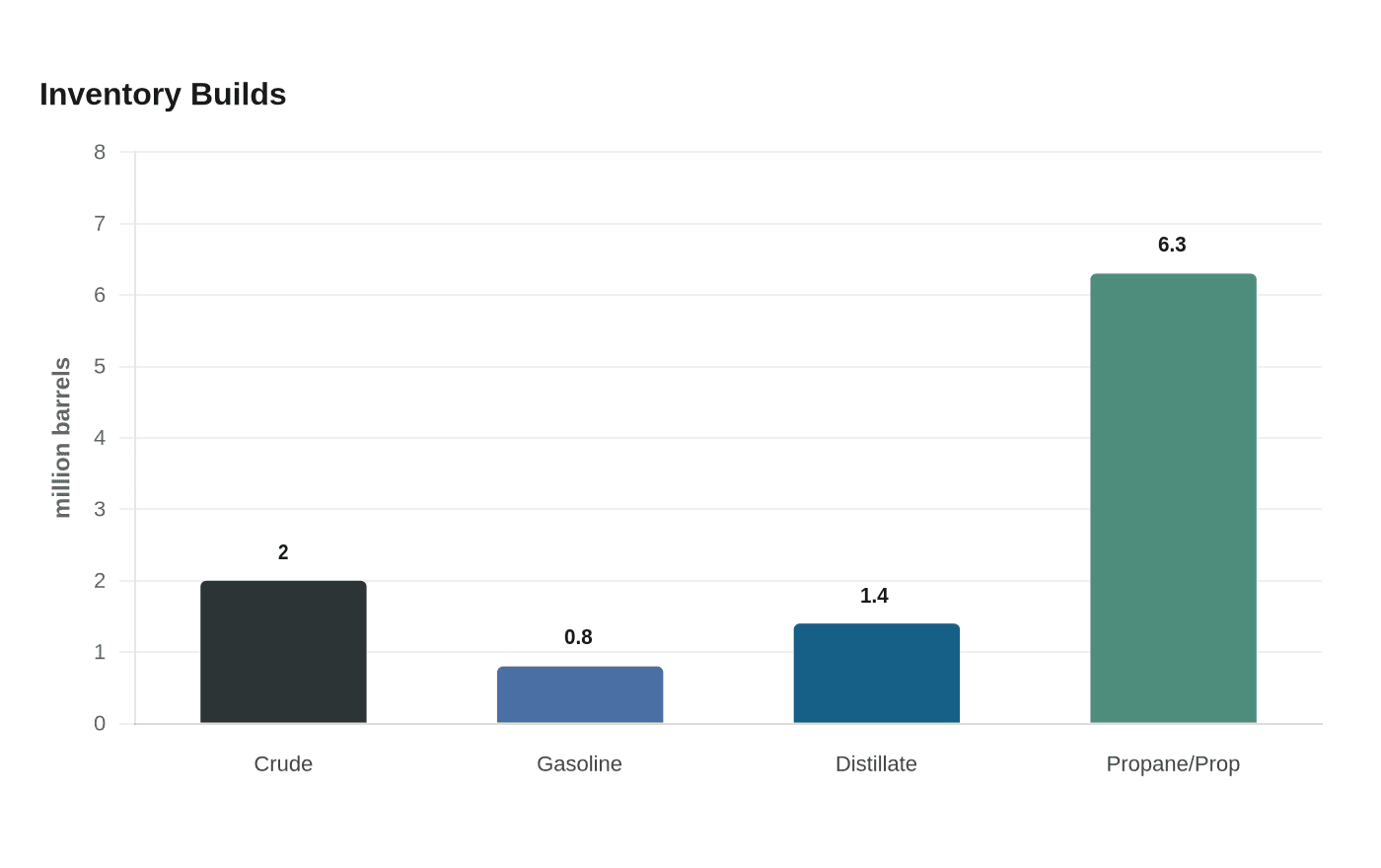
On July 22, EIA data showed U.S. commercial crude oil inventories rose 2.0 million barrels to 411.7 million barrels for the week ending July 17. The build left crude stocks 6% below the previous five-year average, but it added to a broader petroleum inventory gain of 11.6 million barrels as gasoline, distillate and propane/propylene all moved higher.
Gasoline inventories rose 0.8 million barrels and remained 7% below the five-year average, while distillate inventories climbed 1.4 million barrels and stood 10% below average. Propane/propylene inventories jumped 6.3 million barrels, leaving them 34% above the five-year average.
The weekly petroleum report showed U.S. crude oil refinery inputs averaging 17.1 million barrels per day, down 58,000 barrels per day from the prior week, with refineries running at 96.1% of operable capacity. Gasoline production averaged 9.7 million barrels per day and distillate fuel production averaged 5.3 million barrels per day, while U.S. crude oil imports averaged 5.8 million barrels per day, up 117,000 barrels per day from the previous week.
For the week ending July 3, EIA data showed crude inventories at 411.4 million barrels, and total petroleum product exports had reached a record 8.73 million barrels per day in the same weekly series.
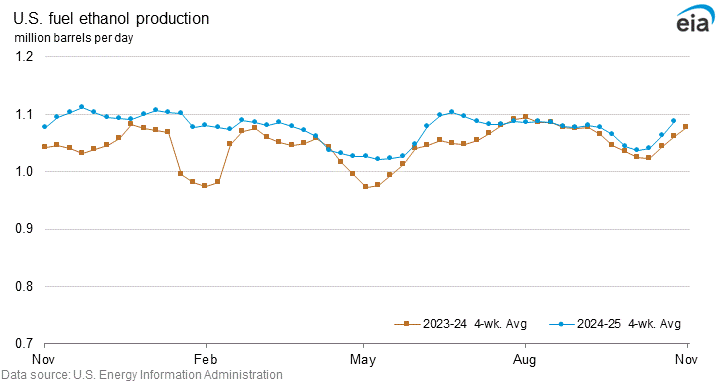
In its July 2026 Short-Term Energy Outlook, EIA put U.S. fuel ethanol exports on track to set a record and expected ethanol production and net exports to remain near record highs in 2026. In the weekly ethanol report for the week ending July 17, domestic ethanol demand came in at 14.3 billion gallons per year, up 1.2% from the prior week, gasoline demand was 137.2 billion gallons per year, also up 1.2%, and ethanol production reached 16.8 billion gallons per year, up 5.2%.
This article was produced by Prism’s automated news system from verified source data, official records, and press releases, then run through automated quality and moderation checks before publishing. The system is built and supervised by the people who set the standards it runs under. Read our full AI policy.
Did this article answer your question?