EPA’s renewable fuel standard shapes U.S. gas prices and ethanol demand
Washington can move pump economics through the RFS, but the first reaction is in RIN prices and blending, not an instant change at the station.
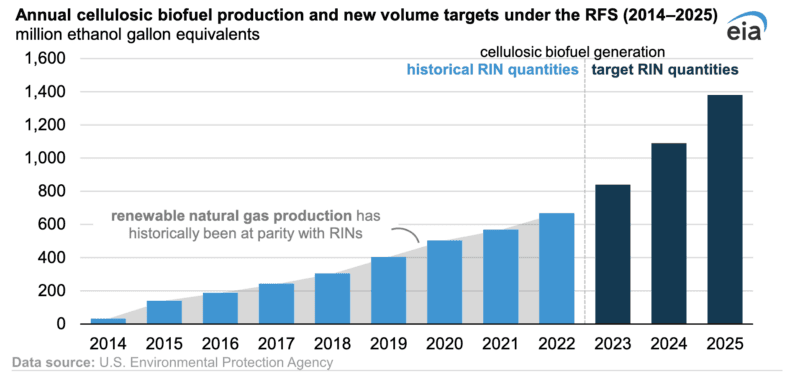
EPA on July 12, 2023 finalized RFS standards that kept conventional renewable fuel at 15 billion gallons a year through 2025. The first market reaction showed up in compliance credits, with D3 RINs returning to about $3 each shortly after the rule, long before any consumer noticed a change at the pump.
How the RFS reaches gasoline prices
Congress created the Renewable Fuel Standard in the Energy Policy Act of 2005 and strengthened it in the Energy Independence and Security Act of 2007, then handed EPA the job of setting and revising the program. EPA does not set retail gasoline prices, but it does set the annual renewable volume obligations that determine how much renewable fuel the market has to absorb and how many RINs obligated parties must hold.
When EPA tightens or loosens the volumes, refiners and importers adjust their compliance buying, blenders adjust their economics, and the change filters into wholesale fuel pricing before it reaches station signs. In that July 2023 final rule, EPA estimated biodiesel volumes would contribute 1.78 billion gallons a year to the biomass-based diesel requirement.
The credit market is where the policy becomes visible. D3 RINs, tied to cellulosic biofuel obligations, moved shortly after the June 2023 final rule, changing compliance costs in real time and feeding through blending decisions and downstream prices with a lag.
Why consumers do not feel it overnight
The lag comes from how gasoline is bought and sold. Refiners and blenders operate on contracts, inventory cycles and wholesale postings, not on the same clock as EPA rulemakings. If EPA changes the annual target, the first thing that moves is demand for RINs and the relative value of blending more ethanol or biodiesel, not the retail price on the corner marquee.
That is why the debate over gasoline prices keeps circling back to the same question: does the RFS lower prices consumers actually feel, or does it just reshuffle margins across the fuel chain? The American Petroleum Institute has framed the issue as a “gas-price lever Washington already holds.” The Renewable Fuels Association has taken the opposite view, saying the RFS lowers gas prices, supports U.S. energy independence and helps farms and cleaner air.
The evidence in the market is not a direct one-to-one pump calculation. It is the compliance response, the blending response and the timing. The policy is set years ahead, then revised again as EPA resets the next cycle. EPA on June 13, 2025 proposed Renewable Volume Obligations for 2026 and 2027, and EPA’s 2026 final RFS materials later covered standards for 2026 and 2027 along with a partial waiver of the 2025 cellulosic biofuel volume requirement.

Who gains and who loses if volumes move now
If EPA or Congress pushes RFS volumes higher, the first beneficiaries are renewable fuel producers, corn ethanol plants, biodiesel makers and the farmers tied to those feedstocks. Higher obligated volumes mean stronger demand for RIN generation and blending, especially in categories where supply is tight. If the agency moves the other way, refiners and other obligated parties get relief first because they need fewer RINs to comply.
The biggest losers from a tighter mandate are usually the obligated parties facing higher compliance costs, though the direction of the retail price effect depends on the rest of the fuel market. In contrast, lower RVOs can ease pressure on RIN prices and reduce the incentive to blend above minimum levels. That can soften demand for ethanol and biodiesel even if crude oil and refinery margins are doing something entirely different.
EPA’s final 2026 materials included a partial waiver of the 2025 cellulosic requirement, which affects D3 compliance dynamics separately from the conventional ethanol market.
State E15 decisions widen the ethanol market
State policy has also mattered. California Gov. Gavin Newsom signed legislation on Oct. 2, 2025 allowing E15 in California. California had been the last state to approve the lower-cost blend. EPA gave final approval in 2024 to permanent, year-round E15 sales in eight Midwest states beginning in 2025.
They open more outlets for ethanol demand. A July 2024 UC Berkeley and U.S. Naval Academy study found E15 could save California drivers 20 cents per gallon and $2.7 billion a year if adopted statewide. University of California, Riverside research from June 7, 2023 found E15 has notable emissions-reducing benefits.
This article was produced by Prism’s automated news system from verified source data, official records, and press releases, then run through automated quality and moderation checks before publishing. The system is built and supervised by the people who set the standards it runs under. Read our full AI policy.
Did this article answer your question?