Ethanol monitoring continues after Morgan County train derailment
Air monitoring near the Emory River found no ethanol levels of concern after a June 11 derailment that sent four or five tank cars off track.

Morgan County officials said 15 to 20 rail cars derailed near Lancing on June 11, including four or five ethanol tank cars, after a fiery wreck that triggered an evacuation order later lifted the same evening. No injuries were confirmed, but the spill pushed ethanol into the Emory River and kept cleanup crews on scene as environmental monitoring continued days later.
The Tennessee Department of Environment and Conservation issued a temporary contact advisory for portions of the Emory River affected by the spill, including water near Camp Austin Bridge, the Nemo Picnic Area upstream of the Catoosa Road bridge and swimmable areas close to the derailment site. The advisory was meant to limit public contact while assessments and cleanup work continued around the remote crash site.
Morgan County Emergency Management Agency and Morgan County Homeland Security said air monitoring by the Environmental Protection Agency and Norfolk Southern had not detected ethanol levels of concern, and drinking water supplies remained within normal levels and were considered safe. Officials said the response was being run through a unified command structure with state, federal, local and railroad officials, including the Tennessee Emergency Management Agency, Tennessee Wildlife Resources Agency and U.S. Fish and Wildlife Service.
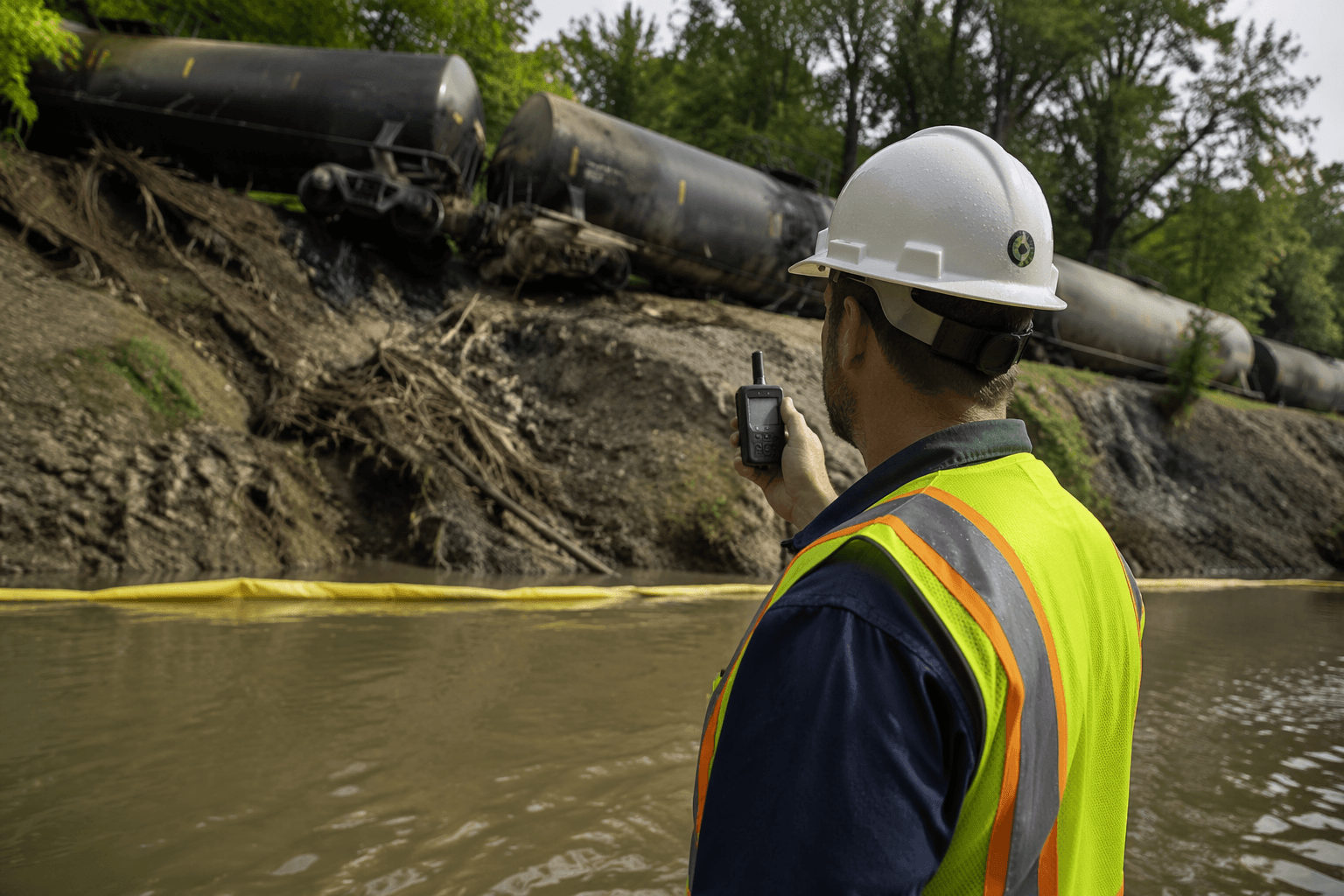
Norfolk Southern sent cleanup crews and heavy equipment to move the derailed cars and placed a boom on the river Saturday to help contain the spill. The railroad also worked in a location with limited direct road access, a factor that complicated the response in the remote stretch near Lancing. The fire was out, but officials said it was still being monitored, with trains moving through the area on one operational track and the derailed cars remaining off to the side.
Ethanol detection in the Emory River led the National Park Service to keep Rock Creek Campground closed, while access restrictions also touched nearby recreation areas in the Obed Wild and Scenic River corridor. Federal investigators from the National Transportation Safety Board and the Federal Railroad Administration have opened reviews, and the FRA says such investigations can take up to six months before a final account is complete.
This article was produced by Prism’s automated news system from verified source data, official records, and press releases, then run through automated quality and moderation checks before publishing. The system is built and supervised by the people who set the standards it runs under. Read our full AI policy.
Know something we missed? Have a correction or additional information?
Submit a Tip