Global SAF production lags far behind 2050 demand forecast
Airlines need 500 million tonnes of SAF in 2050, but 2025 output is just 2 million tonnes, and only 24% of planned capacity has been realized.
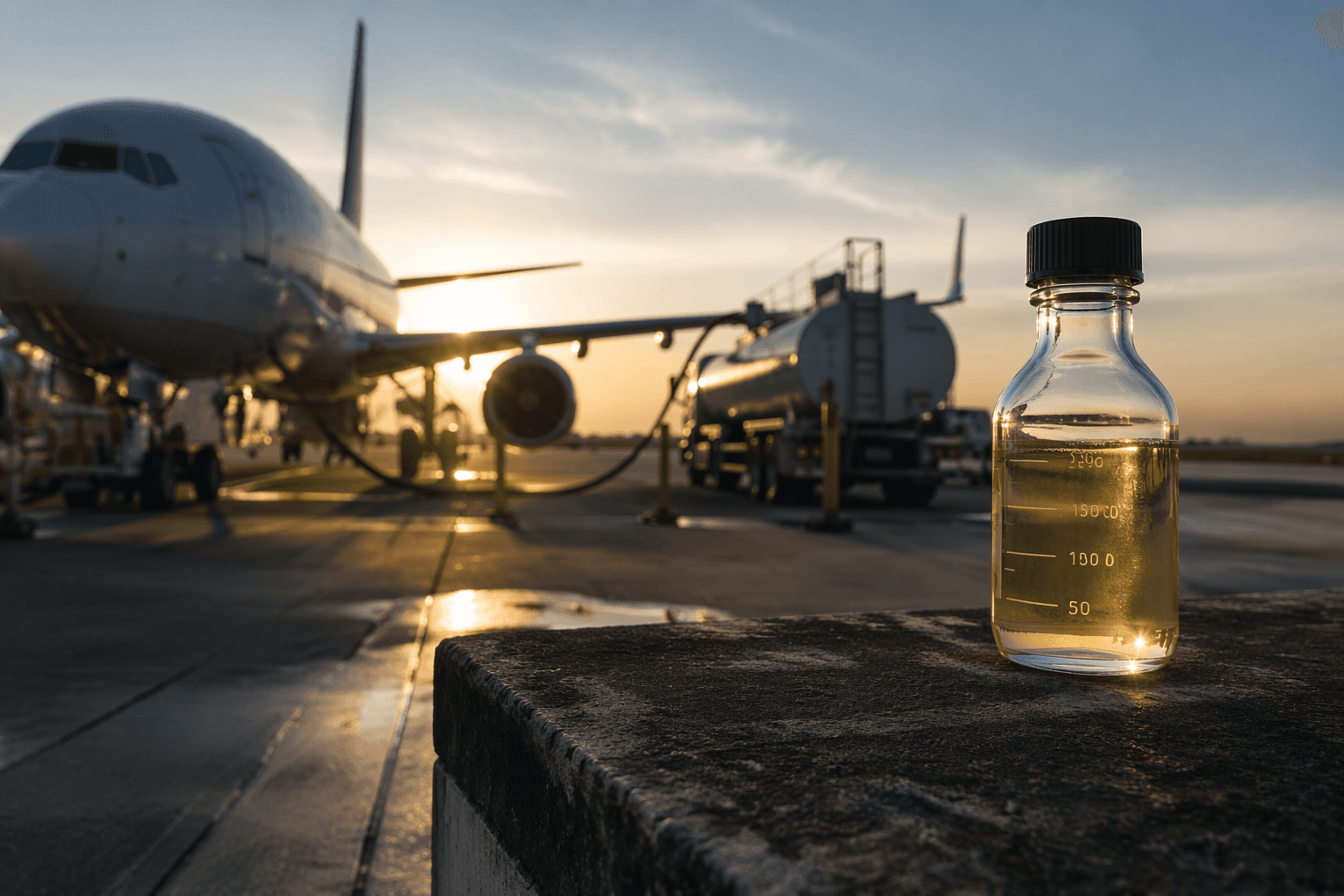
IATA in September 2025 put global SAF output at 2 million tonnes in 2025, far below the 500 million tonnes it says aviation will need in 2050. ICAO's October 2022 net-zero goal for international aviation leans on SAF, which it says has the greatest potential to cut CO2 from the sector. Aviation already accounts for about 2.5% of global CO2 emissions, and the climate burden is larger once non-CO2 effects are counted.
Demand still outruns the buildout
The clearest reality check in SAF is the scale gap. IATA's 2025 global feedstock assessment says airlines will need about 500 million tonnes of SAF in 2050 to hit net-zero CO2 goals, while the trade group expects only about 2 million tonnes in 2025, or roughly 0.7% of total airline fuel consumption. IATA also says global SAF output could reach around 400 million tonnes by 2050, which would still leave a shortfall of about 100 million tonnes.
That gap is not just a chemistry problem. IATA says policy shortcomings are slowing deployment, and its 2025 production estimate of 2 million tonnes, or 2.5 billion liters, underscores how little of the jet-fuel pool has been displaced. The industry can point to targets, but the current run rate still sits at a fraction of what 2050 planning assumes.
What can fly now, and what is still coming
The U.S. Department of Energy says SAF made from biomass and waste resources can deliver similar performance to petroleum-based jet fuel. DOE's Alternative Fuels Data Center says SAF is typically blended with conventional jet fuel, with blending limits ranging from 10% to 50% depending on the feedstock and production pathway. That matters because most near-term supply still has to fit into the existing jet-fuel system rather than replace it outright.
A 2025 review in Energies says the currently certified pathways include HEFA and FT-SPK, while alcohol-to-jet and power-to-liquid remain emerging technologies. The review's broader point is that the upside depends heavily on feedstock choice, production method and sustainability criteria. In practice, that means the technology stack is only part of the equation. Feedstock availability, carbon intensity and production economics determine whether a project can move beyond pilot volumes.
The feedstock problem is the scale problem
Recent research keeps circling back to the same constraint: cheap, sustainable feedstocks are hard to secure at industrial scale. A 2024 Nature Materials focus on SAF highlighted lignin deoxygenation as a promising route because lignin is an abundant renewable aromatic carbon source. It also flagged the hard parts, including biomass depolymerization, upgrading bio-oils and catalysis with real biomass feedstocks. That is useful for future supply, but it also shows why a promising pathway can stay stuck in the lab if the chemistry does not survive real-world feedstock variability.
A 2025 Nature paper made a similar point on municipal solid waste. The paper said municipal solid waste could be turned into SAF, but costs and technical hurdles, including gasification, remain important barriers. In other words, waste-to-fuel may expand the feedstock pool, but it does not remove the need for capital-intensive conversion and reliable, low-cost operations.
Why announced capacity keeps missing operating plants
The commercialization gap is already visible in the project pipeline. A 2025 Nature Communications study found that by 2024 only 24% of planned SAF capacity had actually been realized. The same study said more than 40% of 2030 project plans risk delays. That is the clearest sign that the sector is not merely waiting on demand. It is waiting on plants to reach startup, on supply chains to stabilize and on technologies to advance from design to dependable production.
For refiners and developers, the implication is straightforward. HEFA remains the most established commercial route, but its long-term ceiling is tied to feedstock supply. FT-SPK has certification but still needs more deployment. Alcohol-to-jet, power-to-liquid, lignin-based routes and municipal solid waste pathways all matter, yet each faces a different mix of cost, scale and process risk. None of them solves the 2050 volume problem alone.
The near-term test is not promise, but throughput
ICAO's net-zero aspiration, IATA's 500 million tonne demand estimate and DOE's view of biomass-and-waste SAF all point in the same direction. The question is no longer whether SAF can work in principle. It is which pathways can deliver meaningful volumes, at acceptable cost and carbon intensity, fast enough to turn an announced pipeline into operating capacity.
With 2025 production at 2 million tonnes, a 2050 demand call of 500 million tonnes and only 24% of planned capacity realized by 2024, the sector still has a long way to go before SAF becomes a material jet-fuel pool instead of a niche blend component.
This article was produced by Prism’s automated news system from verified source data, official records, and press releases, then run through automated quality and moderation checks before publishing. The system is built and supervised by the people who set the standards it runs under. Read our full AI policy.
Did this article answer your question?