Heatwaves cut global corn outlook, raising EU import needs
Europe’s heatwaves pushed the IGC to cut 2026/27 global corn output by 4 million tons to 1.306 billion tons. EU corn imports may rise after a sharper regional crop cut.

The International Grains Council on July 19 cut its 2026/27 global corn forecast by 4 million tons to 1.306 billion tons after successive heatwaves in parts of Europe.
The council said the maize harvest outlook had been adversely affected by those heatwaves, and it trimmed its total grains production estimate by 5 million tons month-on-month to 2,422 million tons. The IGC also lowered its 2026/27 use projection by 1 million tons to 2,447 million tons. The new corn estimate sits 37 million tons below estimated 2025/26 production, underscoring how quickly European weather can move global grain balances.

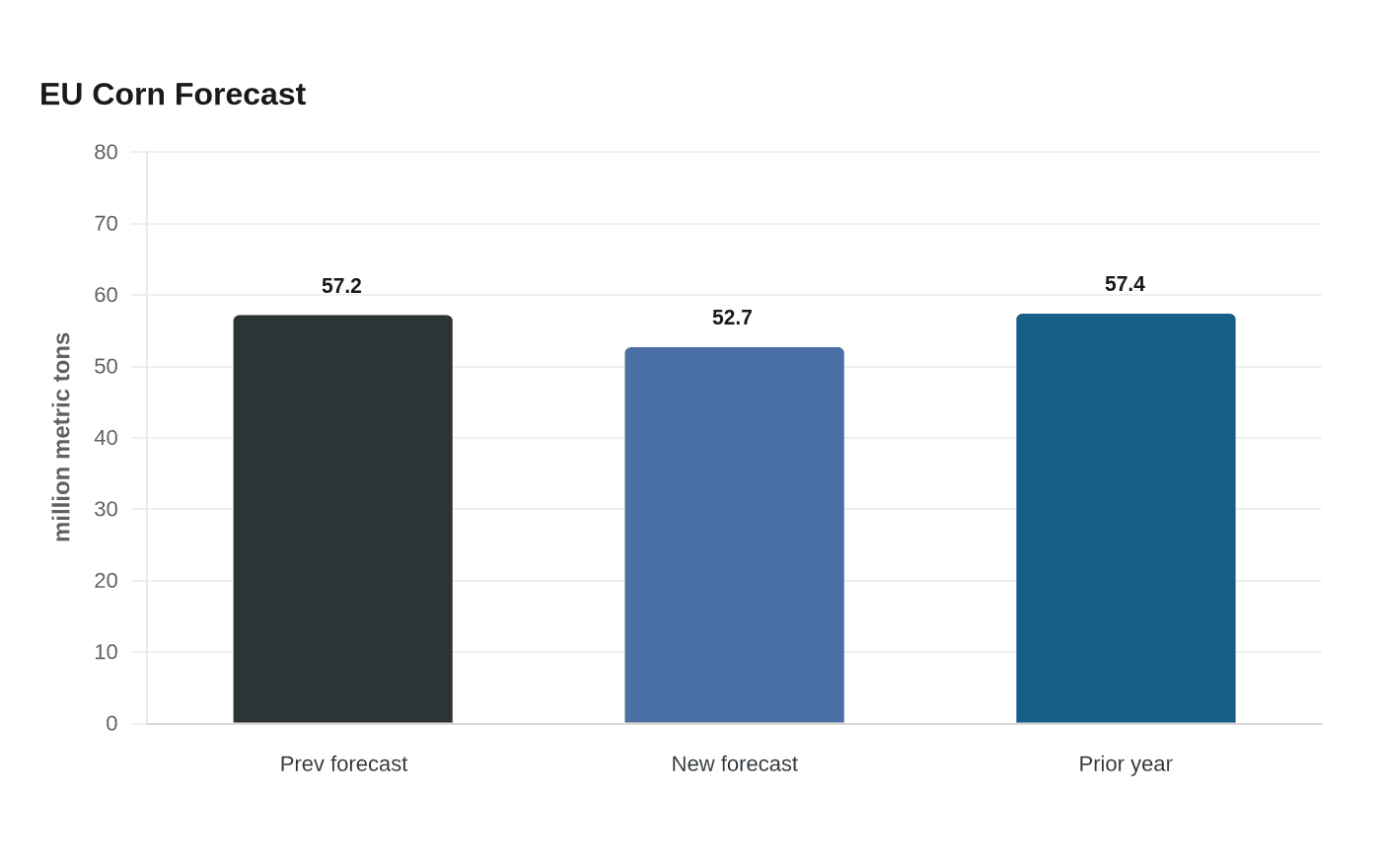
For the EU, the downgrade points to tighter supply and stronger import demand in marketing year 2026/27. S&P Global said COCERAL cut its EU corn production forecast to 52.7 million metric tons from 57.2 million metric tons previously, below the 57.4 million metric tons harvested in the prior year. France’s corn production was described as falling to a 20-year low.

That combination matters for corn buyers across feed, starch and fuel markets. A smaller crop in Europe can lift the cost of corn competing into livestock rations and into corn-based ethanol plants, while also widening the gap between domestic supply and import needs. For biofuels markets, the latest cut adds another weather-driven swing to feedstock pricing at a time when crop risk is increasingly tied to heat.
The IGC, which says it works to improve market transparency through information-sharing, analysis and consultation on market and policy developments, tracks 22 commodity markets including cereals, oilseeds, rice and pulses. Its latest balance sheet suggests the corn market is entering 2026/27 with less cushion than the prior monthly update showed, and with Europe once again at the center of grain import demand.
This article was produced by Prism’s automated news system from verified source data, official records, and press releases, then run through automated quality and moderation checks before publishing. The system is built and supervised by the people who set the standards it runs under. Read our full AI policy.
Did this article answer your question?