India launches E100 at 183 outlets to cut fuel imports
India opened E100 at 183 IndianOil outlets as E20 blending hit 19.93% in July 2025, reviving the import-cutting pitch.
&w=1920&q=75)
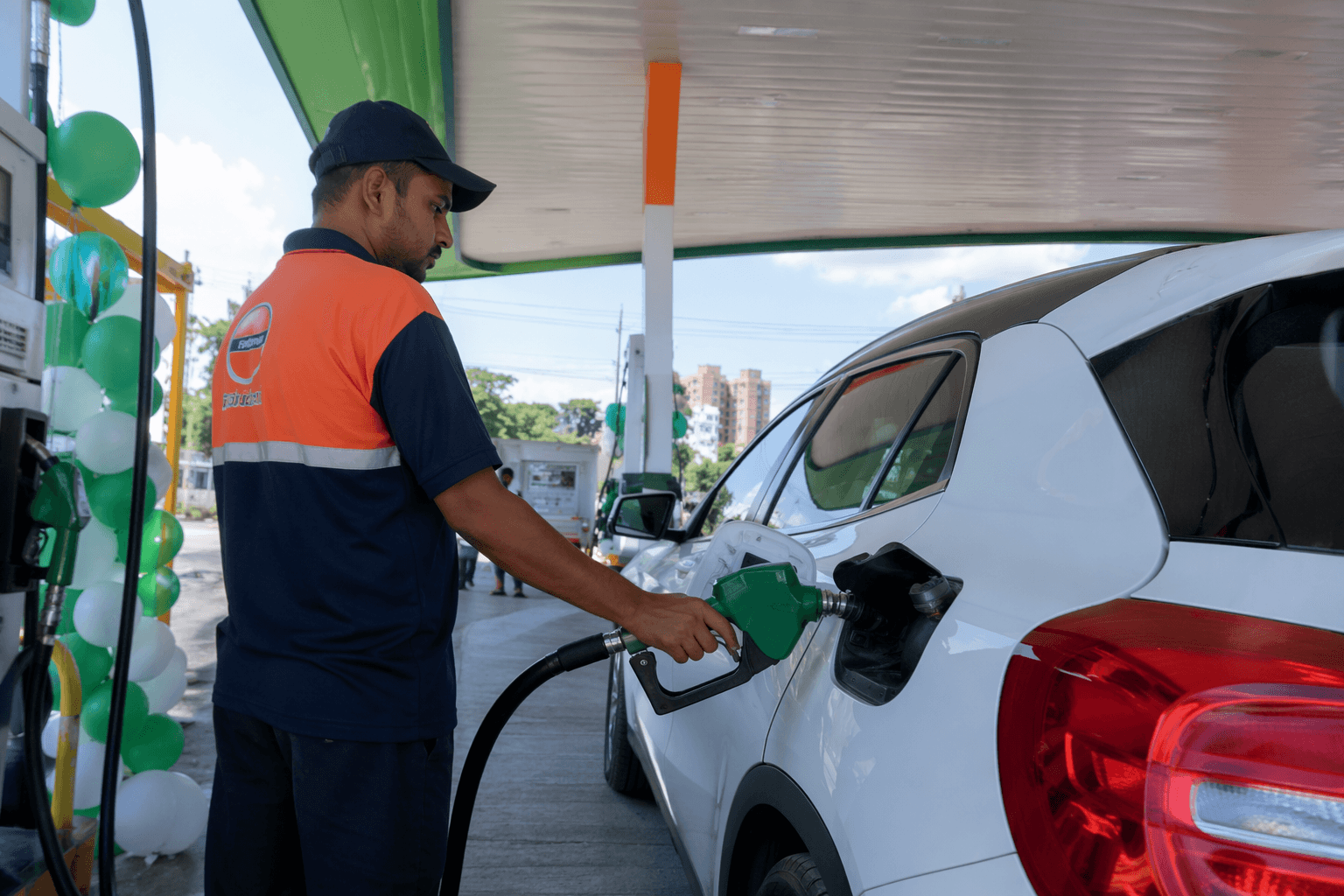
Petroleum Minister Hardeep S. Puri on June 15 launched ETHANOL100 at 183 IndianOil outlets, the latest step in India’s bid to trim crude imports through higher petrol blending.
The launch lands in a market where the government says India imports about 85% of its crude requirement. The National Policy on Biofuels, notified on 4 June 2018, originally set a 20% ethanol blend target for 2030, then advanced that deadline to Ethanol Supply Year 2025-26 as the program became central to energy-security policy.
Officials have pointed to rapid scale-up. The government says ethanol blending started as a pilot in 2001, rose from 1.53% in 2014 to 10% by 2022, and then climbed further as the network expanded. In the same official release that announced E100, the ministry said E20 availability had increased to 12,000 outlets in under a year after Narendra Modi’s 2023 announcement.
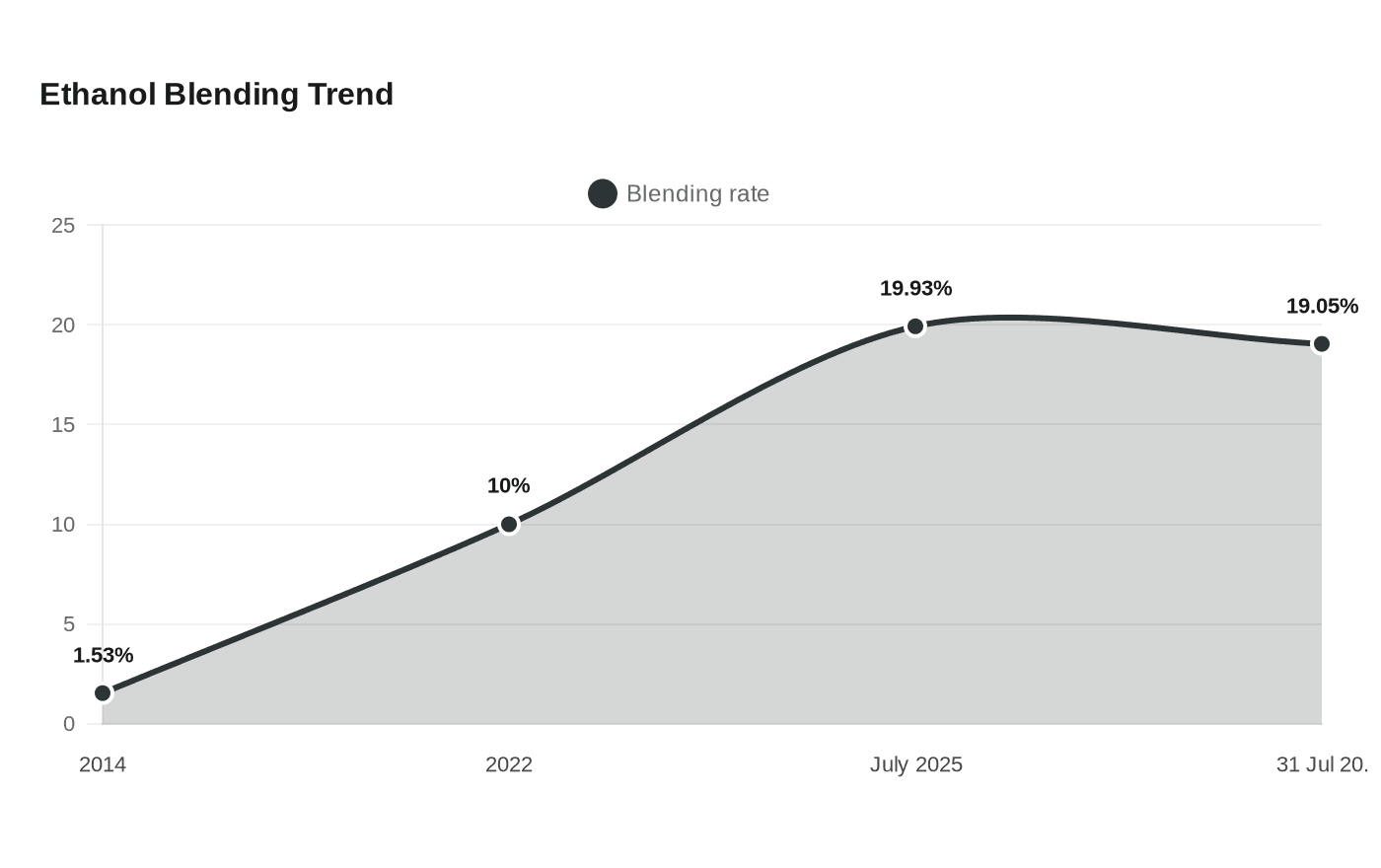
The current blending numbers are close to the policy finish line. Public Sector Oil Marketing Companies achieved average ethanol blending of 19.05% as of 31 July 2025, while July 2025 alone reached 19.93%, according to government data. Over ESY 2014-15 through ESY 2024-25 up to July 2025, officials said ethanol blending saved more than Rs 1,44,087 crore in foreign exchange, substituted about 245 lakh metric tonnes of crude oil and cut carbon dioxide emissions by roughly 736 lakh metric tonnes.
Even so, the rollout is moving into a more difficult phase. NITI Aayog said the 20% target was feasible because oil marketing companies and vehicle makers had already prepared for a phased rollout, but motorists have complained about lower mileage and compatibility concerns in older vehicles. Automaker lobby groups have said E20 is safe, while also warning that mileage can fall by 2% to 4%.
Maruti Suzuki’s June 2026 launch of India’s first mass-market flex-fuel passenger vehicle, capable of running on ethanol blends up to E100, gives the policy a hardware anchor, but it does not remove the core constraint: India still has to scale feedstock supply without worsening pressure on food markets. Officials have repeatedly framed ethanol as a way to strengthen energy security, support farmers and rural distilleries, and cut emissions, but the next step depends on how quickly fuel retailers, automakers and the farm sector can move in sync.
This article was produced by Prism’s automated news system from verified source data, official records, and press releases, then run through automated quality and moderation checks before publishing. The system is built and supervised by the people who set the standards it runs under. Read our full AI policy.
Know something we missed? Have a correction or additional information?
Submit a Tip