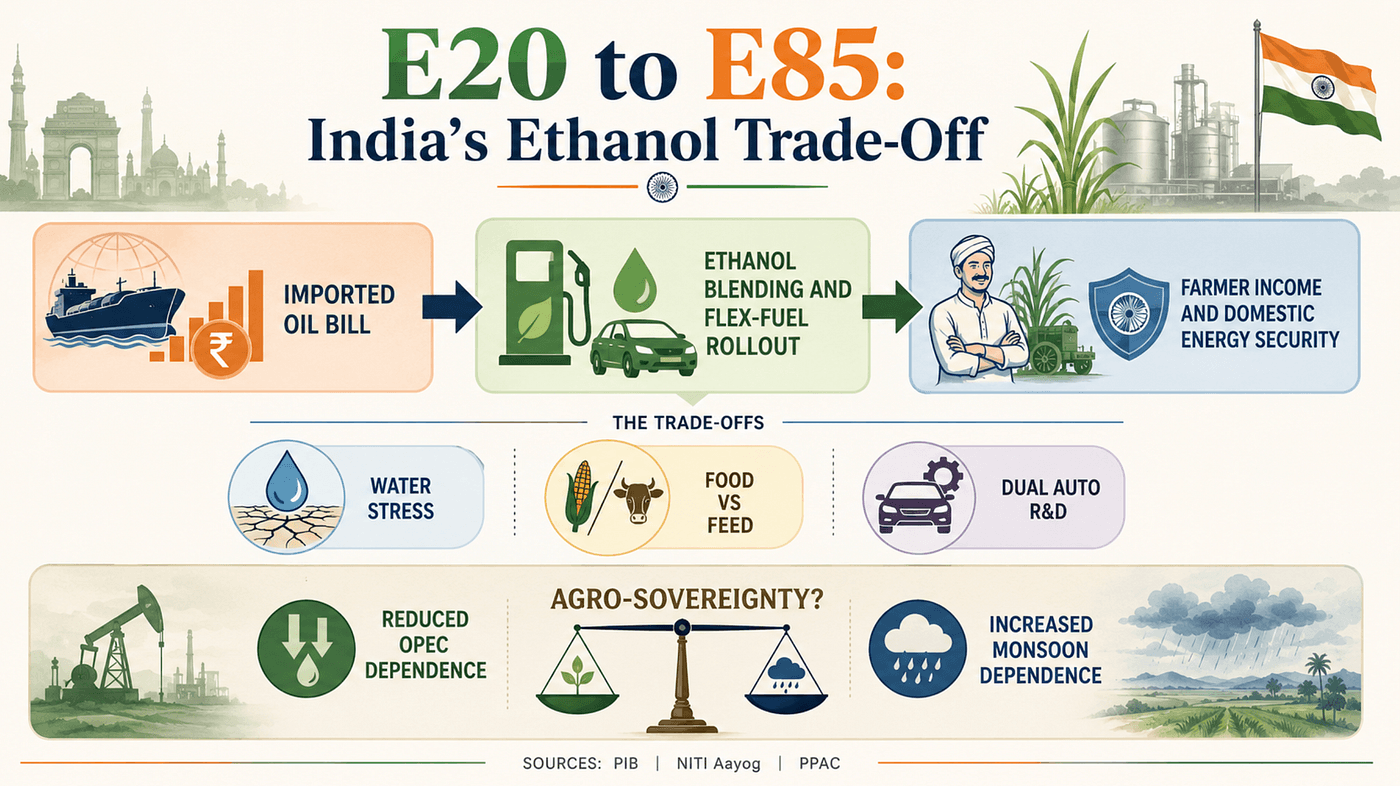
India’s new fuel norms give ethanol cars an edge
E20 is now at more than 17,400 outlets, and India’s fuel norms are shifting buyer attention toward ethanol-ready cars, mileage and resale.
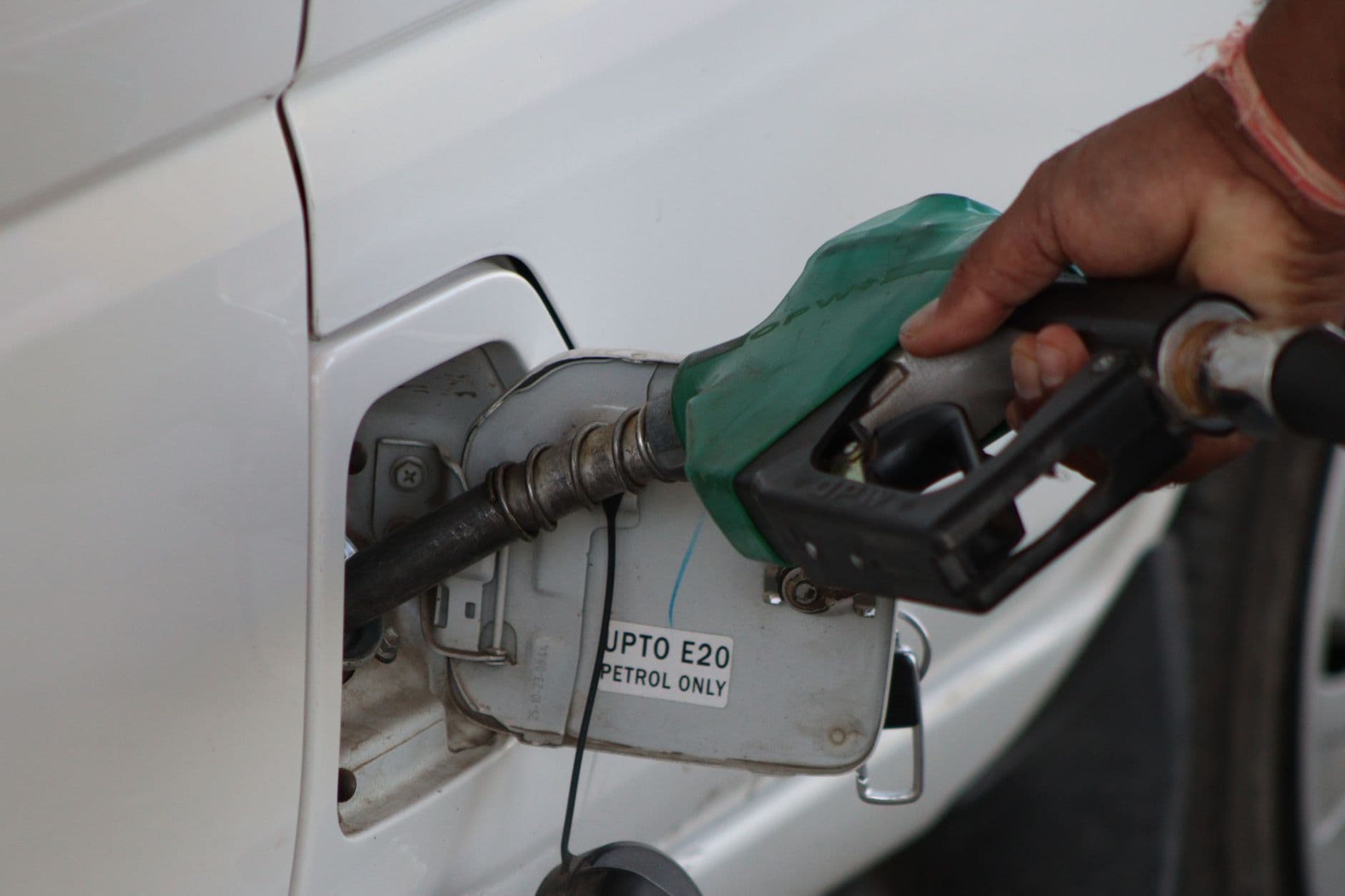
The Press Information Bureau’s Year End Review 2024 counted more than 17,400 retail outlets across India dispensing E20 petrol. That rollout is now changing how buyers price ethanol-capable cars, after the ministry’s June 23 clarification and automakers’ July 4 press conference cut into mileage fears.
E20 is already the baseline, not a pilot
India’s ethanol push is no longer a policy slide deck. The Roadmap for Ethanol Blending in India 2020-25, published by NITI Aayog and the Ministry of Petroleum and Natural Gas in June 2021, set up a steady shift toward higher ethanol use in petrol. With E20 now being dispensed at a national network of outlets, the market question for buyers is no longer whether the blend is coming, but how their car is calibrated to live with it.
The government’s case is straightforward: more ethanol means lower crude oil imports, more foreign exchange savings, and stronger demand for ethanol feedstocks that support farmers. For car buyers, that national arithmetic shows up in two places only, fuel economy and compatibility. Those are the numbers that decide whether an E20-capable car keeps its value or whether an older petrol model starts to look dated.
Mileage is the first line item buyers notice
Shri Bharti noted that E20 has a calorific value about 3 to 3.5 percent below E10. That is the figure buyers should carry into any fuel-economy comparison, because lower energy content is the cleanest explanation for why some motorists are reporting a mileage hit.
The ministry tried to blunt the anxiety on June 23, 2026, when it issued a detailed clarification on the Ethanol Blended Petrol Programme. Automobile manufacturers followed with their own clarifications at a July 4, 2026 press conference, after public concern had built around mileage and vehicle life. Industry experts described E20 as a clean, high-performance fuel, and the government said it had moved ahead only after rigorous testing on older vehicles.
For a buyer, the takeaway is not that every petrol car behaves the same. It is that the blend itself has a defined energy penalty, and the closer a vehicle is to E20 calibration, the less of that penalty should show up in everyday use.
Older cars carry the biggest compatibility question
The friction in the market comes from owners of older petrol cars that were not originally optimized for a higher ethanol blend. That concern is why the ministry’s clarification and the automakers’ July 4 briefing landed together, not months apart. Buyers looking at a used sedan, hatchback or compact SUV now have to ask a different question than they did under an E10-only market: will this car stay within spec if the fuel supply keeps moving toward E20?
Maruti Suzuki gave a “statement of confidence” on E20 and said no issues were found in over 1.5 crore older vehicles serviced.
E20 moved ahead only after rigorous testing on older vehicles, which is the government’s answer to durability and compatibility concerns. The buyer still has to check the car’s own fuel specification, but the policy backdrop now clearly favors vehicles designed with the new blend in mind.
Resale value will start to track blend compatibility
Used-car pricing rarely changes overnight, but fuel standards do change what a second owner is willing to pay for peace of mind. With E20 already on sale across a national network of outlets, a car that is explicitly E20-compatible is easier to defend at resale than one that depends on older calibration assumptions. The buyer on the other side of the transaction will care less about the badge and more about whether the car can absorb the fuel that is actually on sale.
That does not mean every E10-era car becomes stranded. It does mean the resale conversation shifts toward documentation. Service history, the manufacturer’s fuel compatibility note, and any clarification issued by the automaker will matter more than they did when petrol blends were still a policy discussion. A cleaner paper trail can support the asking price because it narrows the uncertainty around mileage, maintenance and long-term use.
What to check before you sign
Before buying a petrol car in this market, line up three checks:
- Confirm the manufacturer’s stated fuel compatibility, especially whether the car is calibrated for E20 rather than only E10.
- Look for any public clarification from the automaker, because manufacturers issued fresh guidance at the July 4, 2026 press conference after the ministry’s June 23 note.
- Compare the expected mileage against the Press Information Bureau’s 3 to 3.5 percent calorific-value gap between E20 and E10, not against optimistic showroom claims.
This article was produced by Prism’s automated news system from verified source data, official records, and press releases, then run through automated quality and moderation checks before publishing. The system is built and supervised by the people who set the standards it runs under. Read our full AI policy.
Did this article answer your question?