India's new fuel norms set to favor ethanol cars
India’s draft CAFE-III norms give ethanol-compatible cars a new credit path, while E20 backlash shows mileage will still shape demand.
The Ministry of Power on July 16 circulated draft CAFE-III norms that would cover M1 passenger vehicles sold in 2027-28 and exclude commercial vehicles. The proposal adds carbon-neutrality factors, super credits and tradable credits, a structure that can reward ethanol-compatible powertrains alongside other cleaner technologies. India has already hit its E20 blending target, and the next step is whether automakers build for E85 and E100 or use ethanol-readiness mainly as a compliance lever.
What the new CAFE-III draft covers
The draft would apply to M1 category passenger vehicles with not more than eight seats in addition to the driver’s seat, which means hatchbacks, sedans and SUVs are in scope. The standards are proposed to take effect from April 1, 2027, and would apply to vehicles manufactured or imported for sale in India during 2027-28. Commercial vehicles are excluded, so the rule is aimed squarely at the passenger-car market.
The Hindu said industry stakeholders had until August 6 to respond to the latest draft, and that the proposal has sharply divided the automobile industry. The Tribune also described the Ministry of Power’s circulation of the Draft Corporate Average Fuel Economy 2027 Norms for stakeholder consultation, a signal that the final shape of the rule is still open.
Why ethanol now sits inside the compliance debate
The draft’s carbon-neutrality factors, super credits and tradable credits matter because they can improve the compliance position of vehicles designed to run on lower-carbon fuels. That puts biofuel-compatible technologies inside the same policy frame as battery-electric and other efficiency-oriented choices, even though the draft itself does not mandate how much ethanol must be sold.
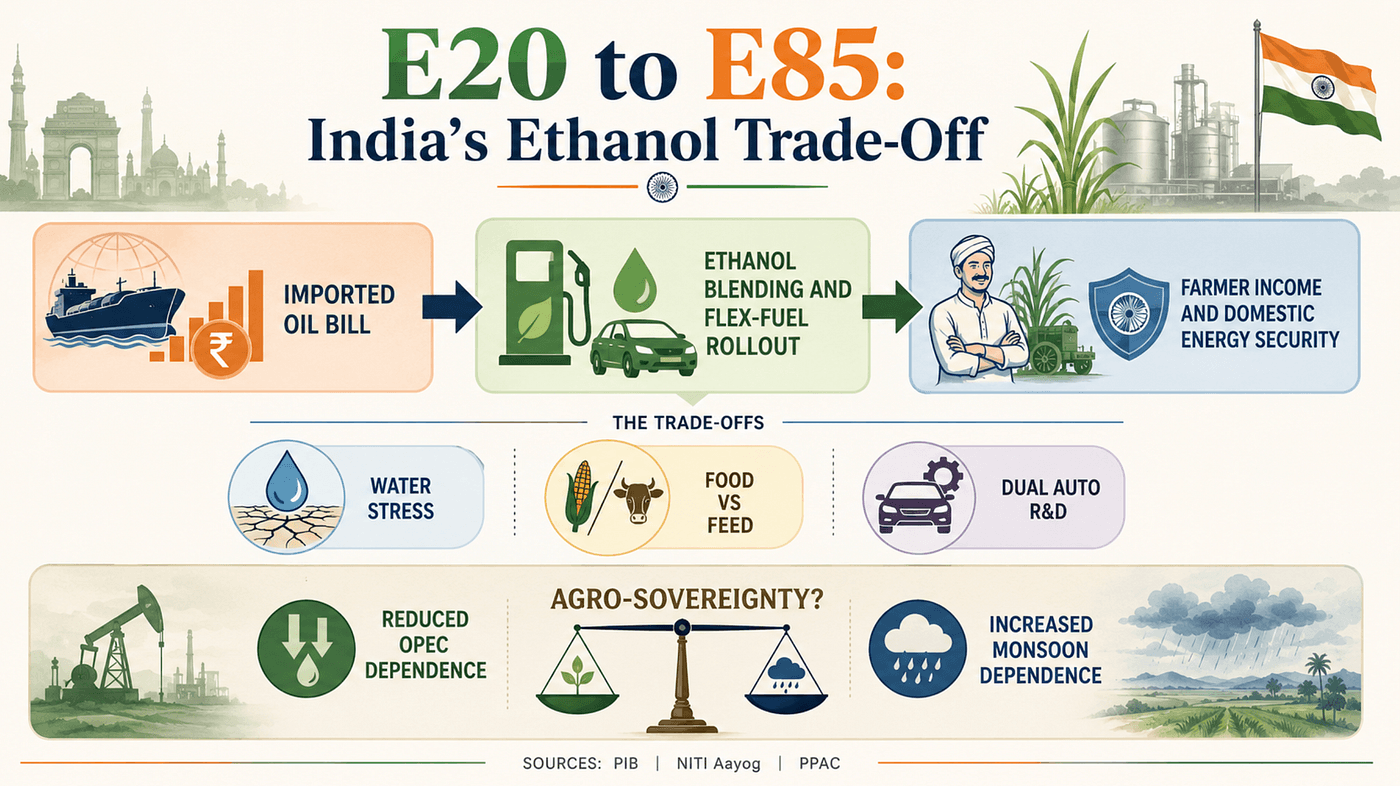
India has already achieved its E20 target, meaning petrol blended with 20% ethanol, ahead of the revised 2025-26 timeline in policy documents. NITI Aayog and the Ministry of Petroleum and Natural Gas laid out that transition in the Roadmap for Ethanol Blending in India 2020-25, published in June 2021. The Bureau of Energy Efficiency has said India’s dependence on imported fossil fuels has been rising because domestic petroleum resources are limited, which keeps the oil-substitution case for ethanol in focus.
The real policy-engineering link is that CAFE-III can make ethanol-compatible vehicles easier to justify inside fleet planning. That is a compliance lever for automakers first, and a demand lever for ethanol second. The demand side becomes stronger only if the vehicle rules for E85 and E100 move in step with the fuel-economy standards.
E85 and E100 would widen the market beyond E20
India is also moving toward formal rules for E85 and E100 fuels, a step that would open the door to flex-fuel and ethanol-only vehicles. The Energy and Economic Times said India has proposed amendments to motor vehicle rules to integrate higher ethanol-blended fuels, including E85, which is 85% ethanol, and E100, which is nearly pure ethanol. ETEnergyworld reported that India approved E100 fuel regulations on June 14, 2026.
Those moves matter because CAFE-III rewards technology choices, while E85 and E100 rules would create the fuel side of the market. Without that fuel availability, ethanol-compatible vehicles stay a compliance tool. With it, they become a product strategy that can support higher ethanol throughput at the pump.
E20 backlash is the market test
Reuters reported that Indian automakers say ethanol fuel is safe but can hurt mileage, with a lobby group saying E20 could reduce mileage by 2% to 4%. Motorists have complained about lower mileage and concerns over vehicle compatibility, which has forced the industry to defend the blend even as the government pushes ahead. Reuters also reported that automakers say there is no evidence of widespread vehicle damage from the blend.
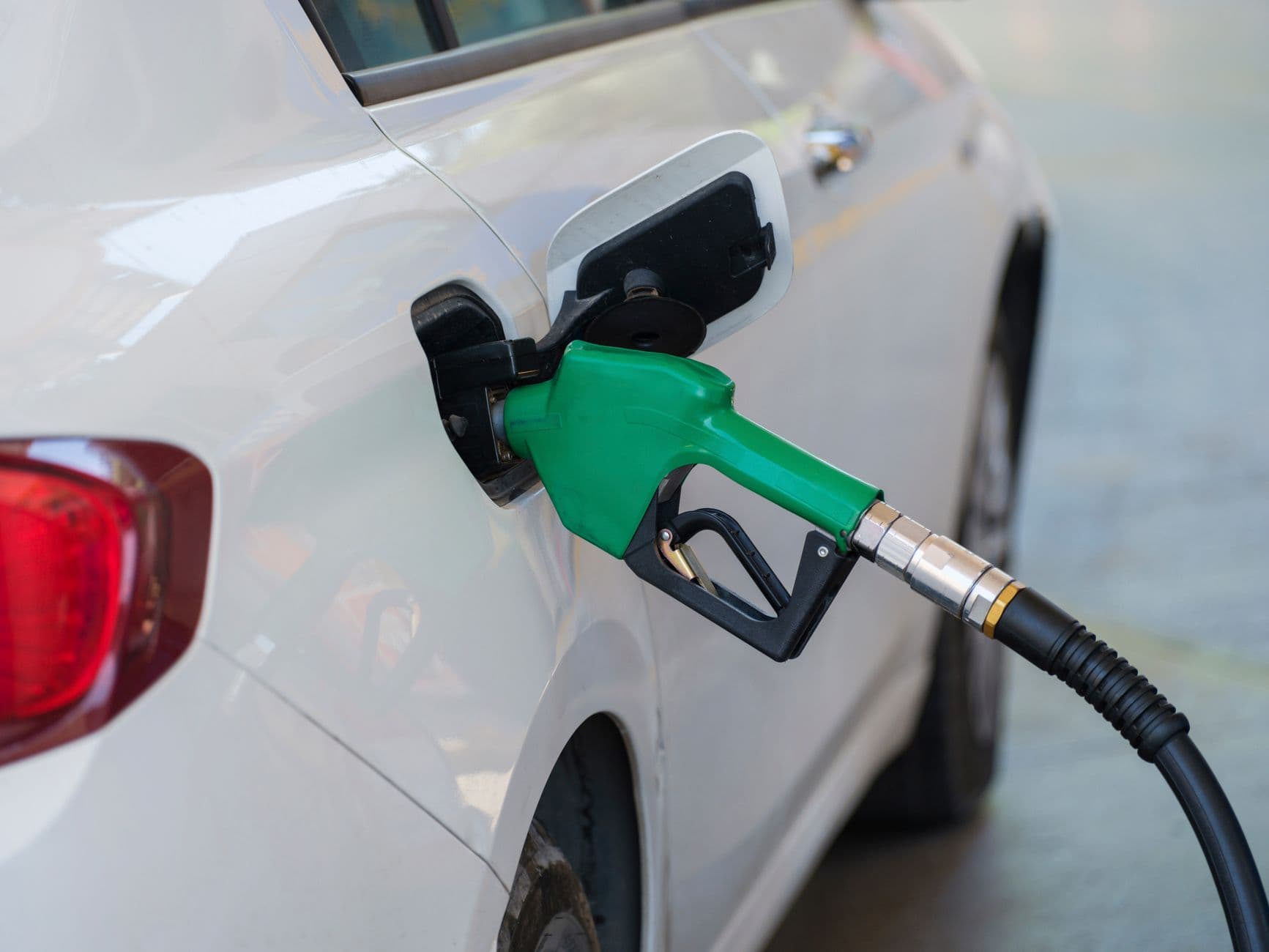
The Ministry of Petroleum and Natural Gas issued a detailed clarification on the Ethanol Blended Petrol programme on June 23, 2026, and automobile manufacturers held a press conference on July 4 to address misinformation, according to a PIB Q&A note. Union Road Transport Minister Nitin Gadkari has called social media campaigns against E20 “politically motivated,” a sign that the government intends to keep the blending push intact despite consumer complaints.
Mahindra has been one of the clearer industry voices on the issue. A Mahindra executive said fuel blended with 20% ethanol is safe to use, while Reuters reported the company acknowledged that E20 can curb vehicle performance. That split between safety and mileage is likely to shape how automakers calibrate engines, calibrate consumer messaging and decide whether to seek compliance credits from ethanol-compatible platforms.
What to watch next
The consultation deadline of August 6 will show whether manufacturers push for more generous treatment of biofuel-ready platforms or for a narrower reading of the new credits. If the final CAFE-III text keeps carbon-neutrality factors, super credits and tradable credits intact, it will give automakers a reason to favor vehicles that can handle ethanol blends beyond E20.
For fuel suppliers, the key variable is not just the passenger-car rule but the follow-through on E85 and E100. For consumers, the near-term issue remains mileage, compatibility and resale confidence, because the E20 debate is still playing out even as the policy framework shifts toward higher blends.
This article was produced by Prism’s automated news system from verified source data, official records, and press releases, then run through automated quality and moderation checks before publishing. The system is built and supervised by the people who set the standards it runs under. Read our full AI policy.
Did this article answer your question?